Every morning, just after sunrise, our neighborhood came alive the same way.
Sprinklers clicked across perfectly trimmed lawns.
A garage door rumbled open somewhere down the street.
A dog barked once before losing interest.
The air smelled faintly of wet grass and coffee.
I loved watching the neighborhood wake up.
That was when I started noticing Barbara.
Her house stood directly across from ours.
Everything about it looked immaculate.
The hedges were trimmed with ruler-straight precision.
The flower beds bloomed without a single weed.
Even her silver SUV always looked freshly washed.
Barbara herself was just as polished.
She wore pressed slacks, silk scarves, and lipstick just to collect the mail.
We waved politely whenever we crossed paths, but we had never become more than neighbors.
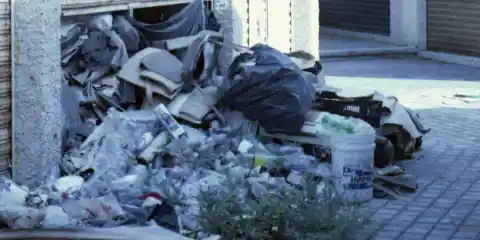
Then the trash bags started appearing.
Every morning around seven, Barbara stepped outside wearing pink slippers and a matching robe, dragging an enormous black contractor bag behind her.
Sometimes there was one.
Sometimes two.
She carried them slowly, almost carefully, before setting them beside the curb.
An unmarked garbage truck always arrived around eight.
The driver loaded the bags, handed Barbara a receipt on some mornings, and disappeared.
At first I assumed she was renovating.
But no contractors ever arrived.
No paint cans appeared.
No furniture was delivered.
Still, every day another bag waited at the curb.
After about a week, my wife, Anna, finally mentioned it over breakfast.
“Have you noticed Barbara’s trash?”
I looked through the kitchen window.
“It looks like trash.”
Anna smiled.
“That is certainly one possibility.”
“What else would be inside a trash bag?”
She carried her coffee beside me.
Across the street, Barbara stopped halfway down her driveway.
She rested one hand against her chest before continuing.
“Look at her,” Anna said quietly.
“She’s tired.”
“She’s sick.”
“That’s a pretty big assumption.”
“Is it?”
Anna watched her thoughtfully.
“She’s lost weight. She wears scarves indoors. Last week I returned a letter that was delivered to our mailbox by mistake, and she barely opened her front door.”
I realized something in that moment.
I had been watching the bags.
Anna had been watching Barbara.
That difference should have embarrassed me sooner than it did.
Barbara finally reached the curb.
She adjusted the knot at the top of the bag with surprising care before slowly walking back toward the house.
“Maybe she’s cleaning out the attic,” I suggested.
“Every morning?”
“She might only be allowed one pickup.”
Anna laughed.
“You’ve invented an entire garbage company just to avoid admitting something strange is happening.”
Over the next several days, I found myself watching more closely.
The truck always came at almost exactly the same time.
It had no company logo.
Only a faded inspection sticker near the back door.
One Tuesday, Barbara drove away before the truck arrived.
Two large bags sat unattended beside the curb.
Anna looked up from her book.
“Don’t.”
“I didn’t say anything.”
“You’re thinking loudly.”
“I’m checking the mail.”
“The mail doesn’t arrive until this afternoon.”
I crossed the street anyway.
The larger bag had been tied with a careful double knot.
I knew I had absolutely no right to touch it.
I untied it anyway.
Instead of garbage, I found carefully folded children’s clothing.
A pink cardigan.
A denim jacket decorated with butterfly patches.
Two pairs of jeans.
A pair of sneakers with the laces neatly tied together.
My pulse quickened.
I dug deeper.
School folders.
Paperback novels.
Costume jewelry.
A stuffed rabbit missing one ear.
At the very bottom rested three wooden picture frames.
The glass had been removed, but the photographs remained.
The same teenage girl smiled from each one.
In one picture she stood on a windy beach.
In another she wore a white dress while sitting at a piano.
In the third she leaned toward a birthday cake topped with sixteen candles.
Written neatly across the back was one name.
Emily.
My hands suddenly felt cold.
I hurriedly tied the bag closed again.
The knot I made looked sloppy compared to Barbara’s careful work.
When I walked back inside, Anna looked at me once and sighed.
“You opened it.”
I nodded.
“There were clothes… photographs… school things.”
She frowned.
“That doesn’t automatically mean something terrible happened.”
“She doesn’t have a teenage daughter living there.”
Anna crossed her arms.
“The better question is why you opened someone else’s trash.”
“You’re right.”
“That isn’t an apology to Barbara.”
“I know.”
That afternoon we visited Mrs. Patterson, who had lived on the street longer than anyone.
When we mentioned Emily, her expression immediately changed.
“She was Barbara’s daughter,” she said quietly.
“She died eleven years ago.”
Anna squeezed my hand.
“We thought…” she began before stopping.
Mrs. Patterson gave us a sad smile.
“You moved here after Emily died.”
“She grew up in that house.”
She pointed toward Barbara’s upstairs front window.
“I heard Barbara locked her bedroom door after the funeral.”
“She also has a son,” Mrs. Patterson continued.
“David.”
“He was nineteen when Emily died.”
“He left for college the following year and never really came back.”
“Why?”
Mrs. Patterson hesitated.
“Barbara and Emily argued the night she died.”
“She left the house angry.”
“While she was walking along the highway, a drunk driver hit her.”
Silence settled over the room.
“David blamed his mother.”
“And Barbara blamed herself.”
I looked back toward Barbara’s house.
“So why is she clearing Emily’s room now?”
Mrs. Patterson slowly removed her glasses.
“She hasn’t been looking well lately.”
That night I couldn’t stop thinking about the photographs inside the trash bag.
I imagined Barbara finally deciding to erase her daughter after eleven years.
“She’s throwing Emily away,” I said.
Anna immediately looked at me.
“You don’t know that.”
“She’s giving everything away.”
“You saw one bag.”
“I saw photographs.”
“And you invaded her privacy to do it.”
Her voice was sharper than usual.
“What kind of mother throws away her dead daughter’s belongings?”
Anna sat upright.
“A grieving mother.”
“We don’t know nearly enough to judge her.”
Two mornings later I heard something heavy hit the pavement.
Barbara had collapsed beside the curb.
One hand rested against the road.
The other still clutched the top of another black bag.
Anna was already running.
“Come on.”
We crossed the street together.
Barbara tried to stand.
“I’m fine.”
She clearly wasn’t.
Up close, the makeup couldn’t hide the gray color of her skin.
Her scarf had slipped just enough to reveal patches of hair loss.
She looked painfully thin.
“The truck will be here soon,” she whispered.
“The bag can wait,” Anna replied.
“No.”
Barbara shook her head.
“It’s the last pickup before Saturday.”
We helped her inside.
Her spotless kitchen contained dozens of prescription bottles.
The refrigerator calendar overflowed with oncology appointments.
After she drank some water, I took a deep breath.
“There’s something I need to tell you.”
She looked at me.
“I opened one of your trash bags.”
For a brief second anger flashed across her face.
“You had no right.”
“I know.”
“No… I don’t think you understood that when you did it.”
I lowered my head.
“You’re right.”
Anna gently asked, “Barbara… are you sick?”
Barbara touched her scarf.
“Stage-four ovarian cancer.”
“The doctors think I have another month or two.”
I slowly sat down.
“My son is coming home Saturday,” she continued.
“David.”
“He hasn’t stepped inside this house since he left.”
I carefully chose my next words.
“We spoke with Mrs. Patterson.”
Barbara nodded.
“She probably told you about Emily.”
“She did.”
Barbara looked toward the staircase.
“The things in those bags aren’t trash.”
“The bags with green tags go to a charity for teenage girls.”
“The plain black bags contain damaged items that can’t be donated.”
“I’m keeping Emily’s most personal belongings.”
“I saw the photographs.”
“They were duplicates.”
She smiled sadly.
“I’m not throwing my daughter into a landfill.”
The shame I felt was almost unbearable.
Anna asked softly, “Why empty the room now?”
Barbara stared into her water glass.
“Because David is coming to say goodbye to me.”
“He spent eleven years avoiding that room.”
“I thought if I emptied it first, he wouldn’t have to lose Emily all over again while losing me.”
Anna remained quiet for a long moment.
“Did you ask him what he wanted?”
Barbara blinked.
“No.”
“How do you know an empty room would hurt less?”
Barbara looked upstairs.
“I was trying to protect him.”
Anna gently reached across the table.
“Maybe.”
“But maybe you were making the decision for him because asking was harder.”
Barbara’s eyes filled with tears.
For the first time, I understood that her decision hadn’t come from indifference.
It came from unbearable love mixed with fear.
“How much is left?” I asked.
“The closet.”
“Some boxes.”
“The attic.”
“Then let us help.”
Barbara looked at me carefully.
“Why?”
“Because I owe you much more than an apology.”
“And because Anna is right.”
“David deserves to decide what he wants to keep.”
Barbara slowly nodded.
“It’s been so hard opening that room.”
“You won’t do it alone anymore,” Anna said.
That afternoon Mrs. Patterson joined us.
Emily’s bedroom wasn’t the untouched shrine I had imagined.
Dust covered the dresser.
The curtains had faded.
Boxes lined one wall.
Barbara sat quietly on the bed while we sorted everything.
We created four piles.
Things to donate.
Things too damaged to keep.
Things Barbara wanted.
And things David deserved to choose himself.
That final pile quickly became the largest.
Barbara hesitated repeatedly.
“He doesn’t need all this.”
Anna held up a school trophy.
“That’s his decision.”
“She might hate me for keeping it.”
“He may hate you more for giving it away.”
Barbara nodded silently.
As we worked, she began telling us stories.
Emily’s exploding science-fair volcano.
Her terrible singing voice.
Her obsession with butterflies.
Her habit of hiding cookies inside piano books.
Slowly the room became less about tragedy and more about a teenage girl who had once filled it with laughter.
By Friday evening the room looked different.
Not empty.
Not frozen in time.
Simply loved.
The bed remained.
The bookshelf stayed.
Photographs lined one shelf.
The faded curtains still framed the window.
Barbara stood quietly in the doorway.
“I thought an empty room would be kinder.”
Anna slipped an arm around her.
“Sometimes kindness means leaving the door open.”
Saturday morning a silver sedan stopped outside.
David stepped out.
He stood beside the car for several long seconds before walking toward the front door.
Barbara opened it.
Neither of them spoke.
They simply embraced.
I instinctively looked through our front window.
Anna gently pulled the curtain closed.
“They deserve this.”
Late that afternoon someone knocked on our door.
David stood outside.
His eyes were red.
“My mother said you helped with Emily’s room.”
“We did.”
“I sat on her bed for an hour.”
Anna asked quietly, “Was it too painful?”
“Yes.”
He swallowed.
“But I needed it.”
That evening Barbara invited us over.
Emily’s keepsakes were spread across the kitchen table.
David looked at his mother.
“I blamed you for eleven years.”
Barbara stared at her hands.
“I told her to leave.”
“She was sixteen.”
“I know.”
“You shouldn’t have said it.”
“I know.”
Her voice broke.
“But I didn’t put that drunk driver on the road.”
“I can’t die believing I killed our daughter.”
David looked at her for a long time.
Finally he reached across the table.
“I know, Mom.”
“It wasn’t your fault.”
“I blamed you because it was easier than facing my own grief.”
Barbara took his hand.
“I came home.”
For the next two months David stayed with her.
He drove her to treatments.
Anna cooked meals.
Mrs. Patterson cared for the garden.
I washed Barbara’s SUV because she still hated seeing dust collect on the hood.
Some mornings Barbara and David sat together inside Emily’s room talking for hours.
Other mornings they simply sat in silence.
But they faced their grief together instead of alone.
Barbara passed away peacefully in early September.
After the funeral, David decided not to sell the house.
It would remain his family home.
A place where he could remember both his mother and his sister.
Now, whenever I look across the street, I no longer see mysterious trash bags.
I see a mother who loved her children so deeply that grief convinced her she had to protect them by making impossible decisions alone.
She thought she was sparing her son another loss.
Instead, she discovered that healing only began when she stopped carrying the burden by herself.
And every time I take my own garbage to the curb, I remember the morning I judged someone without knowing the story she had been carrying all along.
Sometimes the heaviest things people leave behind are never garbage at all.