And when the final guests walked through the door, my husband and sister ran from the house like strangers fleeing a crime scene.
The drive home from the clinic always seemed longer than the drive there.
My arm still carried the phantom weight of the IV bag, and every traffic light felt determined to keep me away from my bed.
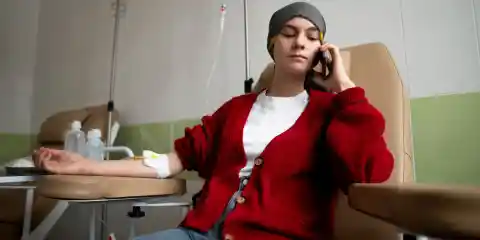
The nurse had released me forty minutes early after my latest chemotherapy treatment.
It was a small gift, but I was grateful for it.
I imagined reaching home before anyone expected me, changing into soft pajamas, and sleeping for an hour before the children returned from school.
My husband, Harold, was supposed to be at work.
My younger sister, Anne, had texted me that morning to say she might stop by later with a casserole.
“You do too much for me,” I had told her the previous week.
She had smiled and squeezed my hand.
“You’re my sister. This is what we do.”
Harold had said something similar during my last appointment.
He sat beside me while the medication dripped into my veins, holding my hand and looking directly into my eyes.
“We’ll get through this together,” he promised. “As a family.”
I believed him completely.
Twelve years of marriage teaches you to trust certain things without questioning them.
His voice beside you in the dark.
His keys on the kitchen counter.
His hand reaching for yours in a hospital waiting room.
I believed Harold the way I believed the floor would remain beneath my feet.
Still, little things had bothered me lately.
Anne’s perfume had lingered on a cushion in our den long after she claimed she had left.
Harold had started turning his phone facedown whenever I entered a room.
Once, I found our bedroom door closed in the middle of the afternoon.
I was almost certain I had left it open.
“Why are you keeping the door shut?” I asked him that evening.
“The hallway light wakes me when I nap.”
It was a weak explanation.
But chemotherapy makes you question yourself.
Everyone reminded me of that.
My doctor said exhaustion could affect memory and concentration.
My mother said illness made people anxious.
Harold said it most often.
“Chemo wears you down,” he told me. “Your mind fills in gaps when you’re exhausted. Tell me when you start worrying so I can help you separate fear from reality.”
So I swallowed my concerns.
I told myself the perfume meant nothing.
The hidden phone meant nothing.
The closed door meant nothing.
Then I turned onto our street that afternoon and saw Anne’s silver sedan parked two houses away.
It was half concealed behind our neighbor’s hedge.
I slowed the car.
Anne always parked in our driveway.
She called it her sisterly privilege and joked that visitors should be treated like family.
There was only one reason she would hide her car.
She did not want anyone to know she was there.
“You’re being ridiculous,” I whispered.
I parked in front of the house and remained behind the wheel for several seconds.
My hands were weak from treatment.
My stomach was already unsettled.
I almost drove away.
Instead, I entered through the front door as quietly as possible.
At first, the house seemed empty.
Then I heard something upstairs.
A muffled laugh.
The soft creak of our bed.
A rhythm of movement that no wife should ever hear when she believes her husband is at work.
My legs began climbing the stairs before my mind accepted what was happening.
I held my phone in one hand.
My thumb hovered over the emergency call screen.
Some desperate part of me still hoped there was an intruder in the house.
Anything would have been better than the truth waiting behind that door.
The bedroom door was open less than an inch.
I pushed it gently with the back of my knuckle.
Then I looked inside.
Harold was in our bed.
Anne was beside him.
My sister.
The woman who had driven me to appointments.
The woman who had brought soup when I could not eat.
The woman who sat beside my children and promised them their mother would recover.
For several seconds, I felt nothing.
No rage.
No grief.
Only a strange stillness.
As though my body had decided the truth was too large to feel all at once.
I raised my phone.
I took one photograph through the gap.
Then another.
Then a third.
Neither of them noticed me.
I backed away from the bedroom one careful step at a time.
I descended the stairs.
I closed the front door quietly.
Then I got into my car and drove.
I do not remember how far I went.
Eventually, I pulled onto the shoulder of an empty road.
I put my forehead against the steering wheel and screamed until my throat hurt.
When I finally lifted my head, I saw myself in the rearview mirror.
My wig sat crooked.
My face looked pale and hollow.
My eyes belonged to someone much older.
“They will say you imagined it,” I whispered to my reflection.
I could already hear the explanations.
Harold would say the chemotherapy had confused me.
Anne would cry.
My mother would beg me not to destroy the family over something I might have misunderstood.
They had spent months teaching everyone to see Harold as the devoted husband.
He attended appointments.
He carried my bag.
He posted photographs of us online with captions about strength, faith, and marriage.
If I confronted him alone, he would turn my illness into a weapon.
He would portray me as unstable.
Paranoid.
Fragile.
I needed more than anger.
I needed proof.
And I needed witnesses.
I picked up my phone and scrolled through my contacts.
I passed Harold’s name.
Anne’s.
My mother’s.
Then I stopped at Mark.
Anne’s husband.
I usually called him only on birthdays and holidays.
He answered on the second ring.
“Kate?”
“Mark, I need to ask you something.”
My voice sounded almost calm.
“And I need you to tell me the truth.”
There was a pause.
“Okay.”
“Have you noticed anything strange about Anne lately?”
He exhaled slowly.
“For about three months.”
My fingers tightened around the phone.
“What have you noticed?”
“She leaves the house during the day and lies about where she has been. She deletes messages. She started taking her wedding ring off when she goes out.”
“Why didn’t you tell me?”
“I didn’t know what I had. I wanted to be wrong.”
“You aren’t wrong.”
The silence that followed seemed endless.
“What happened?” he asked.
“I found them.”
“Who?”
“Anne and Harold.”
I swallowed.
“In my bed.”
Mark swore.
Then he became quiet.
“I’m sorry.”
“So am I.”
“What are you going to do?”
“I want your help.”
He did not hesitate.
“Tell me.”
“I’m inviting the family to dinner tomorrow night. My parents. Harold’s parents. Everyone.”
“You want to confront them publicly.”
“I want them seen.”
There was a difference.
For months, they had hidden behind our families’ trust.
I wanted that trust removed in a single room.
Mark remained silent for several seconds.
Then he said, “There’s something you should know before tomorrow.”
My stomach tightened.
“The reason I started suspecting them was because Harold sent me a message by mistake.”
“What did it say?”
“He deleted it quickly, but I saw it first.”
Mark’s voice became lower.
“It said, ‘Don’t worry, Annie. She’ll be wiped out after chemo. We’ll have the whole afternoon.’”
I closed my eyes.
It was not enough that they had betrayed me.
They had scheduled their affair around my treatments.
They used my weakest days as their safest opportunity.
“I started saving everything after that,” Mark continued. “Messages, receipts, hotel charges, restaurant reservations. I hoped there was another explanation.”
“Bring it all tomorrow.”
“You’re certain?”
“Yes.”
I ended the call and sat inside the parked car for a long time.
Across the street, a woman watered hydrangeas in her front yard.
Cars passed.
A dog barked.
The world continued as though mine had not just collapsed.
Then I typed a message to the entire family.
Dinner tomorrow at our house at seven. I want to thank everyone who has supported me through the hardest year of my life.
I sent it.
Then I drove home.
Harold was in the shower when I returned.
Anne had already left.
Her perfume filled my bedroom.
I stripped the sheets from the bed and placed them in a trash bag.
When Harold came downstairs, he smiled as though nothing had happened.
“You’re home early.”
“The clinic finished ahead of schedule.”
His smile faltered for half a second.
Then it returned.
“How long have you been here?”
“Long enough.”
I watched his face.
He looked frightened.
But only briefly.
“Are you okay?” he asked.
“Just tired.”
He kissed my forehead.
The gesture almost made me sick.
The following morning, I began cooking.
By noon, the kitchen smelled of rosemary, garlic, and butter.
I roasted potatoes.
Prepared vegetables.
Set the table with the good plates we usually saved for holidays.
Harold came home early.
He stood behind me and placed his hands on my shoulders.
“You sure you’re strong enough for all this?”
“I have never felt more clear-headed.”
He smiled.
“That’s my girl.”
The children were spending the night with my friend Jenna.
I told Harold I wanted the house quiet so the family could talk without interruptions.
He accepted the explanation.
The guests began arriving shortly before seven.
My parents came first.
My mother started crying the moment she saw me.
“You look exhausted.”
“I’m all right.”
My father hugged me carefully.
Then came my aunt and uncle.
My cousin Rachel.
Harold’s parents.
Finally, Anne arrived wearing the cream sweater I had bought her for Christmas.
She entered with a casserole dish in both hands and kissed my cheek.
“How was your treatment yesterday?”
“Revealing.”
Her smile flickered.
“What?”
“I said exhausting.”
She relaxed.
“You are so strong.”
I looked into her eyes.
“I feel stronger every minute.”
At dinner, I seated Anne directly across from Harold.
Mark was not there yet.
Anne asked where he was.
“He had something to finish,” I said.
She glanced at her phone.
Harold avoided looking at her.
My mother sat beside me and held my hand.
“I keep saying it, but Harold has been a saint through all of this.”
Anne nodded too quickly.
“He really has. Not every man would stay.”
Harold lowered his eyes with false humility.
I watched him arrange his expression into wounded devotion.
“I don’t know what I would do without him,” I said.
My mother squeezed my hand.
Dinner was served.
Wine was poured.
My father asked about my blood counts.
I gave him the numbers.
Harold added details as though he were my medical advocate.
“Her doctor says she is a fighter.”
Everyone murmured in agreement.
Across the flowers, Anne looked at Harold.
It lasted only a second.
But I saw it.
I lifted my glass.
“Before we continue, I want to say something.”
The table became quiet.
“This year has been the most difficult year of my life.”
My mother’s eyes filled.
“All of you have supported me in different ways. Mom. Dad. Rachel. Harold’s parents.”
Then I looked at Anne.
“And especially my sister, who has visited this house so often.”
Anne shifted in her chair.
I turned toward Harold.
“And my husband, of course, who always seems to know exactly how exhausted I’ll be after chemotherapy.”
His face changed.
Just slightly.
But enough.
“There are a few more guests coming tonight,” I continued. “People who helped me during a very difficult moment.”
Harold looked toward the front window.
“Who did you invite?”
“Someone important.”
Anne reached for her water.
Ice rattled inside the glass.
She knew something was wrong.
She simply did not understand how much I knew.
The knock came a moment later.
My mother started to rise.
“I’ll get it.”
“No.”
I stood.
“I want to.”
I walked slowly toward the front door.
Behind me, I heard Harold whisper to Anne.
“Who is she expecting?”
“I don’t know.”
The knock came again.
I opened the door.
Mark stood on the porch holding a thick manila folder.
Behind him stood Harold’s parents.
They had already arrived earlier, but these were not the only people with him.
A lawyer stood beside Mark.
And next to the lawyer was Detective Ramos, a family friend who had agreed to be present because Mark feared Harold might become aggressive.
Harold saw them and shot to his feet.
“What is this?”
We entered the dining room.
Mark placed the folder on the table.
My mother looked around in confusion.
“I don’t understand.”
“You will.”
Mark opened the folder.
He removed photographs.
Hotel receipts.
Restaurant bills.
Printed messages.
Each document landed on the table with a quiet slap.
Harold’s face lost all color.
Anne stared at the pages as though they were dangerous.
“What is this?” my father asked.
“Evidence,” Mark replied.
Harold forced a laugh.
“This is insane.”
“Is it?”
I connected my phone to the television.
The first photograph appeared on the screen.
Harold and Anne in my bed.
Then the second.
Then the third.
My father dropped his fork.
My mother made a sound like the air had been punched from her chest.
Anne covered her face.
Harold stood completely still.
“I can explain,” he said.
“No,” his father replied. “You cannot.”
Anne began crying.
“It isn’t what it looks like.”
Mark stared at her.
“It is exactly what it looks like.”
He lifted one printed message from the table.
“This is from Harold to Anne.”
He read aloud.
“Don’t worry. She’ll be wiped out after chemo. We’ll have the whole afternoon.”
The room went silent.
Mark lifted another page.
“Anne replied, ‘We need to enjoy this while we can. It will be harder if she goes into remission.’”
My mother gasped.
Harold’s father closed his eyes.
My body felt cold, but my voice remained steady.
“It was not enough that my husband was sleeping with my sister.”
I looked at them both.
“You planned it around the days I was receiving poison through my veins to stay alive.”
Anne stood abruptly.
“He pursued me.”
Harold turned toward her.
“You came to me first.”
“You said your marriage was already over.”
“You said Mark ignored you.”
They began blaming each other so quickly that it almost became absurd.
My father slammed both hands against the table.
“Enough!”
The dishes rattled.
He pointed at Harold.
“I trusted you to care for my daughter.”
Then he looked at Anne.
His expression changed from rage to grief.
“And you stood beside your sister while she fought cancer, then climbed into her bed with her husband.”
Anne sobbed.
“Dad, please.”
“No.”
His voice became cold.
“You will not ask her to protect you from the consequences of what you did.”
He pointed toward the front door.
“Leave.”
Anne stared at him.
“You don’t mean that.”
“I have never meant anything more.”
She looked toward our mother.
“Mom?”
My mother turned her face away.
Anne let out a strangled cry and ran toward the door.
Harold remained standing beside the table.
His mother finally looked at him.
“You heard him.”
“Mom, you don’t understand.”
“I understand enough.”
Harold’s father stepped forward.
“You used your wife’s cancer as cover for an affair.”
He pointed toward the hallway.
“Get out before I remove you myself.”
Harold looked around the table, searching for sympathy.
He found none.
Then he backed away.
At the doorway, he turned toward me.
“Kate, we need to talk privately.”
“No.”
“This is our marriage.”
“It was.”
He stared at me for several seconds.
Then he left.
The front door slammed behind him.
The silence afterward felt almost physical.
I lowered myself into my chair.
Suddenly, the exhaustion returned.
Mark sat beside me.
“Are you all right?”
“No.”
I looked at the closed door.
“But I will be.”
He nodded.
“I filed for divorce this morning.”
“I’ll call my lawyer on Monday.”
The lawyer beside him cleared her throat gently.
“You can call me tomorrow.”
My mother reached across the table and took my hand.
Her fingers trembled.
“I kept telling you he was a saint.”
“You didn’t know.”
“I should have seen it.”
“They were counting on all of us not seeing it.”
My father walked around the table and knelt beside my chair.
“You will not face this alone.”
For months, I had believed strength meant hiding my fear.
I had accepted help from people who lied to me.
I had thanked my sister for casseroles she brought after leaving my husband’s arms.
I had praised Harold for supporting me through appointments he used to schedule his betrayal.
But that night, surrounded by the people who finally knew the truth, I understood something important.
Being sick did not make me weak.
Trusting them did not make me foolish.
Their betrayal belonged to them.
Not to me.
The days that followed were difficult.
Harold moved into a hotel.
Anne disappeared from family gatherings.
Mark provided every message and receipt to both divorce attorneys.
The children were told only that their father and I were separating because he had broken an important promise.
I refused to make them carry details they were too young to understand.
Harold tried to contact me constantly.
He sent apologies.
Flowers.
Messages claiming he had been lonely and frightened by my illness.
In one voicemail, he said, “I was scared I might lose you.”
I listened once.
Then deleted it.
He had been afraid of losing me, so he betrayed me while I fought to stay alive.
That was not fear.
It was selfishness dressed as suffering.
Anne wrote me a long letter.
She said she had always envied my marriage.
She said Harold made her feel wanted.
She said it began as emotional support and became something neither of them planned.
I did not respond.
Some explanations are only attempts to make cruelty sound complicated.
My treatment continued.
The morning after the family dinner, I returned to the clinic.
I sat in the same chair.
The nurse attached the IV.
“You seem different today,” she said.
“I am.”
“Good different?”
I thought about it.
“Clearer.”
The cancer was still inside my body.
My marriage was ending.
My sister was gone from my life.
Nothing about the future felt easy.
But for the first time in months, no one was telling me that my instincts were symptoms.
No one was asking me to doubt what I saw.
No one was using my illness to rewrite reality.
My parents began attending appointments with me.
Mark and I spoke often.
Not because we wanted revenge, but because betrayal creates a strange kind of kinship between the people left behind.
Three months later, my scans showed improvement.
Not a miracle.
Not certainty.
But enough progress for my doctor to use the word remission as a possibility.
I cried in the parking lot.
Then I laughed.
Anne’s message had said their affair would become harder if I went into remission.
She had been right.
I was getting stronger.
Strong enough to finish treatment.
Strong enough to raise my children.
Strong enough to rebuild a life without either of them in it.
The family dinner did not save my marriage.
It saved me from spending another day inside a lie.
Harold and Anne believed my illness would keep me quiet.
They thought exhaustion had made me helpless.
They mistook my trust for blindness and my vulnerability for weakness.
But cancer had already taught me how quickly life could change.
I refused to waste what remained protecting people who had chosen to destroy me.
They ran from the house that night because the truth had finally entered the room.
I stayed.
And for the first time in a year, I felt lighter than the diagnosis written on my chart.