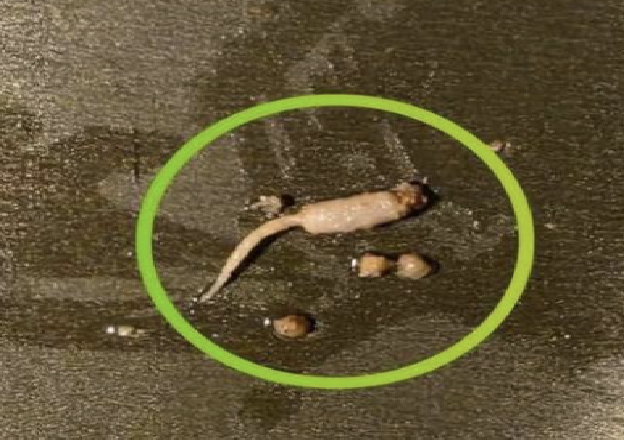
Such responses are understandable. When people encounter something unexpected in their meals, the immediate assumption is often that it could pose a health risk. Unfamiliar shapes, colors, or textures can easily trigger concern, particularly when viewed in a photograph without additional context.
However, closer examination suggests that the object may not be as alarming as it initially appears.
Experts note that many food ingredients can change dramatically during cooking. Heat can cause various tissues within meat to shrink, contract, and curl into unusual shapes that may resemble worms or other organisms. Connective tissues such as tendons, sinew, cartilage, and fatty membranes are especially prone to these transformations.
When exposed to high temperatures, these tissues lose moisture and tighten, sometimes twisting into thin, curved forms that can appear surprising to anyone unfamiliar with the process. While the resulting shape may look unsettling, it is often a completely natural part of the meat.
In the case of the viral image, the object does not appear to display characteristics commonly associated with living organisms. There are no obvious signs of movement, segmentation, or distinct anatomical features that would typically suggest a parasite. Instead, it resembles a narrow strip of tissue that likely changed shape during preparation and cooking.
Food safety specialists often encounter similar concerns when consumers discover unexpected structures in meat, poultry, or seafood. Natural variations within animal tissue can produce appearances that seem unusual but are entirely harmless. Without laboratory testing or a detailed examination, it is impossible to determine the exact nature of an object based solely on a photograph.
This situation highlights how easily images shared online can lead to assumptions before all the facts are known. Visual appearances alone can sometimes be misleading, especially when dealing with food that has undergone significant changes during cooking.
While it is always important to remain cautious about food safety, experts recommend evaluating unusual findings carefully before jumping to conclusions. If there is genuine concern about a food product, contacting the manufacturer or local health authorities is the most reliable way to obtain accurate information.
In many cases, what appears alarming at first turns out to be a normal part of the ingredient itself. Natural connective tissue, fat, or tendon can create unexpected shapes that look strange but pose no health risk.
The viral photo serves as a reminder that appearances can sometimes be deceiving. Although the object initially sparked fears of contamination, the most likely explanation is far less dramatic—a harmless piece of tissue altered by the cooking process into a shape that happened to resemble something much more concerning.