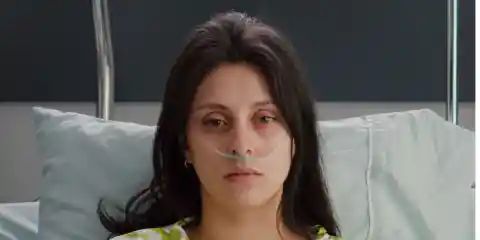
Six months had passed since the word leukemia entered our home and refused to leave.
Before that day, I had worried about normal things.
College applications.
Prom dresses.
Driving lessons.
Whether Carol spent too much time on her phone.
Then suddenly, my worries changed.
White blood cell counts.
Chemotherapy schedules.
Infections.
Fevers.
Whether my daughter would survive long enough to turn eighteen.
Carol was seventeen, and I was a single mother who had learned to smile through things no smile should have to cover.
I smiled when the nurses entered.
I smiled when relatives called.
I smiled when Carol looked frightened and asked whether everything would be all right.
Then I cried in bathrooms, parking garages, and empty elevators where she could not see me.
When Carol was younger, she used to cut pictures of dresses from magazines and tape them around her bedroom mirror.
Red dresses.
Blue dresses.
Dresses covered in sequins.
Dresses with long skirts that looked impossible to walk in.
“Mom, promise you’ll do my hair that night,” she used to say.
She had been saying it since fifth grade.
“What night?”
“My prom.”
“You are planning your prom seven years early?”
“Yes.”
She would grin at me through the mirror.
“And you have to do my hair.”
“I promise, baby. I’ll do your hair for every prom you ever have.”
Now her hair was gone.
The magazine pictures were still taped to her mirror at home, waiting for a girl who had not slept in her own room in weeks.
That afternoon, I sat beside Carol’s hospital bed and watched her doze.
The newest round of chemotherapy had weakened her more than the others.
Her cheekbones looked sharper.
Her hands seemed smaller.
Even the hospital blanket looked too heavy across her legs.
On the rolling tray beside her sat the leather journal I had bought her in February.
She wrote in it constantly.
Sometimes she filled several pages at once.
Other times, she wrote only a sentence before closing it.
She also wrote letters.
I had noticed them folded carefully in thirds and addressed in her looping handwriting to friends from school.
When I leaned over to adjust her pillow, Carol woke suddenly and slid the journal beneath the blanket.
“Sorry, sweetheart. I didn’t mean to startle you.”
“It’s okay.”
She gave me a tired smile.
“Just girl stuff.”
I nodded.
Teenagers needed privacy.
Even sick teenagers.
Perhaps especially sick ones.
Her phone buzzed on the table.
Daryl’s name appeared on the screen before she quickly turned it facedown.
Daryl had been her best friend since middle school.
He was the kind of boy who held doors open, remembered birthdays, and always called me Mrs. Linda even after I told him he could simply call me Linda.
“He’s checking on you again?”
“He’s just being Daryl.”
“He worries.”
“He worries too much.”
“So do I.”
“That’s different. You’re my mom.”
I squeezed her foot through the blanket.
“He’s a good friend.”
Her gaze moved toward the window.
Prom was four days away.
The school had already decorated the gym.
Carol’s dress was still hanging in her bedroom closet.
A pale blue gown with tiny silver beads along the neckline.
We had bought it two weeks before her diagnosis.
For months, I could not bring myself to return it.
“Mom?”
“Yes, baby?”
“Do you think I’ll get to go?”
The question cut through me.
I opened my mouth and reached automatically for hope.
Hope had become my job.
Doctors gave treatments.
Nurses gave medicine.
I gave hope.
“You are going to that prom one way or another.”
Carol watched me carefully.
“Really?”
“Really.”
It was a lie.
Not a cruel lie.
A mother’s lie.
The kind built from desperation and love.
Her eyes remained on mine for several seconds.
Something passed through them that I could not understand.
Then she reached for my hand.
That night, after she fell asleep, I noticed another folded letter tucked into the back of her journal.
I did not touch it.
Two days before prom, Carol woke with a fever.
At first, she insisted it was nothing.
Then she tried to stand and nearly collapsed.
I drove her to the hospital with shaking hands while she rested her cheek against the cool passenger window.
She barely spoke.
She did not need to.
I knew she was frightened.
I was too.
She was admitted for the night.
Then the next.
Then the doctor said she would need to remain indefinitely.
The morning before prom, Carol stared at the ceiling and whispered, “I’m not going to make it, am I?”
I sat beside her and smoothed my hand over the soft scarf covering her head.
“You are going to make it to plenty of proms.”
“Mom.”
“This is only a delay.”
She turned her face toward the wall.
I knew she did not believe me.
I was no longer certain I believed myself.
The following evening, I was rinsing Carol’s plastic water cup at the small sink in her room when Nurse Jenny appeared in the doorway.
There was something unusual in her expression.
Not fear.
Not sadness.
Almost excitement.
“Linda, could you step into the hallway for a moment?”
My body tensed.
“Is something wrong?”
“No. Nothing bad.”
I followed her anyway, expecting paperwork, a discussion with the doctor, or another piece of news I would have to absorb before walking back into Carol’s room with a smile.
Then I stepped into the hallway and froze.
It was filled with teenagers.
Boys wore rented suits with crooked ties.
Girls stood in long dresses with sneakers visible beneath the hems.
Some carried pizza boxes.
Others held foil trays, plastic cups, and balloons in pale pink and silver.
Megan, one of Carol’s closest friends, clutched a pitcher of lemonade to her chest as though it were precious.
Daryl stood near the front of the group with a small speaker hanging from his wrist.
For several seconds, I could not speak.
Megan stepped forward.
“Mrs. Linda, we talked to Dr. Patel and the nurses. They said it was okay.”
“Okay for what?”
“We brought prom to Carol.”
My hand flew to my mouth.
“You did all this?”
Daryl nodded.
“We’ve been planning it for weeks.”
I tried to thank them.
Instead, my voice cracked.
Nurse Jenny squeezed my shoulder.
“Go on,” she whispered. “She has no idea.”
The teenagers crowded quietly around Carol’s door.
Someone counted to three.
Then they entered.
Carol looked up.
When she saw them in their dresses and suits, she made a sound I will never forget.
Half laugh.
Half sob.
Pure disbelief.
“You guys.”
Megan climbed carefully onto the edge of the bed and helped Carol pull a sparkly blue top over her hospital gown.
Another girl placed a small silver crown over Carol’s scarf.
Someone dimmed the lights.
The balloons floated near the ceiling.
Daryl pressed play on the speaker.
The room filled with Carol’s favorite song.
It was the one she had sung badly in the car every morning before her diagnosis.
Carol laughed.
Really laughed.
Her eyes closed.
Her head tilted back.
For one glorious moment, she looked like the girl she had been before leukemia.
They ate cold pizza.
They drank lemonade from plastic cups.
They took photographs in front of a sheet the nurses had hung on the wall.
Someone gave Carol a paper sash that read PROM QUEEN.
When she took a bite of pizza, she made a face.
“The cheese is freezing.”
Everyone laughed.
“Hospital prom has a limited catering budget,” Daryl said.
I stood near the doorway watching my daughter smile.
I had spent six months measuring progress through medical results.
That night, I measured it in laughter.
I stepped into the hallway because I did not want to intrude.
The moment I was out of sight, I pressed both hands to my face and began crying.
Not from sadness.
Not entirely.
From whatever the opposite of sadness is when it hurts just as much.
A few minutes later, I heard footsteps.
Daryl stepped into the hallway.
His tie was loose.
His hands were tucked inside his pockets.
He no longer looked like a seventeen-year-old boy.
He looked older.
Burdened.
“Mrs. Linda?”
I opened my arms.
“Daryl, I cannot even tell you what this means to us.”
He stepped back.
Only half a step.
But enough that my arms fell to my sides.
“Ma’am, do you know why we’re really here?”
I blinked.
The laughter from Carol’s room floated through the doorway.
“To give her prom.”
Daryl reached into his jacket and removed a thick white envelope.
His hand trembled.
“No, ma’am.”
He held it toward me.
“This is the real reason.”
I stared at it.
“What is that?”
“Carol gave it to me last week. She told me to give it to you tonight before the final song.”
My stomach tightened.
“Why?”
“She said you would need to know by then.”
I did not take it.
“Daryl, what is in that envelope?”
“Please, Mrs. Linda. Just open it.”
I reached for it with numb fingers.
Inside were several folded pages.
Some were handwritten.
Others had been printed.
I immediately recognized the pages torn from Carol’s journal.
There was a letter for Daryl.
One for Megan.
And one with my name written across the front.
Mom.
I opened mine first.
Dear Mom,
My last scans did not show what I told you they showed.
My eyes stopped.
I looked at Daryl.
“What does this mean?”
He said nothing.
I forced myself to continue.
Three weeks ago, while I was waiting outside the consultation room, I heard Dr. Patel talking to another doctor about my scans. They said the treatment was not working the way they had hoped.
I confronted her the next morning.
She told me the truth.
My knees weakened.
I leaned against the wall.
The letter shook in my hands.
I asked her not to tell you right away. I needed time to think. I knew you would ask questions, so I told you the numbers were improving.
I’m sorry.
I kept reading even though every word felt like it was tearing something open inside me.
I did not want you to spend every good day crying.
You gave up your job hours, your sleep, your savings, and almost everything else for me.
I wanted to give you a few days where hope still existed.
Please do not be angry with Dr. Patel.
She did not want to keep this from you.
I begged her.
“She knew?” I whispered.
Daryl nodded.
“She knew Carol had heard.”
“And you knew?”
His eyes filled with tears.
“Megan and I knew. A few of the others too.”
I pressed the letter against my chest.
“How long?”
“About a week.”
My breath came too quickly.
“This prom is not an early prom, is it?”
Daryl looked down at his rented shoes.
“No, ma’am.”
His voice cracked.
“It may be the only one.”
A sound came from my throat that I did not recognize.
I covered my mouth, but I could not contain it.
“How could she hide this from me?”
A nurse at the station looked up, then gently turned away.
Daryl did not move.
“I am her mother.”
“I know.”
“I should have been the first person she told.”
“I know, ma’am.”
“Why tonight?”
He finally looked at me.
“Because she wanted you to know while she was still laughing.”
The words stopped me.
“She did not want you to find out after this night was over. She wanted you inside with her. Not pretending. Knowing.”
A girl opened Carol’s door and looked out.
Daryl gave her a small nod.
She closed it again.
I unfolded the rest of Carol’s letter.
Tonight, I want to dance.
I want to hear my favorite song.
I want to eat bad pizza with my friends.
I want you to see me happy.
And when you come back into the room, I want us to stop pretending.
I do not want the rest of our time to be filled with brave little lies.
I want us to be honest.
Even when honesty hurts.
I folded the pages carefully.
My hands were shaking so badly that I nearly tore them.
Daryl watched me.
“She thought she was protecting me.”
“She loves you.”
I wiped my face.
“That is not the same thing.”
“No.”
He nodded.
“But I think she knows that now.”
I stood outside the door for several more seconds.
Part of me wanted to collapse.
Part of me wanted to call the doctor and demand answers.
Part of me wanted to be angry with everyone.
But beyond the door, my daughter was laughing.
She was alive.
She was waiting.
I straightened my shirt.
Smoothed my hair.
Then I opened the door.
The music was still playing.
Carol looked up.
Her smile vanished when she saw the envelope.
The room became quiet.
“You read it,” she whispered.
I sat on the edge of her bed.
“Yes.”
Her eyes filled immediately.
“Mama, I’m sorry.”
I took her hand.
It felt frighteningly small inside mine.
“I did not want you to spend the good days crying,” she said. “You have been trying so hard to keep me hopeful.”
“I am your mother.”
“I know.”
“You do not have to protect me from your pain.”
“I could not watch you break.”
My tears spilled before I could stop them.
“Carol, I will break whether you tell me or not. The difference is whether we break together or alone.”
She began crying.
“I was scared.”
“So was I.”
“I still am.”
“So am I.”
She leaned into me.
I wrapped my arms around her and felt every bone beneath the hospital gown.
“We do not hide things anymore,” I whispered.
“No more fake optimism. No more protecting each other with lies. Whatever happens next, we face it together.”
She nodded against my shoulder.
“Deal.”
“Say it.”
“Deal.”
Her friends stood silently along the walls.
Some were crying.
Others stared at the floor.
I looked around at them.
“Why are you all standing there?”
No one answered.
I wiped my face.
“Do not even think about leaving. My daughter is at her prom.”
A few nervous smiles appeared.
I stood and held out my hand.
“Carol, may I have this dance?”
She looked at me through tears.
“My mother is asking me to dance at prom?”
“Yes.”
“That is deeply embarrassing.”
“I gave birth to you. I have earned the right.”
She laughed.
That laugh saved me.
I helped her stand.
Nurse Jenny adjusted the IV line while Daryl changed the song.
Carol placed one hand on my shoulder.
I held her carefully around the waist.
We swayed in the center of that small hospital room while her friends clapped softly.
She rested her head against me.
“Mom?”
“Yes?”
“You did my hair.”
I touched the silver scarf wrapped around her head.
“I promised.”
“It counts?”
“It absolutely counts.”
Halfway through the song, Daryl stepped forward.
Carol smiled at me.
“You have to let me dance with someone my own age.”
“I suppose.”
I transferred her hand into his.
Daryl moved slowly, careful not to disturb the IV line.
Carol smiled up at him.
He whispered something that made her laugh again.
I stood beside Dr. Patel, who had entered quietly during the song.
For several seconds, I could not look at her.
“I am sorry,” she said.
I nodded.
“I am angry.”
“I understand.”
“But I know my daughter can be persuasive.”
A sad smile touched her face.
“She is formidable.”
“What happens now?”
Dr. Patel looked toward Carol.
“We keep treating her. We keep watching. We use every option we have.”
“And the truth?”
“I will give you all of it.”
“Even when it is bad?”
“Especially then.”
The prom lasted less than two hours.
To everyone else, it might have looked small.
Plastic cups.
Hospital lighting.
Cold pizza.
Music from a portable speaker.
But to us, it was enormous.
It was the night Carol wore a crown over her scarf.
The night she danced with Daryl beside an IV pole decorated with silver ribbons.
The night her friends refused to let leukemia take every milestone from her.
It was also the night we stopped pretending.
After everyone left, Carol was exhausted.
I removed the silver crown and placed it on the tray.
She looked at me.
“Are you mad?”
“Yes.”
She swallowed.
“Very?”
“Very.”
Her eyes dropped.
“But I love you more than I am angry.”
She looked back up.
“And I understand why you did it.”
“I thought hope was helping you.”
“Sometimes it did.”
“Sometimes?”
“Sometimes it made me feel like I was disappointing you when I was scared.”
The sentence broke my heart.
“You could never disappoint me by being afraid.”
“I did not know how to say that I was tired.”
“You can say it now.”
“I’m tired, Mom.”
I climbed carefully onto the bed beside her.
“I know.”
“I do not want to die.”
“I know.”
“Do you think I will?”
There was a time when I would have answered immediately.
No.
Of course not.
You are going to be fine.
But we had promised.
No more brave little lies.
“I do not know,” I whispered.
She began to cry.
“So what do we do?”
“We love each other today.”
“And tomorrow?”
“We do it again.”
She rested her head against my shoulder.
Four weeks later, Dr. Patel sat beside us and explained that Carol’s numbers had stabilized.
It was not a cure.
Not a miracle.
Not the turnaround we had once prayed for.
But the disease had stopped advancing for the moment.
A plateau.
More time.
That was the gift.
Carol returned home for several weeks.
Her friends visited constantly.
Daryl brought homework she did not complete and snacks she could barely taste.
Megan printed the prom photographs and arranged them inside a blue album.
On the front, she wrote:
THE NIGHT WE BROUGHT THE DANCE FLOOR TO CAROL.
Carol eventually showed me the rest of the letters from her journal.
Some were goodbyes.
Some were apologies.
Others were simply memories she did not want people to forget.
We did not destroy them.
We placed them inside a box.
She told me she would decide when they should be delivered.
Not yet.
That mattered.
Months later, we returned to the hospital for another treatment cycle.
The future remained uncertain.
It still does.
But uncertainty no longer lives between us like a secret.
When Carol is frightened, she tells me.
When I need to cry, I no longer hide in the bathroom.
We still hope.
But hope is different now.
It is not pretending everything will be fine.
It is choosing to love the life still in front of us, even when we do not know how long it will last.
The night Carol’s friends brought prom to her hospital room was not the night we gave up.
It was the night we became honest enough to truly begin living.
I had spent months believing my job was to protect my daughter from fear.
Carol believed her job was to protect me from grief.
We were both wrong.
Love was never supposed to make either of us carry the truth alone.
Sometimes the most loving words are not, “Everything will be okay.”
Sometimes they are, “I am scared too, but I am staying.”
And that is what I tell Carol now.
Every day.
For as long as we are given.
I am here.
I know the truth.
And I am not going anywhere.