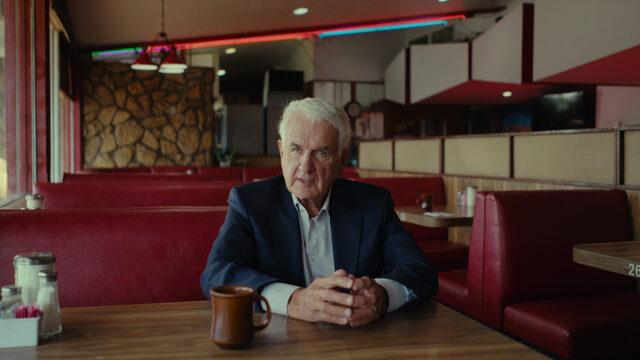
“My name is Arthur Bennett, and I am your grandfather.”
I read the line three times.
My grandfather had died before I was born.
At least, that’s what my mother had always told me.
My hands trembled as I continued.
Arthur explained that forty-three years earlier, he and my grandmother had been involved in a terrible car accident.
My grandmother survived.
Their six-year-old son—my future father—did not.
The loss destroyed their marriage.
Unable to cope with the grief, Arthur left.
Not because he didn’t care.
Because he couldn’t bear waking up every morning to the reminder of what they had lost.
Years later, he learned something that changed everything.
The little boy buried in that cemetery wasn’t his son.
A hospital mix-up had switched medical records after the accident.
The child who died belonged to another family.
His son had survived.
But by the time the truth surfaced, legal confusion, adoptions, and years of misinformation had scattered everyone involved.
Arthur spent decades searching.
Eventually, he found his son.
My father.
But by then, my father was an adult with a family of his own.
And he wanted nothing to do with the man who had disappeared from his childhood.
Arthur respected his wishes.
Just as he later respected my mother’s wishes when she refused contact.
Yet he couldn’t completely let go.
That was why he came to the diner every Friday.
The second meal wasn’t for an imaginary friend.
It was for the son he hoped would one day walk through the door.
Every week.
For nearly five years.
Two meals.
Two coffees.
One empty chair.
One impossible hope.
By the time I reached the end of the letter, tears blurred the page.
Then I found something else inside the envelope.
A photograph.
The edges were worn from being handled countless times.
It showed a young Arthur standing beside a little boy holding a toy airplane.
On the back was a handwritten note.
“The happiest day of my life.”
Beneath the photograph was a small brass key.
A note accompanied it.
“If you’re willing, please open locker 214 at Union Station.”
The next morning, I drove there.
The station was old and mostly forgotten.
It took several minutes to locate locker 214.
My heart pounded as I inserted the key.
The door clicked open.
Inside sat a single cardboard box.
I lifted the lid.
And immediately began crying.
The box was filled with birthday presents.
Dozens of them.
Every year was labeled.
Age 1.
Age 2.
Age 3.
All the way to Age 29—my current age.
There were books.
Handwritten cards.
Tiny souvenirs from places Arthur had traveled.
Photographs.
Letters.
Memories.
A lifetime of gifts he had bought for a granddaughter he never expected to meet.
At the bottom of the box was one final envelope.
This one contained a letter written only weeks earlier.
“If you’re reading this, then I finally found the courage to tell you the truth.”
The letter explained that Arthur had been diagnosed with terminal heart failure six months before.
The doctors had given him little time.
He knew he would probably never see another Christmas.
That was why he had approached me in the diner.
Not because he needed forgiveness.
Not because he wanted sympathy.
Because he wanted someone in the family to know he never stopped loving them.
Even when they hated him.
Even when they forgot him.
Even when he sat alone every Friday talking to an empty chair.
I returned to the diner the following Friday.
For the first time, Arthur wasn’t there.
His usual booth stood empty.
The waitress recognized me immediately.
Without saying a word, she placed two menus on the table.
Then she walked away.
I sat there for a long time staring at the empty chair across from me.
Eventually, I ordered two meals.
One for me.
And one for the grandfather who had spent years waiting for a family that never came.
As I sat there, I realized something.
Arthur’s story wasn’t really about regret.
It wasn’t about mistakes.
And it wasn’t about lost time.
It was about hope.
The kind of hope that survives heartbreak.
The kind that keeps showing up every Friday.
The kind that refuses to die, even when everything else does.
Before leaving, I placed a photograph of Arthur on the table.
Then I tucked one of his old birthday cards into my purse.
For twenty-nine years, I had lived without knowing my grandfather.
Now, somehow, he felt closer than ever.
And every Friday since then, I’ve returned to that diner.
I sit at the same booth.
I order two coffees.
And I leave a generous tip.
Because some traditions aren’t meant to end.
They’re meant to be carried on. ❤️