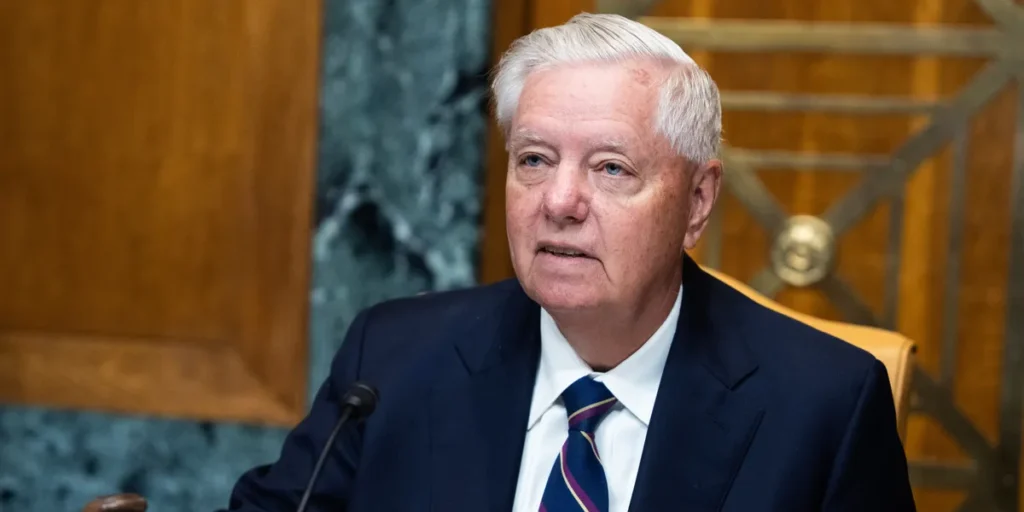
Emergency dispatch recordings reported by multiple news organizations captured the response at Graham’s Capitol Hill residence.
First responders were sent to the property shortly after 8 p.m. for a reported cardiac emergency. When they arrived, crews initially encountered difficulty entering the home. Approximately 20 to 25 minutes after the first dispatch, radio traffic indicated that CPR was underway.
The recordings do not identify the patient by name, and they reveal little about the treatment provided inside the residence. However, they document the urgency of the response before Graham’s office publicly announced his death the following morning.
Graham’s office said he had died following a “brief and sudden illness” and asked the public to respect his family’s privacy.
The senator had celebrated his 71st birthday on July 9, just two days before his death.
What Was the Preliminary Cause of Death?
Initial findings from the District of Columbia medical examiner indicated that Graham suffered an aortic dissection caused by arteriosclerotic cardiovascular disease.
An aortic dissection occurs when a tear develops inside the wall of the aorta, the major artery carrying blood away from the heart. It can become life-threatening with very little warning.
The findings remain preliminary. Graham’s official death certificate is pending while toxicology and microscopic testing are completed. Authorities have released no evidence suggesting criminal activity or foul play.
That distinction matters. Sudden deaths involving powerful public figures often attract speculation, particularly when they occur after politically sensitive travel. But responsible reporting requires separating confirmed evidence from theories that have not been supported.
His Final Mission Took Him to Ukraine
Just one day before his death, Graham was in Kyiv meeting Ukrainian President Volodymyr Zelenskyy.
Graham and a bipartisan group of senators announced that they had reached an agreement with the Trump administration to advance updated sanctions targeting countries purchasing Russian oil and natural gas.
The proposal was designed to increase economic pressure on Moscow and strengthen President Donald Trump’s negotiating position as the war in Ukraine continued.
Graham described the agreement as a major breakthrough after months of negotiations. It was his tenth reported visit to Kyiv since Russia’s full-scale invasion began in 2022.
Whatever one thought of Graham’s policies, his final public actions reflected the issue that had defined much of his career: the belief that the United States should remain deeply engaged in global security.
Trump and Other Leaders Respond
President Trump publicly mourned Graham and later described him as a courageous political ally with sharp instincts and a deep commitment to the country.
Their friendship had not always appeared likely. Graham challenged Trump for the Republican presidential nomination in 2016 and became one of his harshest critics during that campaign. After the election, however, the two developed a close political relationship, with Graham becoming one of Trump’s most dependable Senate allies.
South Carolina Governor Henry McMaster remembered Graham as a determined fighter for both his state and the nation. Ukrainian officials also honored his sustained support for their country.
The tributes reflected Graham’s unusual position in Washington. He was a fierce partisan during major political battles, yet he also maintained long relationships with lawmakers who strongly disagreed with him.
Who Will Hold His Senate Seat?
Graham’s death initially left South Carolina without one of its two senators and tightened the Republican Party’s working margin in the Senate.
On July 14, Governor McMaster appointed Graham’s younger sister, Darline Graham Nordone, to serve temporarily in the seat until January.
The appointment carries a deeply personal meaning. After their parents died while Graham was a young adult, he became his teenage sister’s legal guardian. He later adopted her while serving in the Air Force so she could receive military benefits.
A special Republican primary is expected to determine who will advance to the November general election and compete to hold the seat longer term.
A Career Built From Small-Town Beginnings
Graham grew up in Central, South Carolina, where his parents operated a restaurant and pool hall. He became the first member of his family to attend college, earning undergraduate and law degrees from the University of South Carolina.
Before entering national politics, he served as an Air Force attorney. His active-duty and reserve military career lasted more than three decades, ending with his retirement as a colonel in 2015.
Graham entered the U.S. House of Representatives in 1995 and won election to the Senate in 2002. Over the following years, he became a major voice on defense, foreign policy, judicial nominations and government spending.
He was praised by supporters as fearless and condemned by opponents as overly aggressive. Yet even many critics acknowledged his willingness to confront difficult issues directly.
His death came without a long public farewell. One day he was speaking in Kyiv about sanctions and diplomacy. The next evening, emergency crews were fighting to save him inside his home.
That sudden ending is a reminder that public power does not shield anyone from human fragility—and that behind every political headline is a family confronting a private loss.