
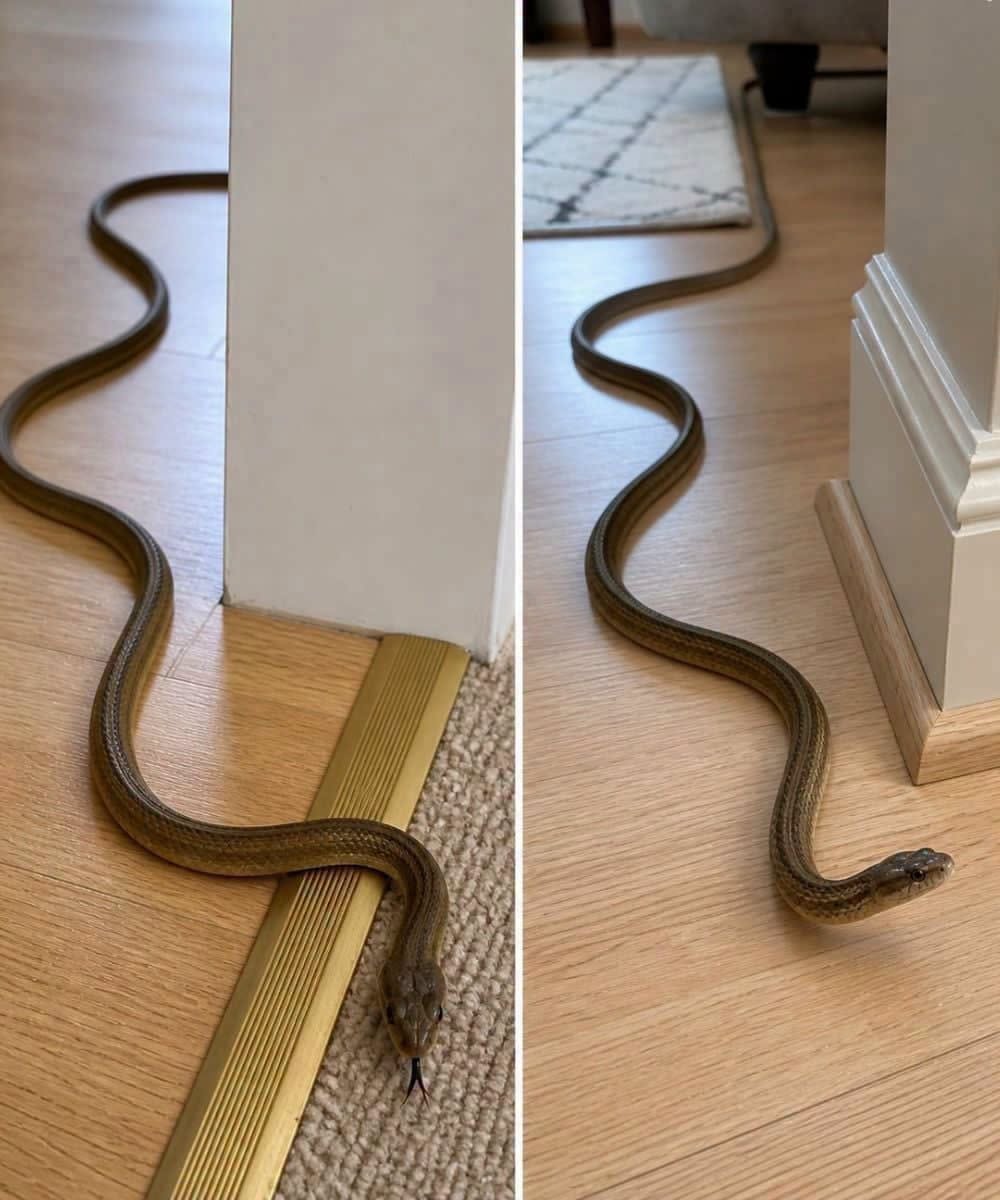
Like many wild animals, snakes are searching for basic necessities:
- Shelter
- Food
- Water
- Protection from extreme weather
Small gaps beneath doors, cracks in foundations, openings around utility pipes, crawl spaces, garages, and damaged vents can all provide access.
Once inside, basements, storage rooms, laundry areas, garages, and cluttered spaces offer cool, quiet places where a snake can remain hidden.
Food Is Often the Biggest Attraction
In many cases, the snake isn’t interested in the house itself.
It’s interested in what’s already living there.
Rodents, insects, and other small animals attract snakes because they provide an easy food source.
If mice, rats, or similar pests have found their way into or around a property, snakes may simply be following them.
Weather Can Also Play a Role
Snakes rely on their environment to regulate body temperature.
During hot weather, they may seek cooler shelter.
During colder periods, they may look for warmer, protected spaces.
Homes can unintentionally provide both.
What To Do If You Find a Snake Indoors
If you discover a snake inside your home:
- Stay calm.
- Keep children and pets away from the area.
- Do not try to catch, corner, or handle the snake.
- If possible, close the door to the room to limit its movement.
- Contact local animal control, wildlife removal professionals, or another qualified authority for assistance.
Many snakes are harmless, but it can be difficult to identify species accurately from a distance. For that reason, experts recommend treating any unknown snake with caution.
If someone is bitten by a snake, seek immediate medical attention. Do not rely on home remedies or attempt to capture the snake if doing so would put anyone at risk.
Reducing the Chances of Future Encounters
After the snake has been safely removed, consider inspecting your property for possible entry points.
Helpful preventive measures include:
- Sealing cracks and gaps around the home’s exterior
- Repairing damaged door sweeps and window screens
- Trimming vegetation close to the house
- Removing wood piles and outdoor debris
- Reducing rodent activity around the property
- Keeping storage areas clean and organized
These steps can help make a home less attractive to snakes and other wildlife.
The Bottom Line
Most snakes would rather avoid people than encounter them.
When one enters a home, it is usually responding to food, shelter, or weather conditions—not seeking confrontation.
Understanding why snakes enter homes can help homeowners respond calmly, protect their families, and take practical steps to reduce the likelihood of future visits.
Awareness—not panic—is usually the best first response.