
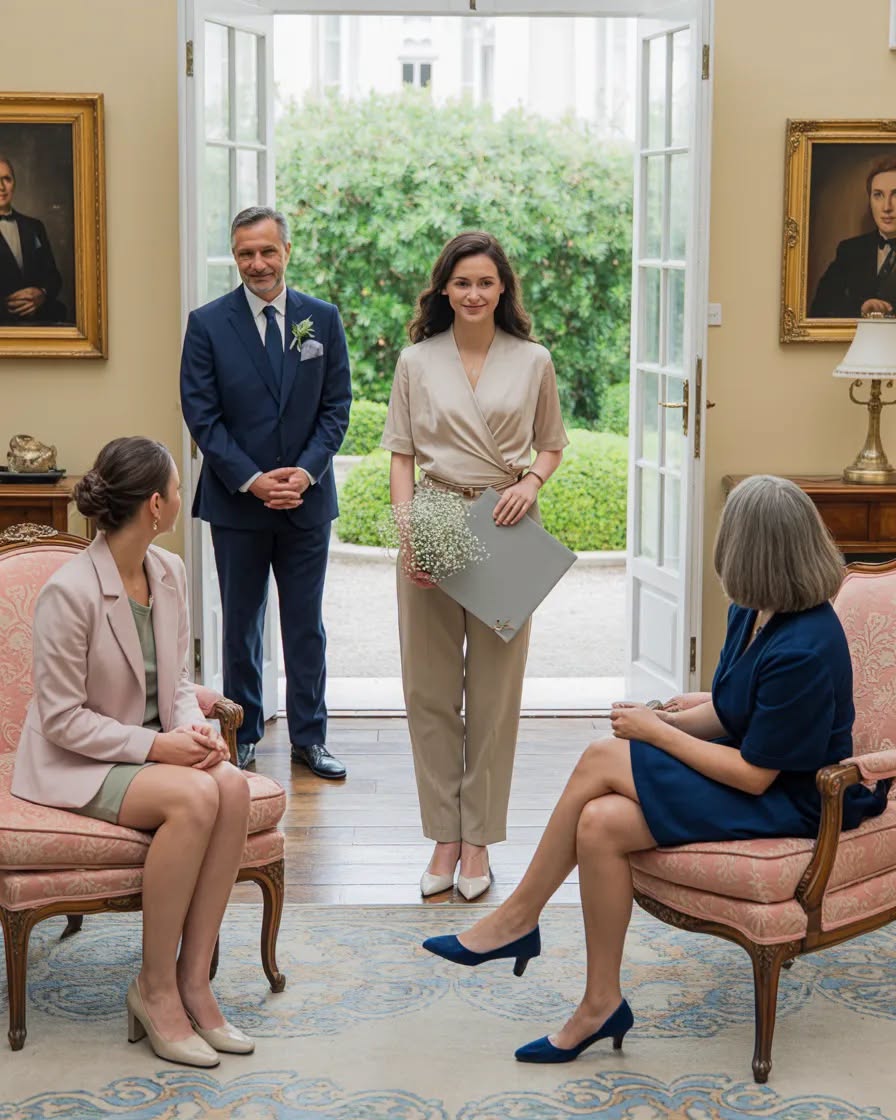
My mother, Veronica, had long believed that family reputation mattered more than personal happiness. She often questioned Ethan because he had chosen a career as a high school counselor rather than one associated with wealth or social status.
Hoping to preserve peace, I allowed her to oversee several wedding arrangements.
Looking back, that decision came from trust.
It also came from the desire to avoid conflict within my family.
A month before the wedding, I learned that our venue and several vendors had been canceled.
At first, I assumed there had been a misunderstanding.
There had not.
When I confronted my mother, she admitted she had canceled the arrangements without my permission because she believed the marriage should not take place.
The disappointment ran deeper than the loss of a wedding.
It was the realization that someone I trusted had made life-changing decisions on my behalf without respecting my judgment.
As Ethan and I worked to understand what had happened, questions arose about how deposits had been paid and where certain funds had originated.
With the guidance of our family attorney, I began reviewing financial records that I had never previously examined.
What we discovered was deeply painful.
A trust established by my grandfather had been managed in ways I had not understood. The records suggested that money intended for my future had been used for purposes that extended far beyond its original purpose.
The findings required careful legal review.
The situation was no longer simply a family disagreement.
It involved questions of fiduciary responsibility, financial stewardship, and possible misconduct.
Proceeding through legal channels was one of the hardest decisions I have ever made.
No one hopes to stand across a courtroom from members of their own family.
Yet there are times when avoiding the truth causes greater harm than facing it honestly.
The legal process examined the records, heard testimony, and evaluated the evidence according to established procedures.
Where wrongdoing was found, appropriate remedies and legal consequences followed.
Those outcomes did not erase the sadness of what had happened.
Justice can address financial loss.
It cannot fully repair broken trust.
During that season, Ethan became a steady source of encouragement.
He reminded me that marriage begins not with a perfect family history but with a shared commitment to honesty, patience, and mutual support.
Together, we planned a smaller wedding than we had originally imagined.
In many ways, it became more meaningful because it was built upon sincerity rather than appearances.
The people who gathered around us came not because of family expectations but because they genuinely wished us well.
That made all the difference.
In time, I also began thinking differently about the trust my grandfather had left behind.
It represented more than financial security.
It reflected his desire to provide wisely for future generations.
Honoring that gift meant using it responsibly rather than allowing it to become another source of conflict.
Eventually, I opened a small bridal design studio—a dream I had quietly carried for years.
The business was not built to prove anything to those who had wronged me.
It was built as a way of creating beauty, serving others, and beginning a new chapter with integrity.
Looking back, I no longer measure that season by the legal victory.
I remember it as the period when I learned that love cannot flourish where control replaces trust, and that healthy boundaries sometimes require difficult decisions.
Choosing truth came at a cost.
Yet it also made something new possible.
A marriage founded on honesty.
A future guided by responsible stewardship.
And a life no longer shaped by fear of disappointing people who valued appearances more than faithfulness.
Sometimes the greatest inheritance is not the money that is preserved.
It is the wisdom to build the next chapter upon truth.