
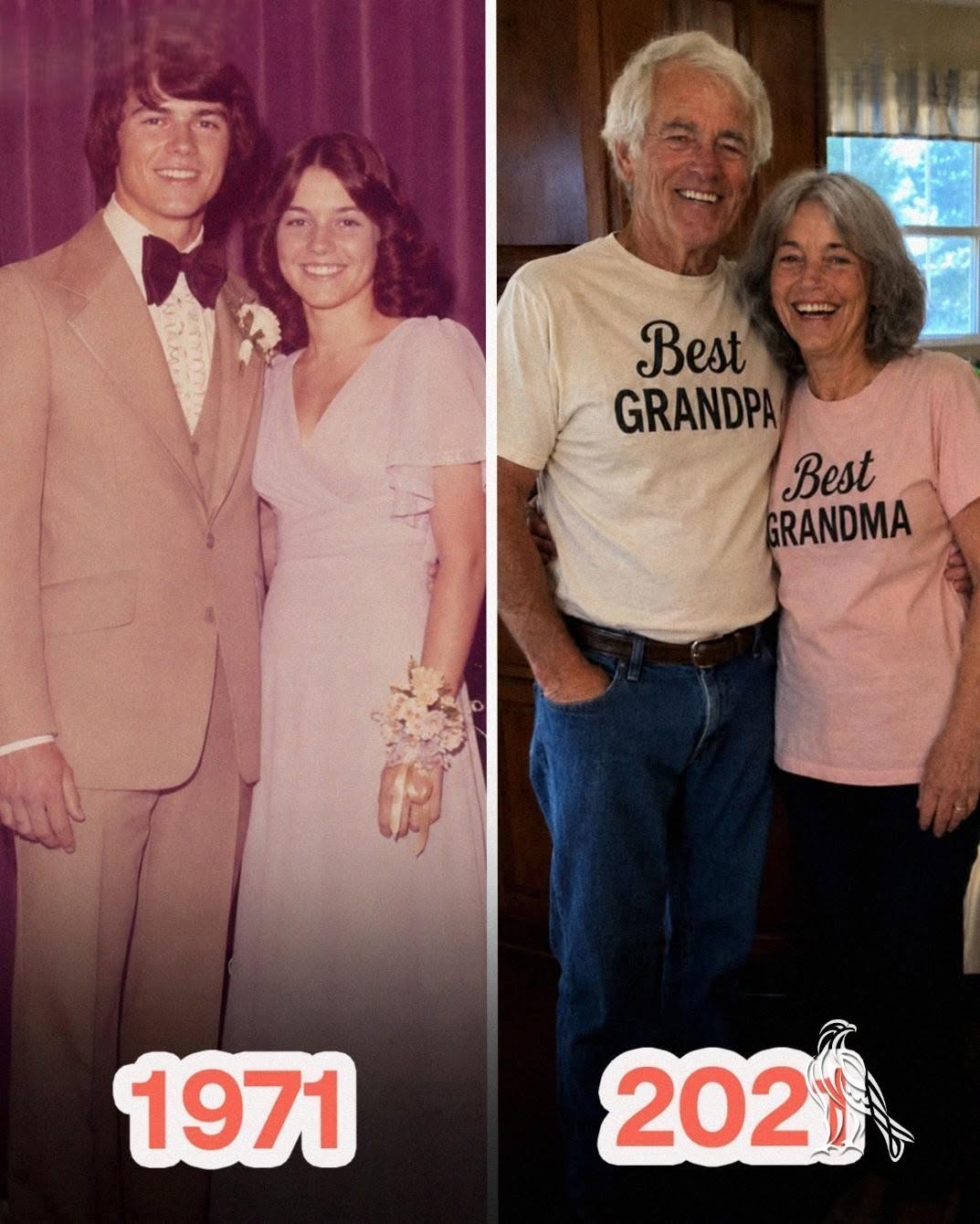
Long marriages are rarely as simple as they appear from the outside.
They contain seasons of closeness and distance.
Moments of tenderness and moments of disappointment.
Shared victories and private wounds.
Over many years, people come to know not only one another’s strengths but also their limitations.
She knew Walter’s limitations well.
There were ways he had failed her.
Conversations that never happened.
Needs that were never fully understood.
Loneliness that existed even within a shared home.
Time had taught her to carry many responsibilities on her own.
That history could not be erased by a note or a bank card.
Nor should it be.
An Unexpected Discovery
At the bank, she learned that the card was connected to an account she had never known existed.
The savings had accumulated gradually over many years.
Quietly.
Consistently.
The discovery raised questions.
Why had he never mentioned it?
Why had he chosen secrecy?
What had he been thinking all those years?
Some answers would remain unknown.
Death often leaves unfinished conversations behind.
Not every question receives closure.
Not every mystery is solved.
What Money Can and Cannot Do
The account offered security.
That mattered.
Practical concerns are real concerns.
Housing.
Healthcare.
Daily expenses.
Financial stability can ease burdens that often grow heavier later in life.
Yet money has limits.
It cannot rewrite history.
It cannot heal every wound.
It cannot restore years that have already passed.
One of the mistakes people sometimes make is assuming that provision and love are identical.
They are related.
But they are not the same.
A person can provide materially while neglecting emotional needs.
A person can care deeply and still fail in important ways.
Human beings are often more complicated than either praise or criticism allows.
Looking at a Life Honestly
The discovery forced her to reconsider Walter.
Not to idealize him.
Not to condemn him.
Simply to see him more fully.
The account suggested that while he had failed in some responsibilities, he had remained concerned about her future.
Perhaps he lacked the language to express that concern directly.
Perhaps he believed practical preparation was itself an expression of care.
Perhaps he simply did not know another way.
Whatever the reason, the account revealed something that had remained hidden.
Not perfection.
Concern.
Not redemption from every mistake.
Responsibility in at least one area where he understood what was at stake.
The Limits of Judgment
One of the challenges of reflecting on another person’s life is resisting simple conclusions.
People are rarely entirely one thing.
A difficult spouse may also be a devoted provider.
A caring person may still leave deep wounds.
A generous act may exist alongside significant failures.
The desire to sort people neatly into categories often prevents us from seeing them clearly.
Maturity allows room for complexity.
It acknowledges harm without denying goodness.
It recognizes goodness without excusing harm.
Both truths can exist together.
What the Account Really Revealed
In the end, the account represented more than money.
It represented foresight.
A quiet attempt to prepare for a future he knew he would not be present to manage.
The gesture did not erase loneliness.
It did not transform the marriage into something it had never been.
Yet it offered one final piece of the story.
A reminder that even imperfect people sometimes express care in imperfect ways.
Walking Forward
Standing outside the bank, she found herself facing a different question than the one she expected.
The question was no longer what Walter had left behind.
The question was what she would do with what remained.
The future still belonged to her.
The years ahead still required courage, wisdom, and hope.
Whatever meaning the account carried, it ultimately pointed forward rather than backward.
What Endures
Some discoveries arrive too late to repair a relationship.
Yet they can still deepen understanding.
The account did not change the facts of her marriage.
It changed the way she held them.
She no longer saw only the disappointments.
Nor did she ignore them.
Instead, she carried a more complete picture of a man who had loved imperfectly, failed imperfectly, and tried, in his own limited way, to prepare for her life after his own.
Perhaps that is one of the quieter truths about human relationships:
People are often more flawed than we hoped, and more caring than we realized.
Wisdom lies in seeing both clearly.
And then choosing to walk forward with gratitude for what was given, honesty about what was missing, and hope for what still remains.