
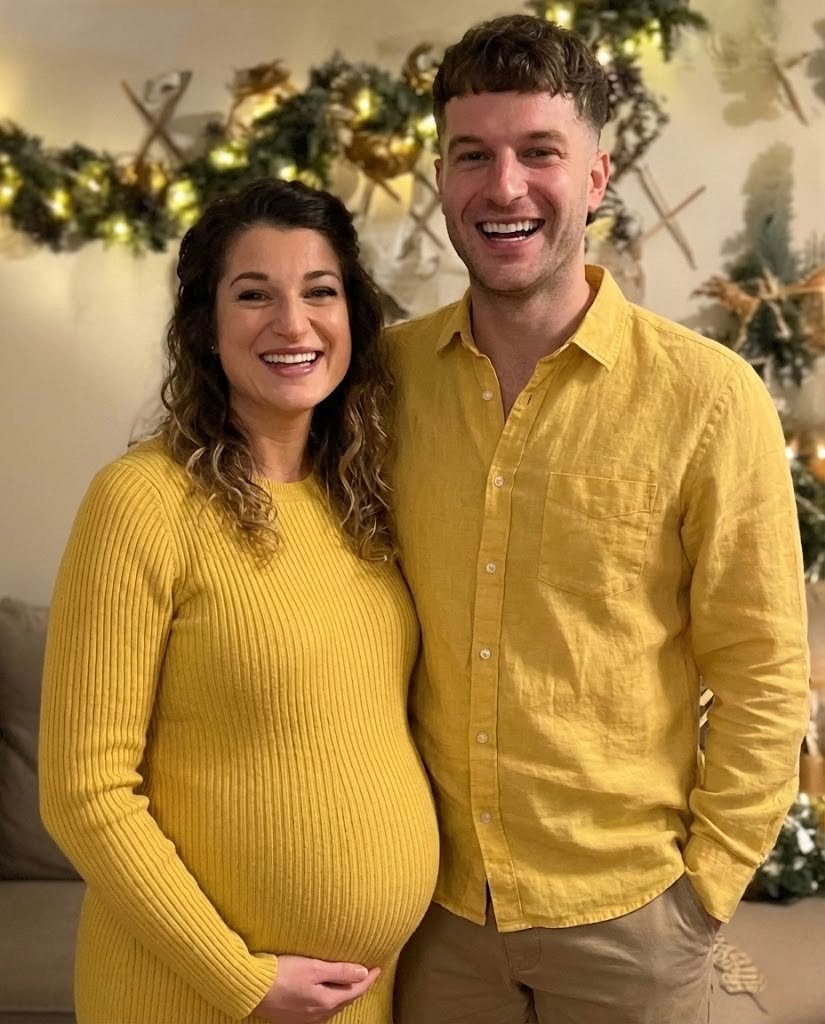
As the pregnancy progressed, something in my husband began to change.
At first, I explained it away.
Stress.
Anxiety.
The pressure of impending parenthood.
Many people struggle when facing major life transitions, and I wanted to respond with understanding rather than suspicion.
Yet distance slowly entered places where closeness had once existed.
Conversations became shorter.
Presence became less reliable.
An uneasiness settled into the spaces between us.
Then one night, it finally emerged in words.
He asked for a DNA test.
The Weight of Distrust
The request itself was painful.
Not because of what it implied biologically.
Because of what it revealed relationally.
Trust is one of the quiet foundations of a marriage.
Most days, people do not think about it because it operates beneath the surface.
When trust is questioned, however, the foundation suddenly becomes visible.
The request forced both of us to confront something deeper than a laboratory result.
Fear had entered our relationship.
And fear, left unexamined, often causes people to wound those they love most.
Choosing Space
In the days that followed, I realized I needed room to think clearly.
Not out of anger.
Not to punish.
But because important decisions are rarely made wisely in the middle of emotional turmoil.
Distance sometimes allows people to hear truths they would otherwise avoid.
For me, that truth was simple:
A healthy future would require more than an apology.
It would require honesty about how we arrived at this moment in the first place.
For him, it meant facing the consequences of allowing outside voices and private fears to outweigh the trust we had spent years building.
A New Beginning
A few weeks later, our daughter was born.
Holding her for the first time changed everything and changed nothing.
The pain between us did not disappear.
The questions did not vanish.
Yet her arrival brought clarity.
A child deserves parents who are willing to grow, repent, and become better versions of themselves.
The responsibility was larger than either of our wounded feelings.
It required maturity from both of us.
The Difference Between Regret and Change
When my husband returned, he did not arrive with dramatic speeches.
He came with humility.
There is an important distinction between feeling sorry and accepting responsibility.
One focuses on emotion.
The other focuses on action.
Over time, he began doing the difficult work that genuine reconciliation requires.
Listening.
Admitting mistakes.
Accepting consequences without defensiveness.
Participating in counseling.
Showing consistency when consistency was most needed.
Trust rarely returns because someone asks for it.
It returns because someone becomes trustworthy again.
Rebuilding What Was Damaged
Many people imagine forgiveness as a single decision.
Often it is a process.
A series of choices made repeatedly over time.
Some days were easier than others.
Some conversations reopened old wounds.
Some doubts took longer to quiet than either of us expected.
Yet healing gradually became possible because both of us were willing to engage honestly with reality rather than pretend nothing had happened.
The goal was not returning to the marriage we once had.
That marriage had already been damaged.
The goal was building something healthier in its place.
What Love Requires
One lesson became increasingly clear.
Love is not proven by never making mistakes.
Human beings are too flawed for that standard.
Love is revealed in how people respond after mistakes occur.
Do they hide?
Do they justify themselves?
Do they blame others?
Or do they accept responsibility and begin the difficult work of repair?
The answer to those questions often determines whether trust survives.
Choosing Again
Today, when I watch my husband with our daughter, I do not see perfection.
I see effort.
I see growth.
I see a man who learned that fear can damage what he values most if it is left unchecked.
And I see a family that was willing to walk through difficult truths rather than avoid them.
That does not erase the past.
Nor should it.
The past remains a teacher.
Its lessons continue shaping the choices we make.
What Endures
Looking back, the defining moment was not the question that wounded us.
It was what happened afterward.
Pain revealed weaknesses that needed attention.
Accountability created the possibility of repair.
And patience allowed trust to grow again where it had once been damaged.
Relationships are not sustained by perfection.
They are sustained by honesty, responsibility, and the willingness to keep choosing one another when the easier path would be retreat.
Every day, we still make that choice.
And perhaps that is what commitment has always meant—not the absence of failure, but the courage to face it truthfully and continue building together.