
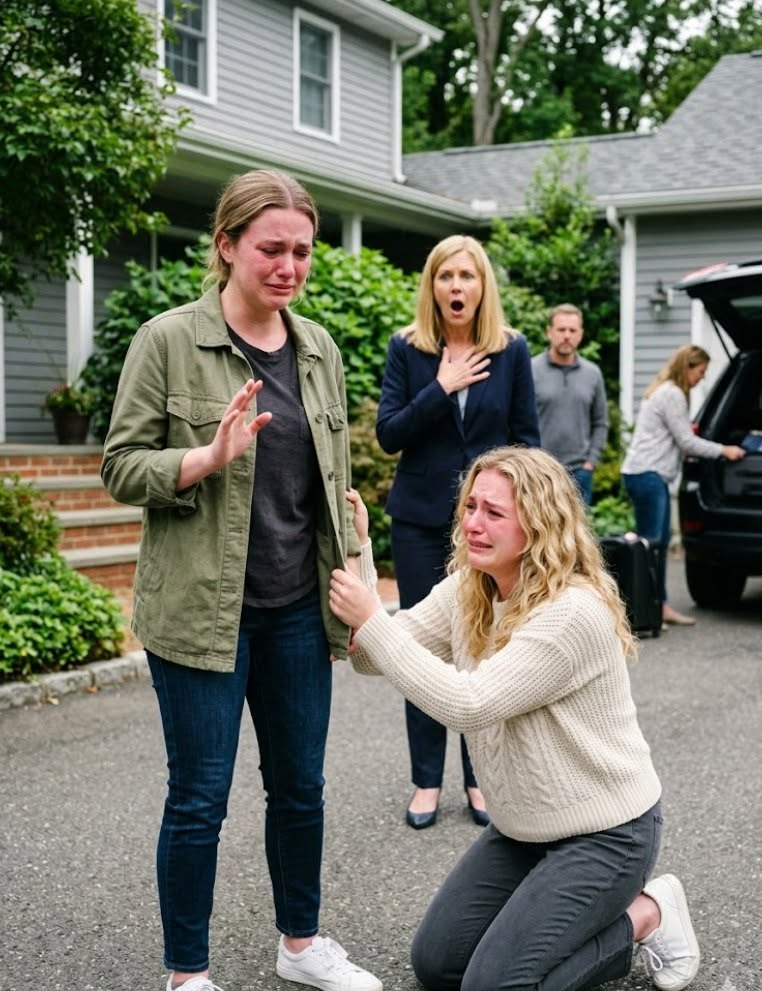
Family rejection carries a particular kind of weight.
Strangers can disappoint us.
Family members know exactly where our hopes are.
The deeper the expectation of belonging, the deeper the wound when that belonging is denied.
As I looked around, I realized that the decision had not been made impulsively.
It had been planned.
People had known.
People had agreed.
And no one had thought enough of us to stop it.
That realization hurt more than any argument could have.
A Responsibility I Could Not Ignore
There was another reality that complicated the situation.
For years, I had been entrusted with responsibilities connected to family resources that had been established long before this gathering.
Those responsibilities were not gifts to distribute according to emotion.
They were obligations requiring judgment, stewardship, and accountability.
Until that day, I had often blurred the line between helping and enabling.
I believed generosity required saying yes whenever possible.
Experience eventually taught me otherwise.
Resources given without wisdom sometimes strengthen the very behaviors they are meant to help.
Choosing Boundaries Instead of Revenge
In moments of humiliation, people are often tempted to retaliate.
I felt that temptation.
But retaliation rarely produces peace.
Instead, I focused on responsibilities that already belonged to me.
Decisions regarding financial support and trust administration were reviewed carefully and brought into alignment with the standards that should have existed all along.
Those decisions were not acts of punishment.
They were acknowledgments that trust requires accountability.
When people benefit from resources entrusted to them, their conduct matters.
Character matters.
Responsibility matters.
Ignoring those realities helps no one.
A Different Kind of Evening
Rather than arguing on the porch or demanding explanations, my family and I left.
We found another place to stay.
The evening was quieter than expected.
There was disappointment.
There was sadness.
Yet there was also relief.
Sometimes distance allows us to see situations more clearly than confrontation ever could.
For the first time, I stopped asking whether others appreciated what I had done for them.
Instead, I began asking whether my actions were truly helping anyone grow.
The answers were uncomfortable.
When Consequences Arrive
In the days that followed, difficult conversations occurred.
Apologies were offered.
Some were sincere.
Others seemed motivated more by circumstances than understanding.
Distinguishing between the two required patience.
One lesson became increasingly clear:
Dependence can sometimes disguise itself as affection.
People may appreciate what someone provides without truly valuing the person themselves.
Recognizing that difference is painful, but necessary.
What Love Actually Requires
For years, I believed love meant preventing hardship whenever possible.
I now see that love sometimes requires allowing people to experience the consequences of their own choices.
Not out of cruelty.
Not out of anger.
But because growth rarely occurs where responsibility is continually removed.
Boundaries are often misunderstood.
People assume they are walls.
In reality, healthy boundaries are guideposts.
They clarify what is acceptable and what is not.
They protect relationships from becoming transactions.
And they allow generosity to remain voluntary rather than demanded.
Driving Forward
As we left Vermont, I found myself thinking less about what had happened and more about what I had learned.
The most important change was not financial.
It was personal.
I no longer felt obligated to earn a place within relationships that treated my presence as optional and my contributions as expected.
A person’s worth is not determined by how useful they are to others.
Nor should family loyalty require accepting mistreatment.
The road home felt lighter than the road there.
Not because every problem had been solved.
Not because every relationship had been restored.
But because I had finally accepted something I should have understood years earlier:
Love can be generous without being naïve.
Compassion can exist alongside boundaries.
And peace often begins when we stop confusing self-sacrifice with virtue.
That lesson proved more valuable than any reunion could have been.