
One rainy night, I parked outside her building and sat there watching the windshield wipers push water back and forth.
The dashboard clock read 11:47 p.m.
I mentally counted bills, prescriptions, groceries, and utilities. No matter how many times I rearranged the numbers, I ended up in the same place.
Short.
Always short.
I grabbed the groceries and medication, climbed three flights of stairs, and forced a smile onto my face.
My mother opened the door before I could knock.
She always knew when I was there.
“You shouldn’t be out this late, dear.”
“I brought your blood pressure medicine,” I said. “And that soup you like.”
She cupped my face in her hands.
“You look exhausted, Jeremy.”
“I’m okay, Ma.”
But I wasn’t.
The following morning, between delivery shifts, I stopped for coffee.
That’s where everything changed.
A well-dressed man sat across from me without asking permission.
He looked like the kind of person who had never worried about paying a bill in his life.
“You’re Jeremy?”
“Who’s asking?”
“A man with an opportunity.”
I should have gotten up and left.
Instead, I stayed.
He slid a thick stack of cash across the table.
“My mother lives in a nursing home,” he said. “Her name is Rosie.”
I stared at him.
“So?”
“She has dementia.”
I still didn’t understand.
Then he explained.
His mother constantly told people her son never visited.
Relatives were talking.
Friends were asking questions.
The situation was embarrassing.
He wanted someone to pretend to be him.
Me.
Five hundred dollars every week.
All I had to do was visit on weekends, call her “Mama,” and act like I was her son.
I stared at the money.
The offer felt disgusting.
Then he said something that cut straight through my defenses.
“Right and wrong won’t pay your mother’s medical bills.”
The worst part wasn’t that he was cruel.
The worst part was that he was right.
I asked one question.
“When do I start?”
He almost looked relieved.
“Saturday.”
As he stood, he paused.
“One more thing, Jeremy.”
“What?”
“Don’t get attached.”
The first time I walked into Rosie’s room, I felt like a criminal.
The hallway smelled like disinfectant and old flowers.
Room 214.
I knocked softly and stepped inside.
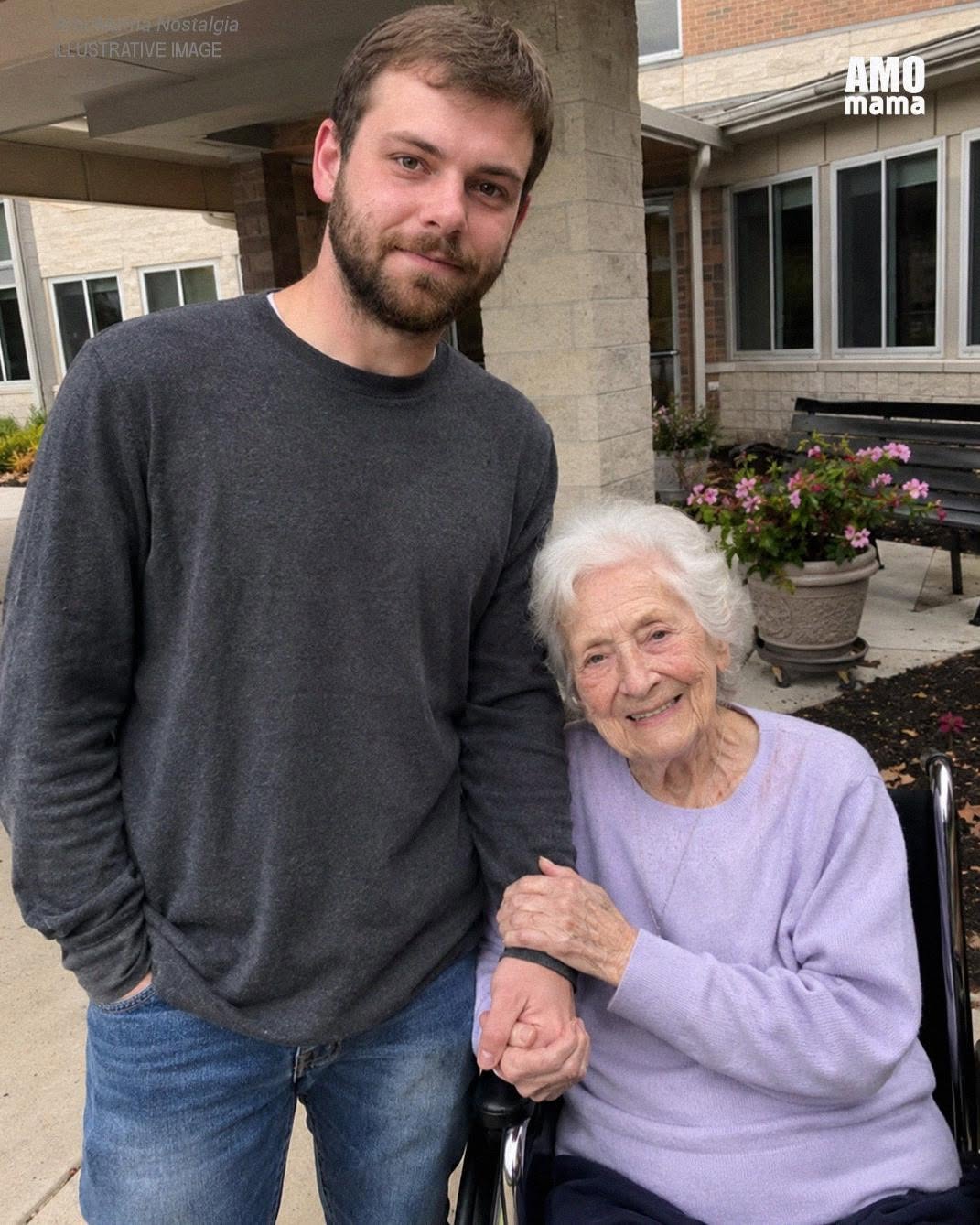
An elderly woman sat by the window with a blanket over her knees.
She looked small.
Fragile.
Lonely.
I swallowed hard.
“Mama,” I said. “It’s me. Tim.”
For several seconds she simply looked at me.
Then her face lit up.
“There you are.”
The joy in her voice nearly broke me.
She reached for my hand.
I took it.
I expected to feel like an actor.
Instead, I felt ashamed.
She patted the chair beside her.
“Sit down, Timmy.”
I sat.
The first question she asked wasn’t about herself.
It was about me.
“Have you been eating enough?”
Then:
“Are you sleeping?”
Then:
“Are you taking care of yourself?”
Nobody had asked me those questions in years.
Not since my father disappeared.
Not since my mother became sick.
I stayed an hour.
When I left, she squeezed my hand.
“Come back soon.”
I promised I would.
The next visit, I brought tulips.
The visit after that, chocolates.
Soon I wasn’t just showing up on weekends.
I came during lunch breaks.
I stopped by on Wednesdays.
Sometimes Thursdays.
Sometimes just because.
Rosie told stories about gardens and dogs and family memories that belonged to another life.
I listened to every word.
Somewhere along the way, pretending became impossible.
I wasn’t acting anymore.
I genuinely cared.
One afternoon, she took my hand and looked directly into my eyes.
Her expression was unusually clear.
“You’re a good man, son.”
I nearly cried.
“Mama…”
She touched my cheek.
“I know what I know.”
At the time, I assumed dementia was speaking.
I had no idea what she meant.
Then everything ended.
Two days later, the nursing home called.
Rosie had passed away peacefully in her sleep.
I stood beside my truck holding the phone while rain soaked the pavement around me.
The director’s voice softened.
“Jeremy… she left something for you.”
Three days later, I sat in the director’s office staring at a sealed envelope.
What happened next shocked me more than her death.
The director folded her hands.
“Jeremy, Rosie knew.”
I frowned.
“Knew what?”
“That you weren’t her son.”
The room went silent.
“She figured it out during your first visit.”
I couldn’t speak.
“She asked us not to tell you.”
My hands shook as I opened the envelope.
Inside was a letter.
Written in Rosie’s uneven handwriting.
It began:
“My dear boy who is not my boy.”
Tears immediately blurred my vision.
She wrote that her memory had betrayed her many times, but her heart had not.
She knew I wasn’t Tim.
She knew from the beginning.
But she had chosen to keep me anyway.
Because unlike her real son, I stayed.
Inside the envelope was a small brass key.
The letter explained that it belonged to a safety deposit box.
Whatever was inside, she wanted me to have it.
But there was one condition.
Half of it had to go to the nursing home’s residents.
People who, like her, often sat waiting for visitors who never came.
I thought that was the end of the story.
I was wrong.
Four days later, someone started pounding on my apartment door.
Tim.
His face was red with anger.
“Where’s the key?”
“It’s not yours.”
His expression darkened.
“You manipulated a sick old woman.”
I stared at him.
Then I asked the question that had been haunting me for months.
“Where were you?”
For a moment, something cracked inside him.
A flash of guilt.
Regret.
Pain.
Then it disappeared.
He threatened lawyers.
He threatened lawsuits.
He threatened to take everything.
And soon he did exactly that.
Within days, legal papers arrived.
He was contesting the bequest.
According to him, I had tricked his mother into leaving me her money.
Family members I had never met called me a fraud.
A thief.
A con artist.
I almost gave up.
One evening I sat beside my mother’s couch staring at the legal documents spread across the coffee table.
“What are you going to do?” she asked softly.
“I don’t know.”
She looked at me for a long moment.
Then she said something simple.
“You have the truth.”
The court hearing arrived sooner than I expected.
Tim sat across from me in an expensive suit.
His attorney painted me as a predator.
A man who had taken advantage of a vulnerable elderly woman.
Then my lawyer presented the evidence.
Bank records.
Text messages.
Payment transfers.
Everything.
The judge learned that Tim himself had hired me.
That he had paid me to replace him.
For the first time, he looked trapped.
When asked when he had last visited his mother, he couldn’t answer.
Eventually, his voice broke.
“She didn’t look like my mother anymore.”
For a moment, he stopped looking like a villain.
He looked like a frightened son who had run away from grief.
But that didn’t change what he had done.
Margaret, one of Rosie’s closest friends at the nursing home, testified next.
She told the court about Rosie’s final days.
How she talked about me constantly.
How she called me “the boy who chose to stay.”
Then it was my turn.
I stood and told the truth.
Every ugly piece of it.
“I took the money,” I admitted.
“I needed it for my mother’s medication.”
The courtroom remained silent.
“But I kept coming back because I cared about her.”
The judge read Rosie’s letter.
Then she made her decision.
“The bequest stands.”
Just like that, it was over.
A few days later, I opened the safety deposit box.
Inside were savings bonds, stacks of cash, and an old photograph of a young Rosie holding a baby.
Her son.
The son she had loved even when he couldn’t bear to see her growing old.
I sat there holding the picture for a long time.
Then I reread the final sentence in her letter.
“Use half for my friends. They have no one either.”
And that’s exactly what I did.
Half went to the nursing home.
Better meals.
Special outings.
Comforts that made life a little brighter.
The other half paid my mother’s medical bills.
For the first time in years, I slept through the night without calculating expenses in my head.
Without fear.
Without panic.
Yet the most valuable thing Rosie left me wasn’t money.
It was something far rarer.
Every Saturday, I still visit the nursing home.
I sit beside Margaret near the window.
Sometimes we talk.
Sometimes we don’t.
One afternoon, I brought a bouquet of tulips and placed them in Rosie’s old chair.
The sunlight fell across the flowers exactly the way it used to fall across her lap.
Margaret watched quietly.
After a while, she asked, “What are you thinking about?”
I smiled.
The answer came easily.
“Rosie taught me something.”
“What?”
I looked at the empty chair.
“She taught me how to stay.”
And somehow, that lesson turned out to be worth far more than anything hidden inside a bank vault.