
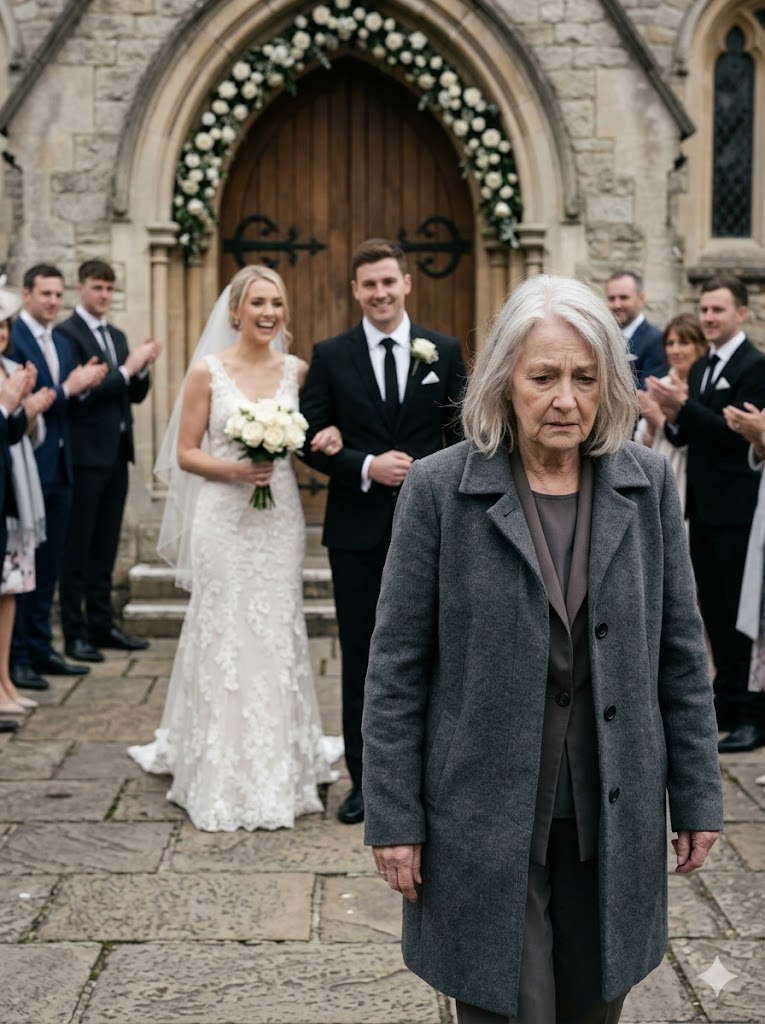
Instead, he met me at the entrance and blocked my path.
With a firmness I had never heard in his voice before, he told me I wasn’t welcome. He said the family had made its decision and that my presence would only create problems.
For a moment, the world seemed to go silent.
I could have argued. I could have pleaded. I could have demanded an explanation.
Instead, I simply looked at my son and saw someone carrying anger I could no longer reason away in that moment.
I wished him well, told him to check his phone later, and quietly walked down the cathedral steps.
The deepest wounds are often not caused by strangers.
They come from the people we love most.
My husband Lawrence and I had spent forty-two years building a life together. We started with almost nothing and slowly built a successful auto parts company through long days, sacrifice, and persistence.
When Lawrence passed away after a difficult illness, the grief changed everything.
What many people didn’t know was that we had accumulated significant assets over the years. Yet Lawrence never measured success by money. His greatest concern was always our son’s character.
Before his death, he left clear instructions regarding Mason’s inheritance. He believed financial wealth could be either a blessing or a burden depending on the maturity of the person receiving it.
I promised him I would use wisdom when the time came.
For a while, life remained quiet.
Then Mason introduced me to Brielle.
At first, I genuinely wanted to welcome her. Every parent hopes the person their child chooses will bring them happiness.
But as time passed, small concerns began to emerge.
Conversations frequently returned to money. Questions about family assets appeared unusually early. Decisions seemed rushed. Certain behaviors left me uneasy, though I struggled to explain exactly why.
I reminded myself not to judge too quickly.
After all, suspicion alone is not truth.
Yet as the engagement accelerated, more warning signs appeared. Eventually, I sought professional advice and requested a formal investigation—not out of hostility, but out of concern.
The results were difficult to ignore.
The information revealed significant financial problems, along with evidence suggesting that important facts had been hidden from Mason.
My heart broke.
Not because I disliked Brielle.
But because I feared my son was making a lifelong commitment without seeing the full picture.
For weeks, I wrestled with what to do.
There is no handbook for moments like that.
Every choice seemed painful.
Stay silent and risk watching him walk blindly into trouble.
Speak up and risk losing his trust.
In the end, I chose transparency.
I compiled the information and arranged for it to be delivered so that Mason would have access to the facts before making irreversible decisions.
Not to humiliate anyone.
Not to punish anyone.
Simply to ensure he could make an informed choice.
As my car pulled away from the cathedral that day, I felt no sense of victory.
Only sadness.
Parents often imagine that love means protecting their children from every mistake.
Life eventually teaches a harder lesson.
Sometimes love means telling the truth even when it costs you the relationship.
Whether Mason would accept what I had done, I did not know.
Whether he would forgive me, I could not predict.
Some truths heal immediately.
Others take years.
As I looked out the window, I thought about Lawrence.
I remembered the promise I had made beside his hospital bed—to act with courage when difficult choices arrived.
The wedding was never the real issue.
The real issue was whether truth would be allowed to stand when emotions, appearances, and expectations pushed against it.
I did not leave the cathedral feeling triumphant.
I left carrying the quiet hope that one day my son would understand that everything I did came from love, however imperfectly expressed.
And sometimes, love requires us to accept being misunderstood for a season while trusting that truth will eventually find its own voice.