
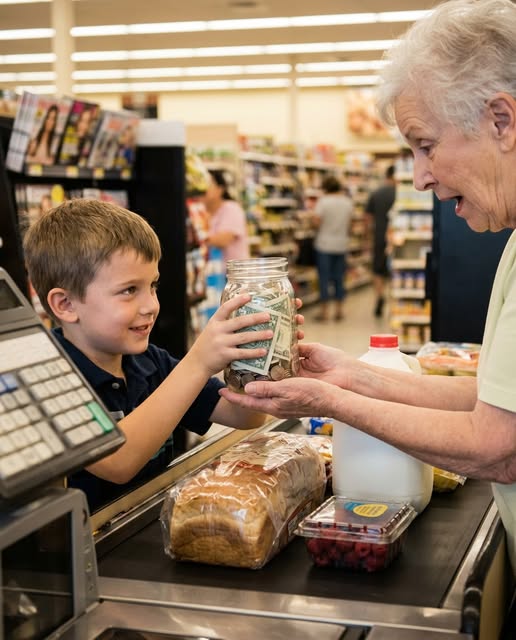
The grocery store was bustling, and I was ready to get home. That was when I noticed the woman in front of us. She was thin, gray-haired, and clearly trying to hide her tears. When her card declined, the cashier began pulling items from her basket—bread, milk, and a small container of strawberries. The woman’s face crumbled with a specific, hollow devastation. Before I could reach for my wallet, Eli stepped forward. He placed his jelly jar on the belt and asked, with heartbreaking sincerity, if his money was enough to cover the strawberries.
The checkout line went deathly silent. The woman dropped to her knees, wrapping her arms around my son as if he were her own. She whispered her gratitude, her voice breaking, before leaving the store in a rush. I stood there, stunned, while Eli smiled as if he’d done nothing more than tie his shoes. I thought that was the end of it, but I was wrong.
Three days later, I opened my front door to find a worn, crimson leather suitcase sitting on the welcome mat. A white envelope was taped to the handle, addressed to Eli in shaky, uneven handwriting. As I reached for it, I heard a faint, steady ticking coming from inside. My stomach dropped. Was it a threat? A prank? I told Eli to stay back, my heart hammering against my ribs. I stood on my porch, the neighborhood silent around me, and made the decision to open it.
Inside, there was no bomb—only an old brass clock, its hands moving with a rhythmic, steady heartbeat. Surrounding it were toys, books, and a teddy bear, all packed with intentional, loving care. I tore open the envelope and read the first line: Your son saved my grandson that day.
The letter was from Margaret, the woman from the store. She explained that her seven-year-old grandson, Leo, was dying. His final wish had been for strawberries, but her bank account had been drained by medical bills. Eli’s small act of kindness had allowed Leo to have his favorite treat one last time. Leo had passed away peacefully that night, but not before telling his grandmother that the kind boy who gave him his strawberries should have his toys.
I sat on the porch step and wept as I read her words: I left the clock because every tick reminded me of a heartbeat. Leo’s time ran out, but kindness keeps people alive long after they’re gone.
We eventually met Margaret, and our families became inseparable. The brass clock still sits on Eli’s nightstand today. Every night, its steady, rhythmic ticking fills the room, a constant reminder that a small, uncalculated act of generosity can echo across a lifetime. It taught me that you never know how far a single act of kindness will travel—or how it might return to your own doorstep, carrying the heartbeat of someone who will never be forgotten.