
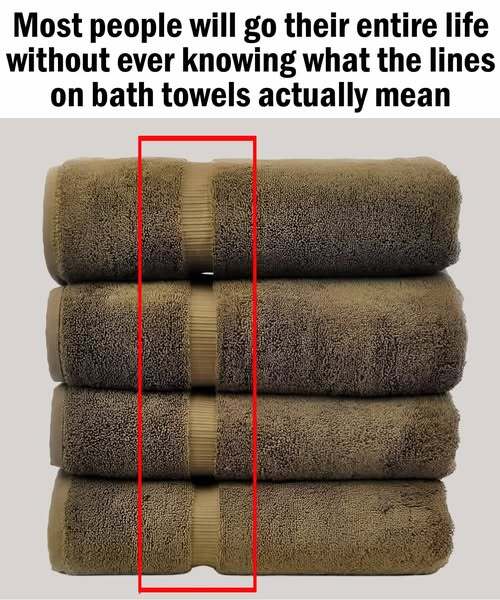
But in most cases, that stripe serves a practical purpose in how the towel is made—and it can actually help the towel hold up better over time.
The Stripe Is Often Called a Dobby Border
That woven band is commonly known in textiles as a dobby border.
Unlike the fluffy center of the towel, the dobby border uses a tighter, flatter weave.
Manufacturers often include it not just for appearance, but also for structure and reinforcement.
Why Towels Need Reinforcement
Bath towels go through repeated stress.
They’re regularly:
- soaked with water
- rubbed against skin
- twisted or wrung out
- washed repeatedly
- dried with heat
Over time, all of that puts strain on the fabric.
The central absorbent area of most towels is made from looped terry cloth, which works well for drying—but those loops can also be more vulnerable to wear.
Without added structure, towels may begin to:
- fray at the edges
- lose shape
- curl or warp
- shrink unevenly over repeated washes
What the Woven Border Helps With
The dobby border can act like a stabilizing section at the ends of the towel.
In practical terms, it may help:
Reduce edge fraying
The ends of towels tend to wear faster than the middle. A tighter weave can help strengthen those areas.
Support shape retention
Because it doesn’t stretch the same way terry loops do, the border may help the towel keep a cleaner rectangular shape over time.
Limit uneven puckering
Towels sometimes develop wavy ends after repeated washing due to different parts of the fabric shrinking differently. A denser border can help reduce that effect.
Make folding easier
A towel that keeps its shape tends to stack more neatly in storage.
Decorative Function Too
The border isn’t only structural.
It’s also commonly used as a design element.
Manufacturers often add:
- woven patterns
- textured details
- stripes
- logos or subtle branding
to the border area without affecting the main absorbent surface of the towel.
That allows the center to stay focused on absorbency while the edges add style and support.
Does It Affect Absorbency?
Generally, the dobby border itself is less absorbent than the fluffy terry center because it’s woven more tightly and without loops.
But that’s intentional.
The main drying function still comes from the terry cloth across most of the towel.
The border mainly contributes to durability and appearance rather than moisture absorption.
The Bottom Line
That stripe near the end of many bath towels isn’t just decoration.
It’s typically a woven dobby border designed to:
- reinforce the towel’s edges
- help maintain shape
- reduce wear over time
- add texture or design detail
It’s a small feature—but one that plays a useful role in how many towels are built to last.