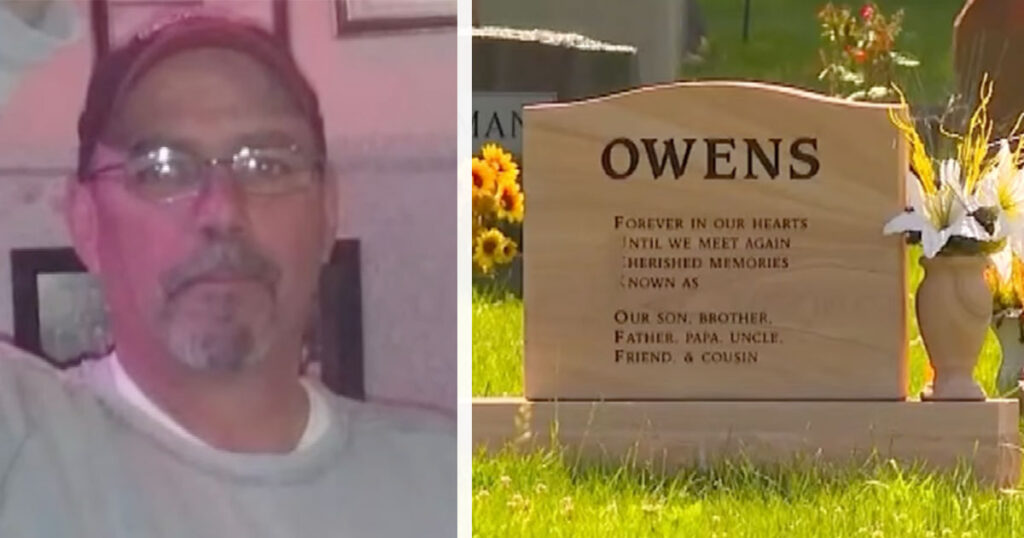
The inscription reads:
“Forever in our hearts, until we meet again, cherished memories, known as: our son, brother, father, papa, uncle, friend & cousin.”
Nothing about the wording initially seems unusual. However, when the first letter of each phrase is read vertically, it spells out an unmistakable hidden message: “F**K OFF.”
The unusual tribute quickly gained national attention after visitors and media outlets noticed the acrostic message hidden within the inscription.
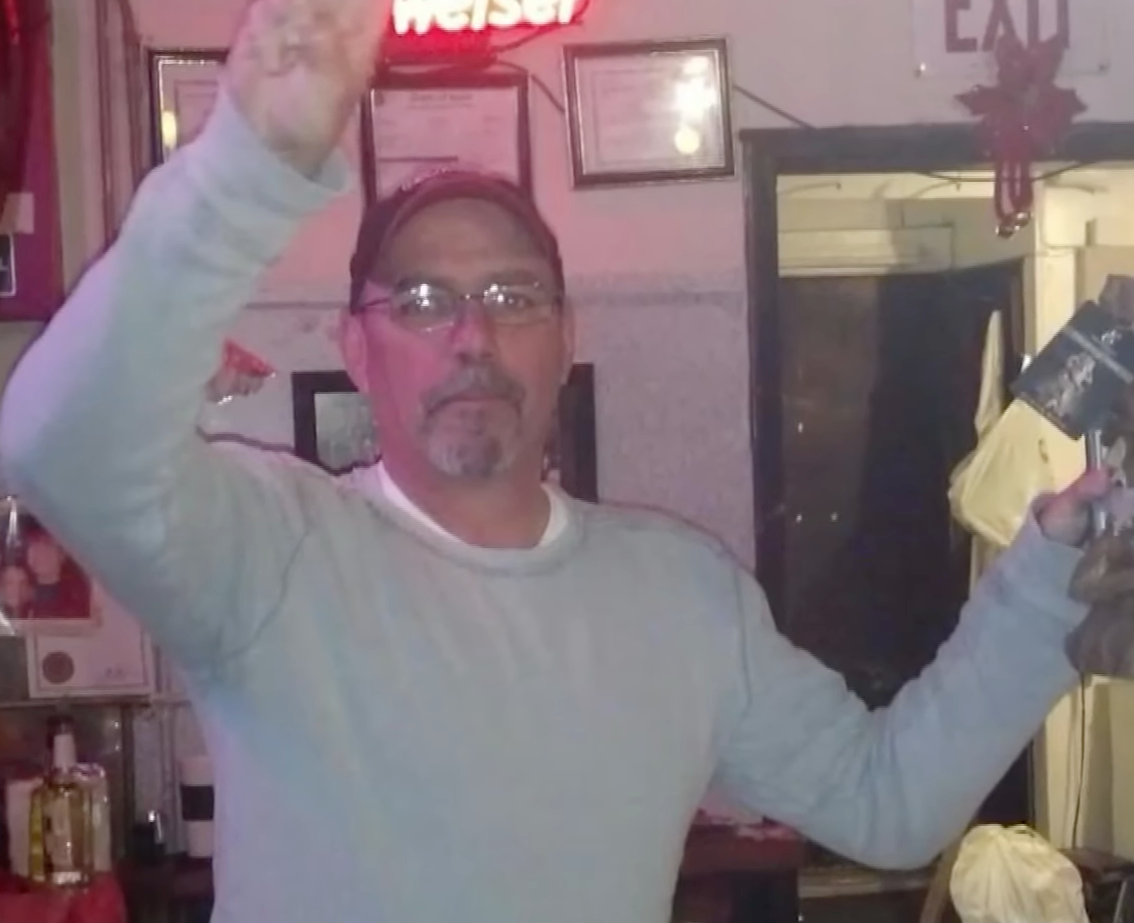
According to family members, the message was never intended to insult anyone. Instead, they viewed it as a fitting reflection of Owens’ personality and sense of humor.
His son, Zachary Owens, described his father as a fun-loving man who enjoyed joking with friends and family. His daughter, Lindsay Owens, explained that her father often used colorful language affectionately rather than aggressively.
She noted that if her father told someone to “f**k off,” it was often a sign that he liked them.
Because of that reputation, the family felt the hidden phrase captured his personality better than a conventional memorial ever could.
The idea reportedly came from one of Owens’ cousins, and family members agreed it would be a unique way to honor him.
Not everyone saw it that way.
Officials responsible for overseeing the cemetery objected to the inscription after discovering the concealed profanity. Representatives argued that allowing such language—even in a hidden form—could set a precedent that would make it difficult to establish boundaries for future memorials.
One cemetery representative expressed concern that other families might not appreciate having loved ones buried near a monument containing profanity, regardless of the context.
As a result, township officials explored legal options and discussed whether the memorial should be removed or altered.
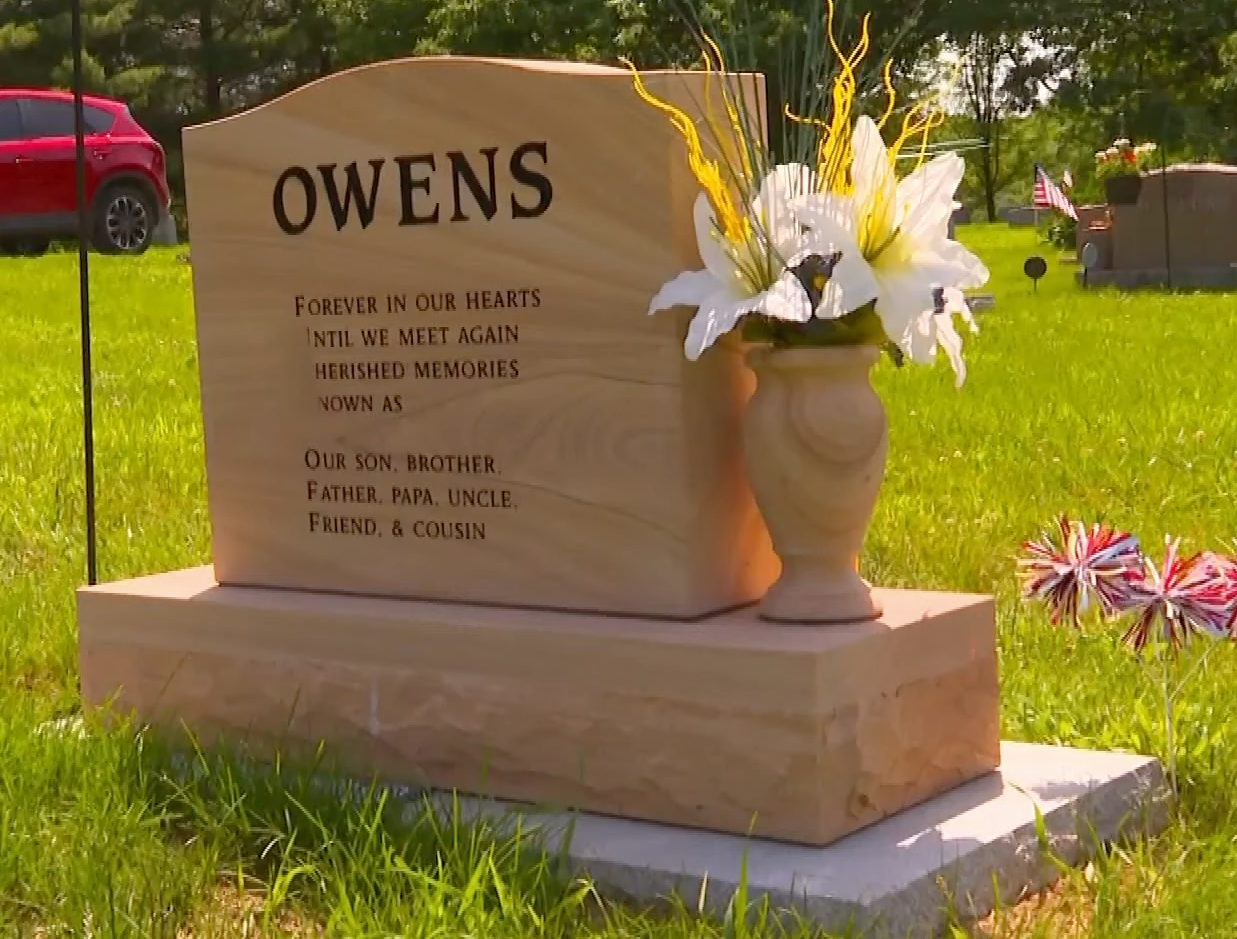
The Owens family stood by their decision.
Lindsay emphasized that the family never intended to offend anyone and simply wanted to remember their father in a way that reflected who he truly was.
Zachary echoed that sentiment, arguing that visitors were not forced to seek out or focus on the hidden message.
The debate soon expanded beyond one headstone and became a broader discussion about memorials, personal expression, and public standards.
Some people argued that a gravestone should primarily reflect the life and personality of the person being remembered. If humor, irreverence, or unconventional language defined someone during life, they felt it was reasonable for those traits to appear in their memorial.
Others believed cemeteries are shared public spaces that should maintain a respectful atmosphere for all visitors, especially grieving families.
Years after the controversy first emerged in 2022, the headstone continues to attract attention and generate discussion. Reports indicate that the memorial remains in place at Warren-Powers Cemetery, serving as both a tribute to Steven Paul Owens and a reminder of the ongoing debate over how people choose to be remembered.
Whether viewed as a heartfelt inside joke or an inappropriate cemetery inscription, the memorial has undoubtedly accomplished one thing: it keeps people talking about the man it was designed to honor.
What do you think? Should memorials reflect a person’s personality no matter how unconventional, or should cemeteries maintain stricter standards for inscriptions?
{"post":103372,"page":2,"next":[{"id":103367,"title":"\u201cDoctors Were Speechless\u201d: The Truth Behind This Viral Photo","url":"https:\/\/new24.info\/103367"},{"id":103363,"title":"These are the consequences of sleeping with the\u2026","url":"https:\/\/new24.info\/103363"},{"id":103359,"title":"An Urgent Call From Washington Changed Everything Before Crucial International Discussions","url":"https:\/\/new24.info\/103359"},{"id":103352,"title":"Hidden Habits That May Be Affecting Your Most Sensitive Skinm-","url":"https:\/\/new24.info\/103352"},{"id":103354,"title":"The Monkey Test: A Curious Psychology Exercise That May Reveal Narcissistic Traits - Terbv","url":"https:\/\/new24.info\/103354"},{"id":103347,"title":"What Erika Kirk Said About Recent Relationship Rumors Is Getting Attention","url":"https:\/\/new24.info\/103347"},{"id":103343,"title":"Florida student dies in tragic crash","url":"https:\/\/new24.info\/103343"},{"id":103340,"title":"The gravel in Johnny Cash\u2019s voice wasn\u2019t a stylistic choice","url":"https:\/\/new24.info\/103340"},{"id":103337,"title":"The Kitchen Appliance You Must Unplug Before Sleeping to Prevent a Fire","url":"https:\/\/new24.info\/103337"},{"id":103333,"title":"Celine Dion: her journey through health challenges after a legendary career - Terbv","url":"https:\/\/new24.info\/103333"},{"id":103330,"title":"For two decades, my life was a fractured existence, defined entirely by the moment my seven-year-old son, Daniel, vanished from a Route 9 rest stop","url":"https:\/\/new24.info\/103330"},{"id":103320,"title":"Expert shares insight into Melania Trump\u2019s beauty routine","url":"https:\/\/new24.info\/103320"},{"id":103317,"title":"Doctor says Kyle Busch\u2019s tragic death was \u2018totally preventable\u2019 \u2013 details how protocol was ignored","url":"https:\/\/new24.info\/103317"},{"id":103308,"title":"Three Best Friends, One Uniform","url":"https:\/\/new24.info\/103308"},{"id":103298,"title":"David Letterman\u2019s question that left Jennifer Aniston very uncomfortable","url":"https:\/\/new24.info\/103298"},{"id":103303,"title":"My sister threw a hot skillet at my 4-year-old\u2019s face because she sat in the wrong chair. My mom told ME to stop screaming while my daughter lay unconscious. My dad called her a burden. I rushed her to the hospital\u2014that\u2019s where the true nightmare began. Spotlight8","url":"https:\/\/new24.info\/103303"},{"id":103300,"title":"Cemetery is demanding headstone be removed over obscene \u2018hidden message\u2019","url":"https:\/\/new24.info\/103300"},{"id":103294,"title":"At Prom, Only One Boy Asked Me to Dance Because I Was in a Wheelchair","url":"https:\/\/new24.info\/103294"},{"id":103290,"title":"A Teen\u2019s Sentence Sparks Debate About Justice, Choices, and Consequences","url":"https:\/\/new24.info\/103290"},{"id":103286,"title":"This legendary actress made a rare public appearance at 90","url":"https:\/\/new24.info\/103286"}]}