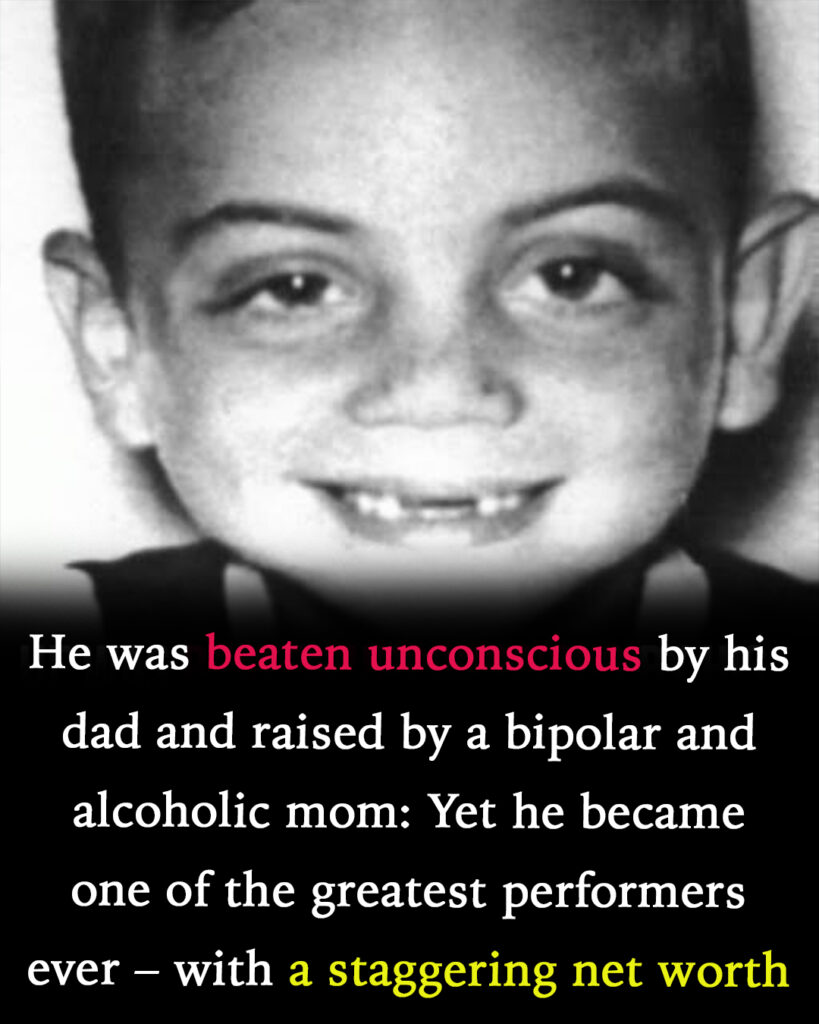
Long before he became internationally known, Joel’s early life was marked by instability.
His family history included displacement connected to war in Europe, and his childhood was also shaped by financial strain and family upheaval. Like many artists whose work later carries emotional depth, parts of that early uncertainty would eventually echo through both his songwriting and personal life.
Music became central early on.
The piano was not only a skill he developed, but also a place of structure and expression during periods of instability. Over time, that discipline became the foundation of what would grow into one of the most commercially successful careers in American music.
As his career expanded, so did the pressures surrounding it.
Joel has spoken publicly over the years about personal struggles involving depression, alcohol use, addiction, and the emotional difficulties that often accompany fame, public scrutiny, and complicated personal relationships. Like many high-profile performers, the visibility of success often existed alongside much less visible private battles.
What many fans connect with most is not the idea of perfection—but endurance.
Rather than presenting himself as untouched by hardship, Joel’s story has often been one of continuing through setbacks, recovery, reinvention, and periods of emotional difficulty while remaining creatively active.
More recently, public attention has also focused on his health.
Joel has spoken about dealing with medical issues affecting his well-being and ability to perform—especially significant for an artist whose work relies on stamina, concentration, timing, and consistent live performance. For someone with a career built around the stage, health challenges naturally carry emotional as well as physical weight.
Even so, he has continued performing while adapting around those realities, supported by family, medical care, and long-term efforts to protect both his health and career.
Part of why his music continues to resonate across generations is that many listeners hear real life in it.
His songs frequently explore themes of:
– love and heartbreak
– loneliness and relationships
– regret and personal change
– ambition, pressure, and disappointment
– resilience and moving forward despite uncertainty
For many fans, that emotional honesty is what keeps his catalog feeling current decades later.
His legacy extends beyond record sales or touring milestones.
It lives in the way his music has remained emotionally recognizable to listeners at very different stages of life—and in the fact that his own story reflects many of the same themes his songs often carry: struggle, vulnerability, survival, and persistence through change.
Seen through that lens, Billy Joel’s career is remembered not only as a music success story, but as the story of an artist who kept creating while navigating everything life kept putting in front of him.
{"post":103281,"page":2,"next":[{"id":103278,"title":"\u00abWhat is the reason of Gwen Stefani\u2019s tears?\ud83d\ude2b SHe shared her horrible emotions with us in her recent post!\u00bb\ud83d\udc94","url":"https:\/\/new24.info\/103278"},{"id":103275,"title":"Search Results for \u201cInside the life of a global superstar: Love, loss, and the fight to keep performing\u201d \u2013 Tbdig Divaxo","url":"https:\/\/new24.info\/103275"},{"id":103270,"title":"The entertainment world is mourning the sudden loss of a beloved television personality","url":"https:\/\/new24.info\/103270"},{"id":103266,"title":"What to Do If You Find Ticks in Your Child\u2019s Hair (Without Panicking)","url":"https:\/\/new24.info\/103266"},{"id":103261,"title":"FDA approves many drugs that predictably increase heart and stroke risk","url":"https:\/\/new24.info\/103261"},{"id":103257,"title":"Young woman puts both babies inside the fir\u2026 See more","url":"https:\/\/new24.info\/103257"},{"id":103240,"title":"You would watch the clip, your heart thudding dully against your ribs like a trapped bird","url":"https:\/\/new24.info\/103240"},{"id":103237,"title":"The life and career of Brian Connolly: from fame to later years - Terbv","url":"https:\/\/new24.info\/103237"},{"id":103234,"title":"Terrifying moment gunshots rang out outside White House captured on camera","url":"https:\/\/new24.info\/103234"},{"id":103231,"title":"The Case That Still Leaves One Painful Question No One Can Fully Answer","url":"https:\/\/new24.info\/103231"},{"id":103226,"title":"These are the consequences of sleeping with the\u2026See more","url":"https:\/\/new24.info\/103226"},{"id":103222,"title":"Police Arrest Suspect in Unusual Wildlife Case in U.S. Woodland Region","url":"https:\/\/new24.info\/103222"},{"id":103217,"title":"20 Minutes ago in New York City, Kelly Ripa was confirmed as\u2026See more","url":"https:\/\/new24.info\/103217"},{"id":103215,"title":"kaylestore.net","url":"https:\/\/new24.info\/103215"},{"id":103212,"title":"Why Stretching Your Ring Finger Might Feel Surprisingly Good","url":"https:\/\/new24.info\/103212"},{"id":103209,"title":"Former AG Pam Bondi diagnosed with cancer weeks after being fired by Trump: report","url":"https:\/\/new24.info\/103209"},{"id":103203,"title":"Here\u2019s what the sticker says. What do you think??\u2026\u2026","url":"https:\/\/new24.info\/103203"},{"id":103199,"title":"Valerie Bertinelli Opens Up About Emotional Career Change and What Comes Next","url":"https:\/\/new24.info\/103199"},{"id":103190,"title":"After My Father Hid My Grandmother Away for Four Years and Lied That She Had Forgotten Me","url":"https:\/\/new24.info\/103190"}]}