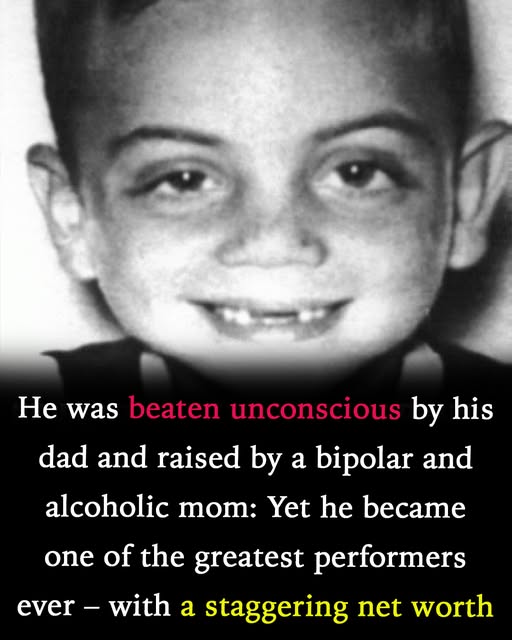
…where the next explosion might occur. Yet, instead of succumbing to the wreckage of his upbringing, he found refuge in the only thing that couldn’t abandon him: the piano. The keys didn’t judge, they didn’t leave, and they didn’t scream. They offered a language for the grief he couldn’t articulate, a way to translate the chaos of his childhood into the haunting melodies that would eventually define a generation.
His rise to fame was anything but linear. It was a grueling climb marked by financial ruin, failed contracts, and the crushing weight of depression. Before he was the “Piano Man” filling stadiums across the globe, he was a struggling musician playing in dive bars, trying to outrun the ghosts of his past. He carried the heavy baggage of his father’s abandonment and his mother’s illness into every song he wrote, pouring his raw, unfiltered humanity into lyrics that resonated with millions who felt just as lost as he did.
The irony of his life is as sharp as his lyrics. He spent decades singing about the struggles of the common man, the heartbreak of broken relationships, and the search for meaning in a cold world, all while battling his own internal demons. He became a billionaire, a household name, and a cultural icon, but the success never fully erased the boy who stood at the window waiting for a father who never returned. The stage became his therapy, and the roar of the crowd became the validation he had been starved of for so long.
However, the fight didn’t end with fame. In recent years, the man who gave us the soundtrack to our lives has faced a new, more insidious adversary: his own health. The physical toll of decades on the road, combined with the lingering scars of a life lived at full volume, has forced him to confront his own mortality. There have been whispers of health battles, of vocal strain, and of the quiet, inevitable slowing down of a man who has given everything he had to his audience.
Yet, even as the shadows lengthen, his resilience remains unbroken. He continues to perform, not because he needs the money or the fame, but because the music is the vessel through which he remains whole. He has shown us that our origins do not have to dictate our destination. He transformed the trauma of his youth into a legacy of empathy, proving that even the most damaged among us can create something beautiful enough to heal the world.
Today, when he sits down at that piano, he isn’t just playing chords; he is reclaiming his story. He is the living embodiment of the idea that we are not defined by what we lose, but by what we choose to build from the fragments. Billy Joel’s life is a testament to the fact that while we cannot choose our beginnings, we have the absolute power to determine how the song ends.