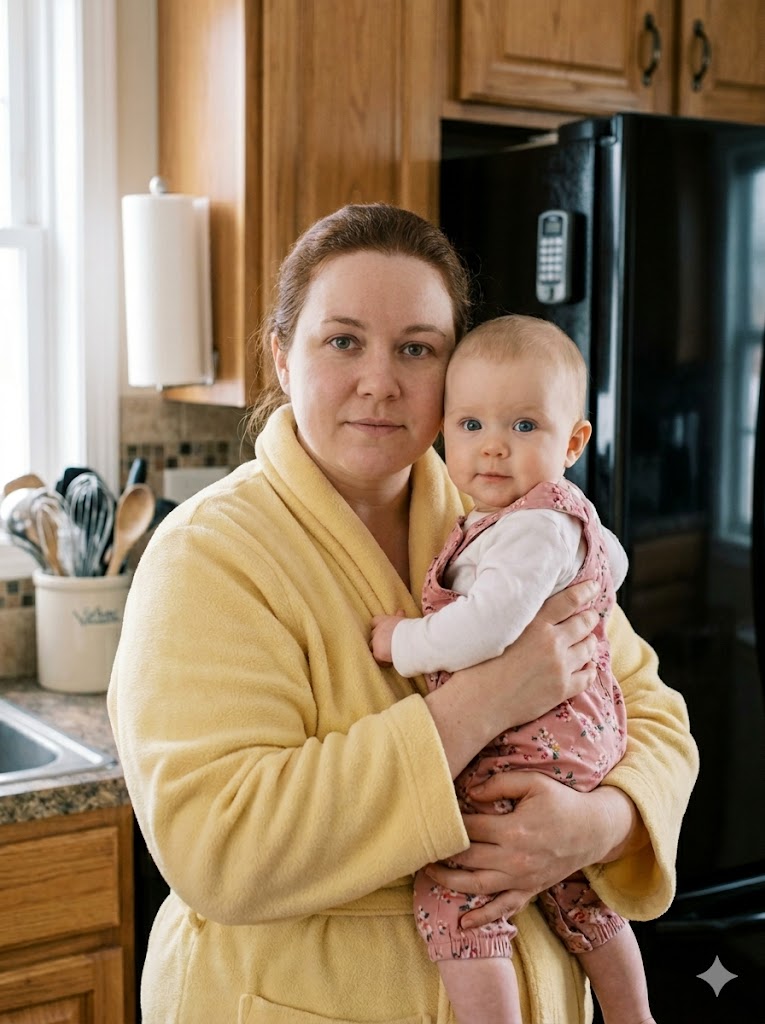
Ryan’s behavior did not begin with concern for health. Real care does not rely on shame, surveillance, or punishment. A nursing mother recovering from fertility treatments, pregnancy, and childbirth needs nourishment, rest, patience, and emotional support. Instead, he turned food into a test of obedience. The refrigerator lock symbolized something larger than dieting—it reflected an unhealthy need for power disguised as “discipline.”
What often happens in situations like this is that fear quietly mutates into control. Ryan likely saw the physical changes after pregnancy and reacted immaturely to them, clinging to appearance and routine because he felt unsettled by change. But insecurity does not excuse cruelty. Once a person begins rationing another adult’s access to food, especially a postpartum spouse feeding an infant, the issue has already moved beyond ordinary marital conflict.
The image of her crying while nursing Kelly captures the moral center of the story. A mother feeding her child while her own stomach aches from restriction reveals how distorted the household had become. It also reminds us how vulnerable early motherhood can feel. Exhaustion lowers defenses. Constant criticism slowly reshapes self-worth. Many people endure unhealthy treatment longer than they should because they are physically drained and emotionally isolated.
Michelle’s arrival changed the atmosphere because she refused to normalize what had been happening. What makes her response effective is not merely the humor of the steering wheel lock or the neon magnets. It is that she brought hidden behavior into the open. Controlling people often depend on privacy, minimization, and the assumption that others would quietly tolerate what is happening. Once the family gathered in the driveway, Ryan could no longer pretend his actions were reasonable.
The older men mocking him was less about humiliation for entertainment and more about restoring proportion. They recognized something he had forgotten: strength inside a family is measured by protection, generosity, and steadiness—not by controlling a recovering wife’s meals. Sometimes accountability lands more deeply when it comes from people whose respect matters to us.
Michelle’s meat pie carried its own quiet symbolism. Before any speeches or confrontations, she first fed the hungry person. There is wisdom in that. When someone has been deprived emotionally or physically, restoring dignity often begins with restoring simple human care.
To Ryan’s credit, he eventually removed the locks and apologized. Whether that apology leads to lasting change depends on whether he truly understands the damage caused—not only the embarrassment of being exposed. Real repair would require humility, patience, and a willingness to examine why he became so controlling in the first place.
The ending matters because it shifts away from revenge and toward restoration. The takeout meal was not important because of indulgence. It mattered because she was finally eating freely in her own home again, without fear, permission, or shame attached to something as basic as nourishment.
In healthy relationships, love does not shrink a person’s dignity after childbirth. It expands in tenderness and responsibility. Bodies change. Seasons of exhaustion come and go. What sustains a marriage through those seasons is not perfection of appearance, but mercy, gratitude, and the ability to remember that the person beside you is not an obstacle to your comfort—they are your companion through life’s hardest transformations.