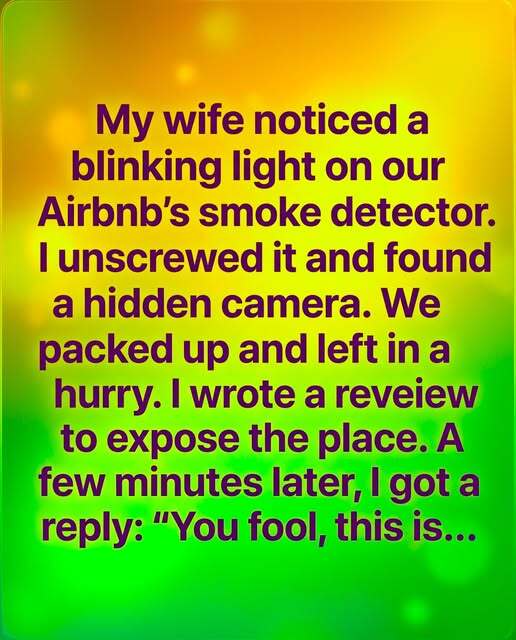
At first, most people try to rationalize what they see. A blinking light becomes “probably normal.” An odd device becomes “just part of the house.” The mind naturally looks for harmless explanations because accepting the alternative feels deeply violating. But sometimes intuition notices danger before logic catches up.
The moment the lens became visible, the situation stopped feeling like a vacation inconvenience and started feeling like a breach of human dignity. Privacy is one of the quiet foundations of peace. Once it is disturbed, even simple things—sleeping in a room, hearing electronic sounds, noticing LEDs in the dark—can suddenly feel threatening.
What stands out most in experiences like this is often the speed at which comfort turns into caution. A cozy rental becomes a place to escape from. Guests stop acting like travelers and begin thinking about safety, exits, witnesses, and documentation. Fear narrows attention quickly.
The host’s message only deepened that fear because it replaced explanation with intimidation. Calm communication reassures people. Vague warnings tend to do the opposite. Even if there are innocent explanations behind certain devices, secrecy and threatening language destroy trust immediately.
At the same time, stories like this are a reminder not to drift into paranoia. Most vacation rentals are used honestly, and most hosts are ordinary people trying to run a business responsibly. But technology has created new opportunities for misconduct, which means travelers benefit from a little more attentiveness than they may have needed years ago.
Simple habits can help without turning every trip into suspicion:
- Briefly inspect smoke detectors, clocks, or unusual electronics in sleeping areas.
- Notice whether devices seem positioned toward beds or private spaces.
- Pay attention to instincts when something feels unusually off.
- If concerns become serious, leave first and investigate later from a safer environment.
- Document concerns calmly with photos or screenshots rather than escalating emotionally onsite.
What also lingers after experiences like this is the psychological aftermath. Even once physical safety returns, the nervous system often remains alert. A blinking light in another hotel room may suddenly trigger anxiety because the body remembers how quickly safety once disappeared. That response is human.
Still, it is important not to let one violation harden the heart completely against trust. Wisdom grows through caution balanced with steadiness—not fear consuming every ordinary experience.
In the end, privacy is not a luxury. It is part of basic human dignity. Places that invite people in under the promise of safety carry a moral responsibility to protect that trust carefully. And when that trust is violated, the most grounded response is neither panic nor revenge, but clarity: leave, document, report, and protect others quietly through truth.