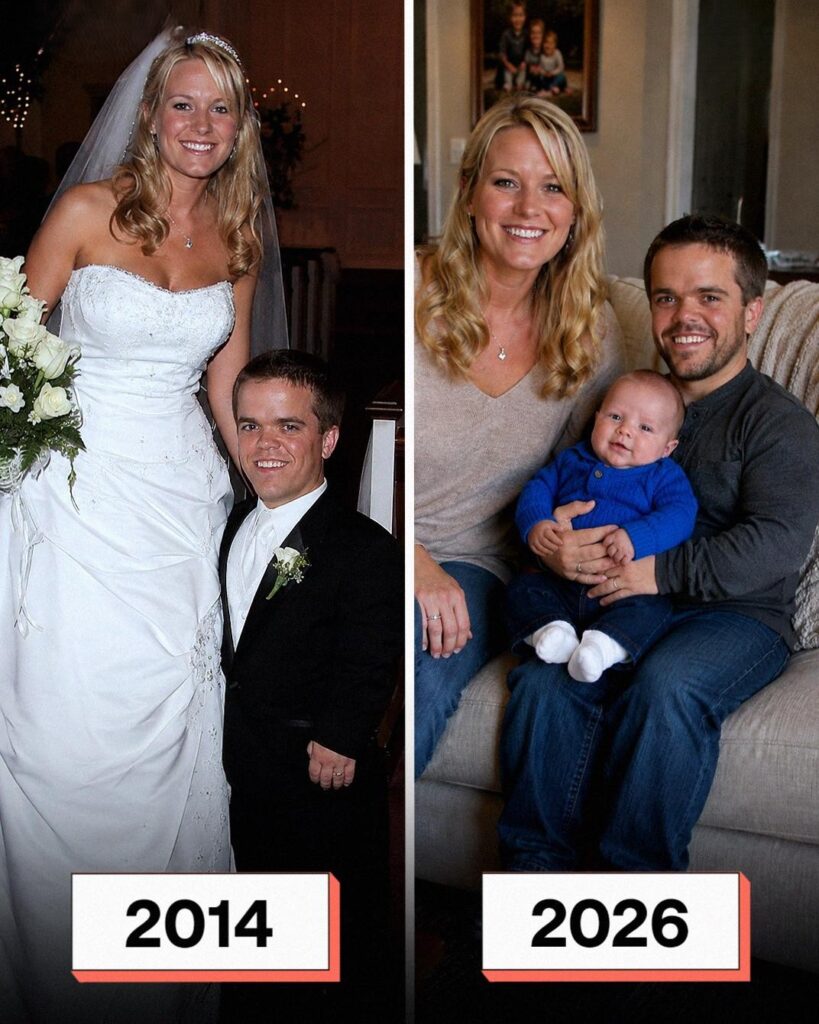
They expected Jordan to smile, write the check, and prove he was the bigger person.
And in a way, he was.
Just not in the way they imagined.
Advertisement
I will never forget my mother’s face on my wedding day.
She wasn’t crying from joy. She wasn’t glowing with pride. She looked embarrassed, like she wanted the floor to split open and swallow her whole.
All because my husband, Jordan, was born with achondroplasia.
He has dwarfism.
To me, Jordan was brilliant, kind, steady, funny, and more generous than anyone I had ever known. He was an architect who could look at an empty lot and imagine light, space, and structure where everyone else saw dirt.
To my parents, he was something to be ashamed of.
Once, when they thought I couldn’t hear them, I heard my father call him a “genetic stain” on our family name.
That sentence never left me.
Advertisement
On our wedding day, I thought their stiff smiles and embarrassed whispers would be the worst of it.
Then my father stood up during the reception with a glass in one hand and a microphone in the other.
“To the couple!” he announced, already laughing at his own cruelty. “May their children be able to reach the dinner table!”
A few guests chuckled nervously.
Not because it was funny.
Because people sometimes laugh when they don’t know what else to do.
My face burned with humiliation. I wanted to disappear.
Jordan simply took my hand under the table and squeezed it gently.
“Don’t let it get to you,” he whispered.
“How can I not?” I whispered back, fighting tears. “That’s my father.”
Jordan’s expression didn’t change, but his eyes told me everything he would never say out loud.
I’m used to it.
I’ve heard worse.
This is not new.
Advertisement
That broke my heart more than the joke itself.
Because no one should ever become so familiar with cruelty that silence feels easier than defending themselves.
But my parents didn’t stop after the wedding.
One evening over dinner, Jordan told them he had grown up in an orphanage after being abandoned by his biological parents.
I expected sympathy.
Maybe admiration.
At the very least, basic human decency.
Instead, my parents exchanged a look and giggled.
“I’m sorry,” my mother said, though she didn’t sound sorry at all.
Then my father leaned back in his chair and said, “Well, I think we all know why your parents left you there.”
For a second, I couldn’t breathe.
“Are you serious right now?” I snapped.
Dad waved me off. “It’s just a joke, Jen. Jordan doesn’t mind, do you? A little guy like you must—”
“Stop,” I said sharply. “Just stop.”
If he had finished that sentence, I think I would have flipped the table.
Advertisement
That night confirmed something I had been trying not to admit.
My parents were never going to accept my husband.
To them, Jordan would always be someone to tolerate. Someone to crop from family pictures. Someone to use as a punchline when they wanted attention.
So I slowly pulled away.
I called less.
Visited less.
Shared less.
Every interaction with them came wrapped in a new insult, disguised as teasing. Another small humiliation. Another reminder that the man I loved would never be good enough for them.
Jordan never retaliated.
He simply kept building.
He worked harder, stayed focused, and slowly turned his architecture firm into something remarkable.
Then life did what life sometimes does.
It shifted the ground beneath the people who thought they would never fall.
Advertisement
My parents’ business collapsed.
I didn’t know all the details at first. My mother sent vague messages about rising costs, narrow margins, debt pressure, and problems with the bank.
Within months, they lost nearly everything they had spent years bragging about.
Then one Tuesday evening, they appeared at our front door.
For the first time in my life, they looked smaller.
Tired.
Desperate.
And suddenly very polite.
But they did not come to apologize.
“Jordan,” my mother began carefully, “we heard your firm recently secured a major contract.”
My father cleared his throat.
“We need $20,000 to stop the bank from seizing our condo.”
Mom quickly added, “We’re family, after all.”
I almost laughed.
Family.
The word sounded strange coming from people who had spent twelve years treating my husband like an embarrassment.
Advertisement
I was ready to tell them to leave.
But Jordan spoke first.
“Come in,” he said calmly. “We can talk over tea.”
So they sat in our living room, teacups untouched, and spent nearly two hours explaining their situation.
My mother kept smoothing her skirt with nervous hands.
My father sat stiffly, jaw tight, still trying to look like a man in control.
They talked about debts.
Deadlines.
Bank notices.
Business mistakes.
But not once did either of them say, “We’re sorry.”
When they finally ran out of words, Jordan stood and walked into his office.
He returned holding a check for $20,000.
My mother’s eyes lit up instantly.
My father leaned forward like a drowning man seeing shore.
“You have no idea what this means to us,” Mom said, reaching for it.
Jordan gently pulled the check back.
“You can have it,” he said. “Right now. But only on one condition.”
Advertisement
My parents exchanged a nervous glance.
“What condition?” Dad asked.
Jordan’s voice remained calm.
“I want an apology for the way you’ve treated me over the years.”
Dad released a quick breath that sounded almost like a laugh.
“That’s it? Of course. I’m sorry, Jordan.”
Mom nodded quickly. “If anything we ever said hurt you—”
“If?” I interrupted.
She blinked.
Then she continued anyway.
“We didn’t mean it that way. They were jokes. But yes, we’re sorry.”
There it was.
Twelve years of cruelty reduced to an inconvenience.
Twelve years of humiliation softened into if you took it that way.
Jordan held out the check.
And I knew I couldn’t let them take it like that.
Advertisement
I reached forward and took the check from his hand.
“No,” I said.
Everyone looked at me.
My mother frowned. “What do you mean, no?”
“You don’t get to insult him for twelve years and fix it in twelve seconds with an apology you don’t mean.”
Dad’s expression hardened.
“We did what he asked.”
“No,” I replied. “You rushed through words you thought would buy you twenty thousand dollars.”
Mom’s voice sharpened. “We’re trying here.”
“You’re trying to get money.”
My father turned toward Jordan, the way he always did when he wanted to dismiss me.
“You’re not seriously going to let her do this.”
Jordan didn’t even hesitate.
“We make decisions together,” he said. “If Jen isn’t satisfied with my condition, then I trust her judgment. She can set the condition.”
Advertisement
For the first time in twelve years, my parents were not controlling the conversation.
And they felt it.
I turned the check over in my hands.
“If you want our help, you’re going to earn it.”
Dad gave a dry laugh.
“Earn it? We’re your parents.”
“And you spent years mocking the man I love because he is different from you,” I said. “So here’s my condition. You spend one week at Jordan’s firm.”
Mom frowned. “Doing what?”
“Watching. Listening. Learning.”
Dad’s eyes narrowed.
“We don’t need jobs.”
“It’s not a job. You won’t work. You won’t be paid. You’ll simply spend one week seeing what Jordan built and meeting the people who helped him build it.”
Jordan cleared his throat quietly.
“My firm prioritizes inclusive hiring,” he said. “Many of my employees are people with dwarfism, people with disabilities, or people who have spent their lives being underestimated.”
My father’s face twisted.
“You’ve got to be kidding.”
Advertisement
“No,” I said calmly. “You spend a week there without making one cruel remark. No jokes. No smirks. No whispers. You sit in rooms where you are the uncomfortable ones for once.”
Mom stared at me like I had slapped her.
“This is ridiculous, Jennifer. We came here for help, and you’re trying to punish us.”
“No,” I replied. “This is the first honest chance you’ve had to understand what you’ve done. If you think basic respect is punishment, that says more about you than it does about us.”
That was when my father finally lost control.
“We don’t need to spend a week at some circus just to get help from you.”
The room went silent.
Circus.
There it was.
No disguise.
No awkward laugh.
No “just joking.”
Just the truth they had always carried beneath their polished manners.
Advertisement
I stood slowly.
“You both need to leave.”
Mom’s face crumpled, but not from remorse. From panic.
“Please, your father didn’t mean it like that.”
“Yes,” I said. “He did.”
Dad pointed at me.
“You’re being cruel.”
I looked at him, almost amazed.
“No. Cruel is making a man feel unwelcome at his own wedding. Cruel is mocking someone’s body, his childhood abandonment, and his dignity for twelve years. Cruel is coming here for money and still thinking you’re better than him.”
Mom turned desperately toward Jordan.
“Please. There has to be another way.”
Jordan shook his head.
“I stand by my wife.”
My father’s mouth curled.
“I shouldn’t have expected a half-size man to wear the pants, I guess. Hard to stand up to your wife when she’s double your height.”
Something inside me broke cleanly.
“Out,” I said.
Then louder.
“Out!”
Advertisement
This time, even my mother seemed to understand there was no coming back from it.
She grabbed my father’s arm and pulled him toward the door.
They didn’t look back.
The door closed behind them with a soft click that felt louder than every insult they had ever thrown into our home.
For a moment, neither Jordan nor I moved.
The check still sat on the table.
Untouched.
Finally, I looked at him.
“That wasn’t what you expected.”
He gave a small, tired smile.
“No,” he admitted. “But it was the right call.”
I swallowed hard.
“I just couldn’t let them take your kindness and use it as one more thing to disrespect.”
Jordan reached for my hand.
“You did the right thing,” he said softly. “Like you always do.”
Advertisement
Something inside my chest finally loosened.
Not because I was happy.
Not because it felt like victory.
But because, for the first time, I had stopped confusing peace with silence.
My parents had wanted money without accountability.
Forgiveness without remorse.
Help without humility.
And when they were offered one chance to see Jordan as a person instead of a punchline, they chose cruelty again.
So the check stayed on the table.
The door stayed closed.
And my husband, who had spent his whole life being underestimated, stood taller in that room than either of them ever had.