
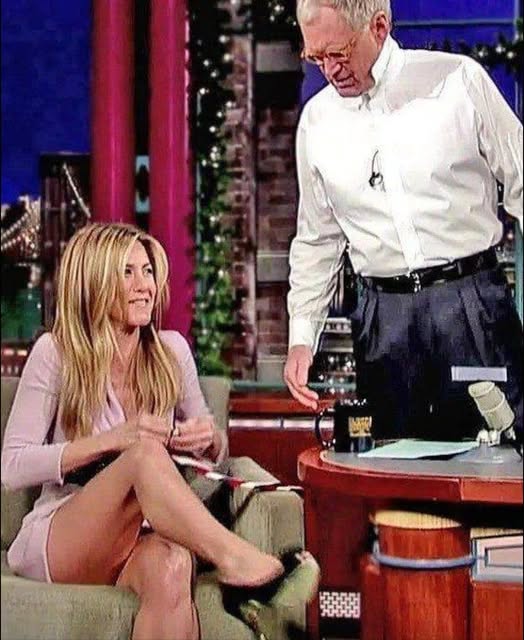
nches, leaving us to wonder how we ever missed the signs. What once passed as witty, effortless banter between a beloved host and America’s sweetheart now feels like a slow-motion red flag. The viral resurfacing of these clips doesn’t just indict a single man or a single show; it exposes a pervasive culture that taught women to laugh off their own discomfort and trained audiences to applaud their compliance. Jennifer Aniston’s legendary poise reads differently through the lens of time: not as effortless cool, but as a layer of emotional armor built in plain sight, forged under the pressure of a million eyes.
Rewatching these moments forces us into a deeply uncomfortable kind of honesty. We are finally seeing the cracks in the facade—how easily the word “chemistry” became a convenient euphemism for professional pressure, how charm blurred into entitlement, and how our own collective laughter helped smooth over the visible unease on her face. We were complicit in the performance, cheering for a dynamic that was, at its core, deeply unequal.
That tightening in our stomachs today is more than just guilt; it is a long-overdue reckoning. It is the realization that we were watching a woman navigate a minefield while we were encouraged to view the explosions as entertainment. We cannot go back and change the past, nor can we undo the moments where the cameras captured a quiet dignity that went unnoticed by the masses. However, we can decide that the next time the crowd roars, we will finally choose to listen to the one person who doesn’t.
True progress isn’t just about changing the script; it is about changing who we choose to amplify. When we look back at these archives, we aren’t just looking at a celebrity interview—we are looking at a mirror. It asks us to consider what we value more: the comfort of a familiar punchline or the truth hidden in the silence of those who are forced to endure it. The roar of the crowd is loud, but the truth, once seen, is impossible to ignore.