The Machine That Carried More Than Metal
At twenty-nine, I wasn’t looking for anything meaningful. I just needed a way to get back to work.
My car had failed, and with it, any sense of stability. What I found instead was an old Harley-Davidson motorcycle listed online for ninety-eight dollars—barely within reach, but still possible.
The seller was an elderly man in a quiet, worn-down repair shop. He didn’t say much. Just asked if I had family nearby, then handed me a folded piece of paper along with the bike.
I didn’t ask questions. I didn’t feel like I had the right to.
I paid him, then pushed the motorcycle two miles home.
When Something Feels Bigger Than It Is
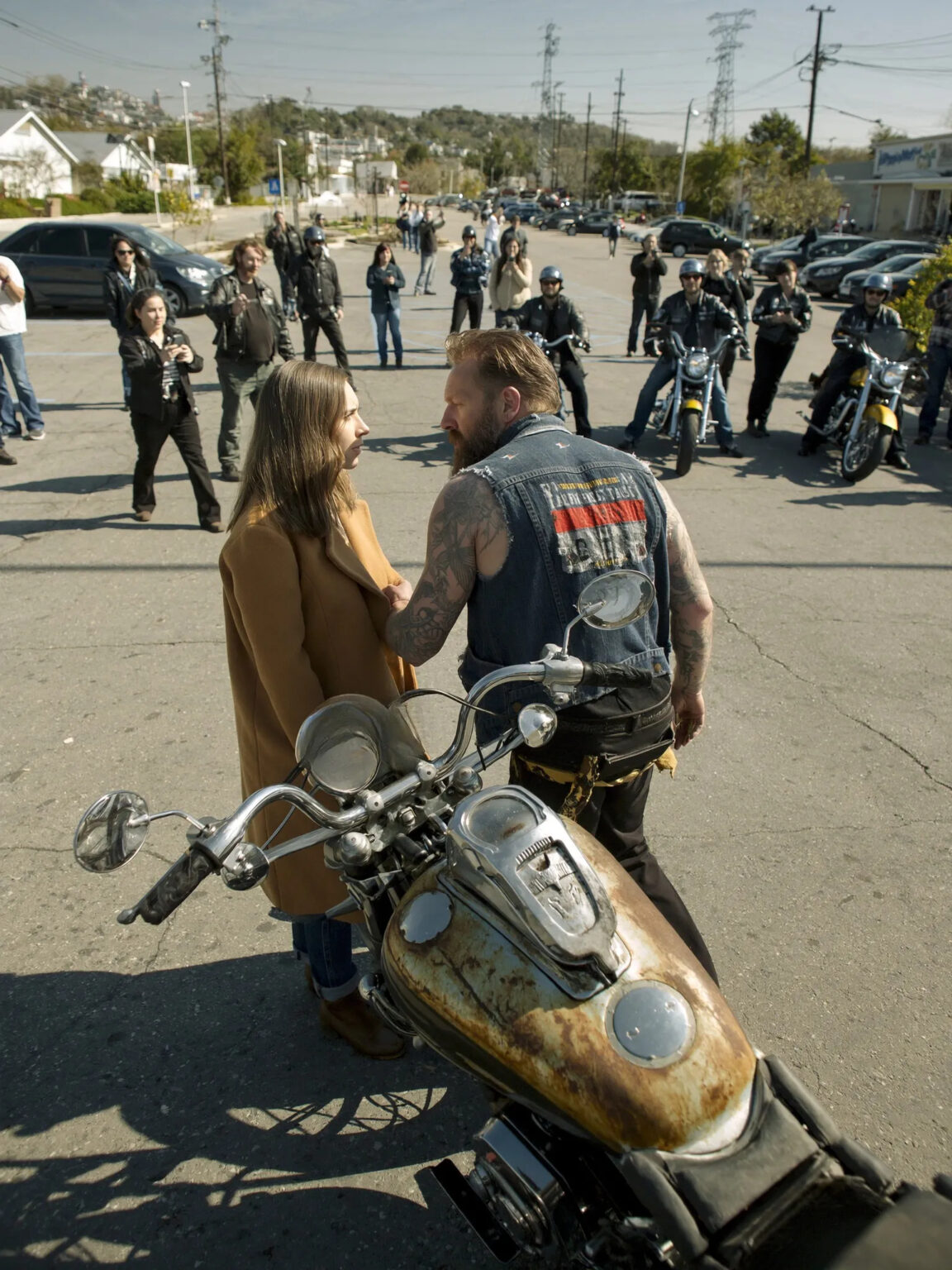
The next morning, I sat on the bike in a parking lot in Riverside, trying to make sense of what I had bought.
Then someone approached me.
He didn’t accuse me of anything. Just said, quietly, that I shouldn’t be riding it.
Before I could respond, the sound came—low, steady, unmistakable. Motorcycles. A lot of them.
They surrounded the lot, not aggressively, but with purpose. People nearby stepped back. You could feel the tension rise without anyone saying a word.
The man asked to see the paper.
What Was Written There
He unfolded it carefully. Looked at it longer than I expected.
Nine names. Nine dates. And a symbol I didn’t recognize.
He didn’t rush to explain. Instead, he showed me a photograph—older, worn at the edges. The same bike. The same man who had sold it to me. And a group of riders standing beside him.
Some of those men were the ones standing around me now.
Others were not.
What Had Been Carried Forward
Years earlier, there had been an accident. A bad one. Nine riders didn’t make it back.
The motorcycle I had bought was the only one that did.
The seller had kept it—not as a possession, but as something tied to memory. Something he wasn’t ready to let go of until he was sure it would go to someone who needed it for more than appearance.
That’s what the paper was.
Not a warning.
A record.
What They Were Looking For
The riders weren’t there to take the bike back. They weren’t there to question me.
They just wanted to see who had it now.
To understand where it had gone.
They checked the engine, helped me get it running properly, and made sure it would hold up on the road.
Then they stepped back.
No speeches. No expectations.
Just a simple message: keep moving forward.
Final Reflection
I bought that motorcycle because it was all I could afford.
But it carried something I didn’t expect—weight, not of metal, but of what had come before.
Some things pass through your hands as objects.
Others arrive with a quiet history.
You don’t own that history.
You carry it for a while.
And then you decide what to do with it next.