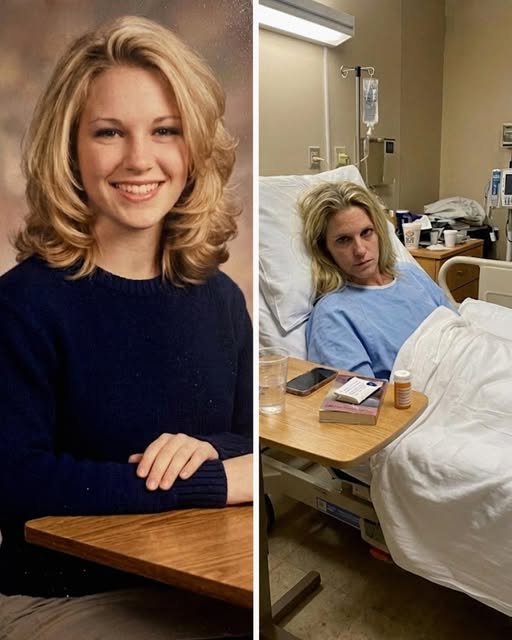
Margaret. The name felt like a physical blow to my chest. Decades had passed since she had turned my teenage years into a systematic campaign of humiliation. She was the girl who had orchestrated the rumors, the social isolation, and the cruel whispers that followed me through every hallway. Seeing her name on the chart—her life now resting in my hands—felt like a cosmic joke. I took a deep breath, reminded myself of my professional oath, and pushed open the door.
She looked older, of course, but the arrogance was still etched into the set of her jaw. As I went through the routine of checking her vitals and adjusting her IV, she didn’t look at me as a caregiver. She looked at me as a servant. For three days, I provided the best care I could, maintaining a stoic, professional distance while she complained about the food, the lighting, and the ‘incompetence’ of the staff. I was invisible to her, just another cog in the machine she felt entitled to command.
On the morning of her discharge, the tension finally snapped. As I helped her gather her belongings, she turned to me, her eyes narrowing with a sudden, sharp recognition. She didn’t see a nurse; she saw the girl she had spent four years breaking. A smug, cruel smile played on her lips as she leaned in close. “I remember you now,” she whispered, her voice dripping with venom. “You’re that pathetic girl from high school. You should resign… immediately. Someone like you shouldn’t be touching people who actually matter.”
My heart hammered against my ribs. The old, wounded teenager inside me wanted to shrink away, to apologize for existing, to run out of the room and never look back. But then, I looked at my reflection in the window—a woman who had raised three children alone, who had survived a betrayal by my husband, and who had saved countless lives in this very ward. I realized that her power over me had died the moment I stopped caring about her opinion.
Before I could respond, a shadow fell over the doorway. My supervisor, a woman known for her zero-tolerance policy regarding staff harassment, had been standing there for the last thirty seconds. She had heard every word. The silence in the room became suffocating. Margaret’s face drained of color as she realized she wasn’t just talking to a nurse anymore; she was talking to a professional whose reputation was impeccable.
My supervisor stepped forward, her expression unreadable but stern. She looked at Margaret, then at the discharge papers, and finally at me. “Is there a problem here, Margaret?” she asked, her voice calm but razor-sharp. “Because if you find our care so beneath you, I would be more than happy to expedite your departure right now—without the assistance of the nurse you seem to think is so beneath you.”
Margaret tried to stammer an excuse, but the air had left her sails. She looked small, fragile, and utterly powerless. I didn’t need to say a word. I simply handed her the discharge folder and stepped back, letting my supervisor handle the rest. As I walked out of that room, I didn’t feel the sting of the past. I felt the quiet, steady strength of a woman who had finally outgrown her bully. I walked back to the nurses’ station, picked up the next chart, and kept moving forward.