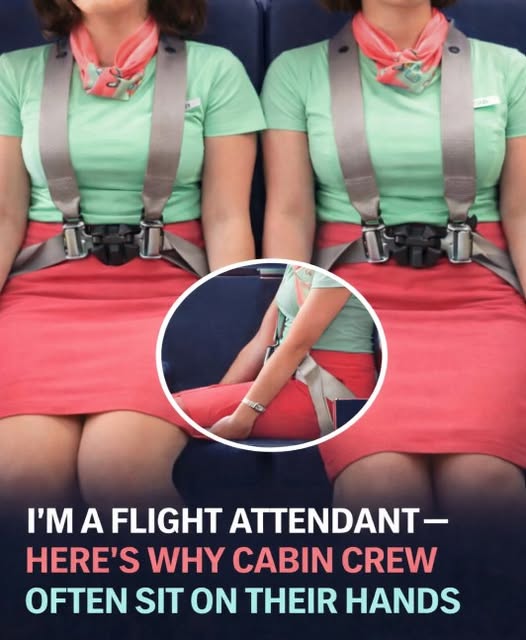
Why Flight Attendants Sit with Their Hands Under Their Thighs During Takeoff and Landing
If you’ve ever looked toward a jump seat during takeoff or landing, you may have noticed flight attendants sitting very still—backs straight, feet firmly on the floor, hands tucked beneath their thighs. To many passengers, the posture can seem unusual or even uncomfortable. It might look like a personal habit.
In reality, it is neither casual nor optional.
That position is part of a specific safety practice known as the brace position, used during the most critical phases of a flight. Behind that quiet stillness is a disciplined mindset of readiness and responsibility—an aspect of the job many travelers rarely see.
Why Takeoff and Landing Matter Most
In aviation, takeoff and landing are considered the moments when the aircraft is under the greatest operational stress. Speed and altitude are changing rapidly, and if something unexpected occurs, the window for response can be very small.
Because of this, flight attendants are trained to assume a posture that both protects their bodies and keeps them ready to act.
Sitting upright with hands tucked beneath the thighs helps anchor the body to the seat. In the event of sudden deceleration or turbulence, this position prevents arms from being thrown forward or striking nearby structures. By keeping their arms secured, attendants reduce the risk of injury to joints and muscles—ensuring they remain capable of helping passengers if needed.
Physical Stability and Mental Readiness
The posture is not only about physical protection. It also supports mental focus.
During takeoff and landing, flight attendants are trained to stay fully alert. They quietly scan the cabin, listen for unusual sounds, and watch for anything out of the ordinary. The still posture helps eliminate unnecessary movement and distraction, allowing them to concentrate on their surroundings.
Training simulations often place cabin crew in high-pressure emergency scenarios. In those moments, calm awareness becomes essential. Their role shifts instantly from service to leadership—guiding passengers, managing panic, and coordinating evacuation if required.
Why Passengers Brace Differently
Passengers and flight attendants are instructed to brace differently for a simple reason: their responsibilities are different.
Passengers are generally told to lean forward and protect their heads and necks, focusing on personal safety. Flight attendants remain upright so they can quickly stand, assess the situation, and begin assisting others without delay.
The hands-under-thighs posture is only one small part of extensive training that includes emergency evacuations, fire response, first aid, and crisis management.
A Quiet Signal of Preparedness
So the next time you notice a flight attendant sitting very still during takeoff or landing, it’s not a quirk or a habit.
It is a quiet expression of discipline and preparedness—someone nearby who is trained to remain calm when moments become uncertain.
Most flights pass without incident. But in the rare moments when something goes wrong, that quiet readiness can make all the difference.