…no one else could. Their bond was forged in the unique crucible of fame and family, a relationship that transcended the stage and settled into the quiet, sacred spaces of their private lives. While the public remembers Alan for the hits he co-wrote like “One Bad Apple” and “Crazy Horses,” those closest to him remember a man who carried the weight of the world on his shoulders so that his siblings never had to.
When Multiple Sclerosis forced Alan to step away from the spotlight, he didn’t retreat into bitterness. Instead, he transitioned into a role of profound, behind-the-scenes leadership. Donny Osmond later reflected on his brother’s character, noting that Alan consistently carried more than his fair share of the burden. It was never about the applause for Alan; it was about ensuring the family remained anchored, even as the tides of fame threatened to pull them apart.
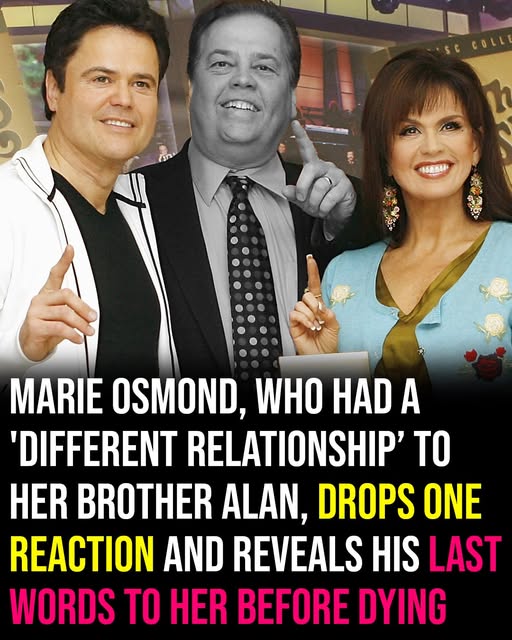
For Marie, the loss is particularly sharp. She has spoken openly about their “different” relationship—a connection that went beyond the typical sibling dynamic. He was her protector, the steady hand that reached out whenever life became overwhelming. In the wake of his passing, just over a year after the family lost their brother Wayne, Marie’s silence spoke volumes. When she finally broke it, her words were not just a eulogy; they were a testament to a man who showed up when it mattered most, a man whose faith and quiet strength defined the very essence of the Osmond legacy.
The tragedy of losing a brother is compounded by the realization that the foundation of the family has shifted. Alan was the one who kept everyone connected, the bridge between their humble beginnings and their massive success. As the family navigates this new reality, they find themselves leaning on the lessons he taught them: that fame is fleeting, but the integrity of one’s character and the depth of one’s love for family are the only things that truly endure.
In his final days, Alan remained the same man he had always been—composed, faithful, and deeply committed to those he loved. His last words to Marie remain a private treasure, a final piece of guidance from the brother who had spent a lifetime guiding them all. It is a reminder that even in the face of death, the bonds we forge in life do not break; they simply change form, continuing to guide us long after the music stops.
As the world pays tribute to a musical icon, it is the humanity of Alan Osmond that resonates most deeply. He leaves behind a legacy that is not measured in record sales or chart-topping hits, but in the lives he touched and the family he kept whole. His journey reminds us all that the most important roles we play are often the ones the public never sees, and that the greatest strength lies in the quiet, consistent love we give to those who call us family.