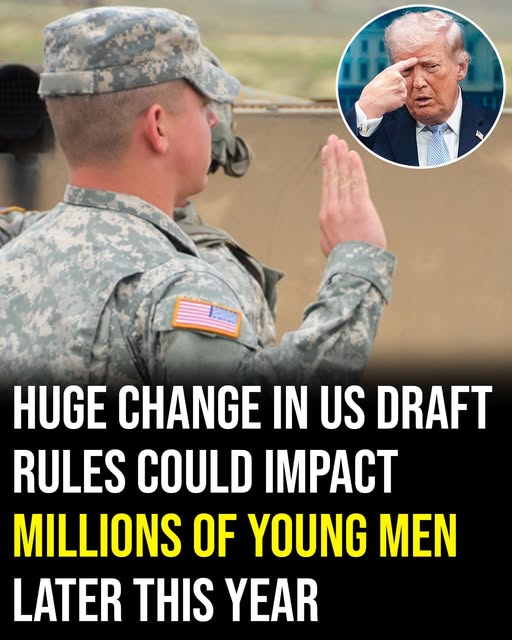
…ing of a future that the government is preparing for, even if the public remains largely unaware. Automatic draft registration marks a profound turning point in how the United States balances the delicate scales of national security, personal responsibility, and individual consent. For generations, the Selective Service System relied on the conscious participation of young men. They were expected to step forward, sign their names, and accept the legal weight of that choice. It was a moment of transition into adulthood, a deliberate acknowledgment of their role in the defense of the nation.
Now, that agency is being stripped away. Under new protocols, the government will quietly handle the registration process for them. By pulling data from the various agencies and systems that young men already rely on—to drive, to attend university, or to work—the state is effectively closing the loop. The registration is no longer an act of personal compliance; it is a background process, an invisible administrative update that occurs without a single signature or a moment of reflection.
Supporters of this shift insist that this is purely a matter of efficiency. They argue that higher compliance rates and lower administrative costs are necessary for modern readiness. In their view, if the unthinkable ever happens and a draft becomes necessary, the system must be prepared to mobilize instantly. They see it as a logistical upgrade, not an escalation of policy.
But the symbolism of this move is impossible to ignore. At a time of heightened global instability and deep political division at home, the state is tightening its grip on a mechanism designed for national emergencies. There is a palpable sense of unease when the government begins to automate the process of claiming a citizen’s potential service. It changes the relationship between the individual and the state, moving from a system of voluntary registration to one of total, inescapable inclusion.
Even if no draft is imminent, the message being sent is clear and resonant. The government is ensuring that when a crisis arrives, they will not be scrambling to find names. They want every eligible person already on the ledger, whether they volunteered for the responsibility or not. For millions of young men, this means they are now part of a machine they didn’t sign up for, living in a world where their participation in the defense of the country is no longer a question of choice, but a matter of data.