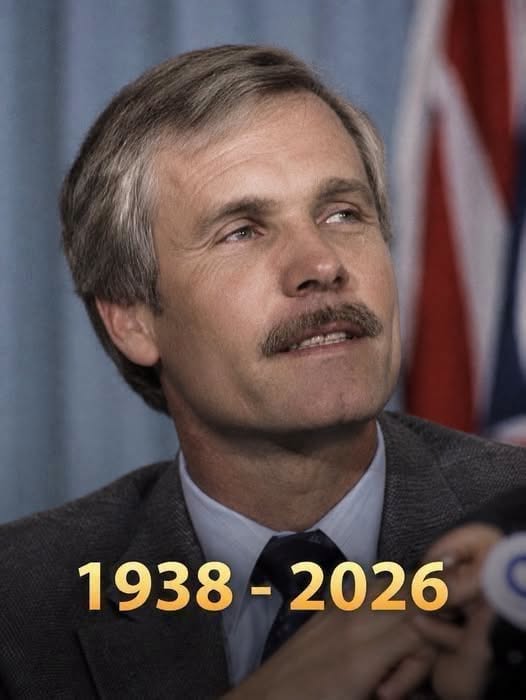
Born on November 19, 1938, in Cincinnati, Ohio, Robert Edward “Ted” Turner III began his business career in his family’s billboard advertising company.
He eventually transformed that business into one of the most influential media empires in American history.
His defining achievement came on June 1, 1980, when he launched CNN, the world’s first 24-hour television news network.
At a time when Americans relied largely on scheduled evening news broadcasts, Turner’s idea of continuous news coverage seemed ambitious and risky.
But CNN changed the industry.
Its round-the-clock reporting eventually became a model for television networks worldwide, fundamentally altering how audiences experienced breaking news and major international events.
CNN’s coverage of the 1991 Gulf War further demonstrated the power of live global reporting.
Building a Television Empire
Turner’s influence extended well beyond CNN.
His media holdings included TBS, TNT, Cartoon Network, and Turner Classic Movies, helping reshape entertainment and cable broadcasting.
He also became a prominent figure in professional sports, owning the Atlanta Braves baseball team and the Atlanta Hawks basketball team.
An accomplished sailor, Turner successfully defended the America’s Cup in 1977, adding another remarkable achievement to his already varied career.
Known for his outspoken personality and willingness to take risks, he earned colorful nicknames, including “The Mouth of the South” and “Captain Outrageous.”
A Billion-Dollar Commitment to Philanthropy
Turner’s ambitions were not limited to business.
In 1997, he announced a historic $1 billion commitment to support United Nations causes, helping establish the United Nations Foundation.
He also devoted substantial resources to environmental protection, preserving more than two million acres of land and supporting the restoration of American bison populations.
His conservation efforts made him one of the most prominent private landowners engaged in protecting wildlife habitats in the United States.
Turner additionally supported efforts to reduce nuclear threats and advance international cooperation.
His Final Years and Lasting Legacy
In 2018, Turner publicly revealed that he had been diagnosed with Lewy body dementia, a progressive neurological disorder.
During his later years, he increasingly focused on philanthropy, conservation, and the causes that had become central to his life.
He is survived by five children, fourteen grandchildren, and two great-grandchildren.
His family announced plans for a private service, followed by a public memorial.
Ted Turner will be remembered as much more than the founder of CNN. He was a businessman willing to challenge established industries, a media visionary who transformed the news cycle, and a philanthropist who committed enormous resources to environmental and humanitarian causes.
Before CNN, continuous television news was an unproven concept.
Today, the expectation that news should be available at any moment is taken for granted.
That transformation remains one of Turner’s most enduring achievements.
His influence will continue to be felt wherever people turn on a screen to discover what’s happening in the world.
{"post":117075,"page":2,"next":[{"id":117071,"title":"Grandpa Never Raised His Voice When the Teller Brushed Him Off. He Just Asked for the Manager.","url":"https:\/\/new24.info\/117071"},{"id":117066,"title":"Hidden Hospital Footage Revealed My Paralyzed Husband Was Faking His Severe Injuries","url":"https:\/\/new24.info\/117066"},{"id":117062,"title":"The Flight of Honor: How a Father\u2019s Quiet Sacrifice for His Late Wife, an Unjust Flight Agent, and an Unexpected Military Encounter in the First-Class Cabin Brought Healing, Grace, and a Lifelong Family Guardian to a Young Girl\u2019s Grieving World Beneath the Carolina Sky","url":"https:\/\/new24.info\/117062"},{"id":117058,"title":"The Open Garage Exposed a Secret I Never Saw Coming","url":"https:\/\/new24.info\/117058"},{"id":117054,"title":"At 64, I Married a 31-Year-Old Man. Six Months Later, I Noticed That Every Evening He Secretly Added Something to My Drink and Insisted I Finish Every Last Drop.","url":"https:\/\/new24.info\/117054"},{"id":117042,"title":"Very rare photos of Princess Diana","url":"https:\/\/new24.info\/117042"},{"id":117036,"title":"A Life Shaped by Sound, Solitude, and Global Influence","url":"https:\/\/new24.info\/117036"},{"id":117032,"title":"At My 8-Year-Old Daughter\u2019s $2,500 Birthday Party, My Sister-in-Law Snapped, \u201cYOU CAN\u2019T EAT ANYTHING! ASK YOUR MOM FOR FOOD!\u201d While Every Other Child Enjoyed Cake, My Daughter Stood There With an Empty Plate. I Demanded an Explanation, but the Manager Revealed My Husband\u2019s Signature on a Shocking Document\u2026","url":"https:\/\/new24.info\/117032"},{"id":117028,"title":"My son laughed while I rented a one-bedroom apartment behind a laundromat. Eight months later, he walked into my beautiful new villa, looked at his wife, and announced, \u201cIt\u2019s perfect. Kendra will love living here.\u201d","url":"https:\/\/new24.info\/117028"},{"id":117024,"title":"My Ex Husband Trashed My House Until My Father Stepped In","url":"https:\/\/new24.info\/117024"},{"id":117020,"title":"They Sold It to Me for $1 and Forgot Who Paid for Everything After. I Kept the Receipts","url":"https:\/\/new24.info\/117020"},{"id":117015,"title":"My father tossed my grandmother\u2019s savings passbook into her grave and sneered that it was worthless. The following morning, I walked into the bank with that same book, and the teller went pale before reaching for the phone and calling the police.","url":"https:\/\/new24.info\/117015"},{"id":117010,"title":"Widow Sells Her Home To Help Son But Discovers Secret Paperwork","url":"https:\/\/new24.info\/117010"},{"id":117006,"title":"A Father Started Charging His 18-Year-Old Son $250 a Month for His Room \u2013 Five Years Later, the Young Man Received a Box That Turned His Life Upside Down","url":"https:\/\/new24.info\/117006"},{"id":117001,"title":"A Woman\u2019s Husband Didn\u2019t Know She\u2019d Regained Her Sight After Two Years of Blindness \u2013 When She Saw What He\u2019d Been Keeping in Their Bedroom, She Was Speechless","url":"https:\/\/new24.info\/117001"},{"id":116997,"title":"My eight-year-old son chose his wealthy father in court and told the judge, \u201cMy mom can\u2019t give me the future I deserve.\u201d","url":"https:\/\/new24.info\/116997"},{"id":116993,"title":"My thirteen-year-old son sold his prized electric guitar to buy a specialized wheelchair for a girl in his class\u2026 but early the next morning, two armed police officers showed up at our front door. And what they revealed left me completely paralyzed.","url":"https:\/\/new24.info\/116993"},{"id":116988,"title":"Claire Bought a Two-Dollar Ticket Right Before Mark Demanded Her House Keys","url":"https:\/\/new24.info\/116988"},{"id":116983,"title":"Undercover Boss Discovers Shocking Secret Destroying His Mothers Sacred Diner Legacy","url":"https:\/\/new24.info\/116983"},{"id":116979,"title":"My Husband Chose His Mistress And Lost My Seventy Three Million Fortune","url":"https:\/\/new24.info\/116979"}]}