Mary’s pregnancy had been difficult.
There had been scares.
Extra appointments.
Nights when she woke me because something felt wrong.
But by the final weeks, the doctors told us both babies were doing well.
We started breathing again.
The morning of the delivery, Mary and I were still arguing about names.
“Twins do not need matching names.”
“I’m not saying they need matching names.”
“You suggested Lily and Lila.”
“That was one time.”
“It was yesterday.”
She laughed.
Then asked me to pass her water.
A few hours later, our lives split apart.
Something went wrong during the delivery.
Then something else.
Doctors began speaking faster.
Machines started beeping.
Someone pulled me aside and explained that serious complications had developed.
They might not be able to save all three of them.
Mary heard enough.
She reached for my hand.
Her fingers were cold.
“The girls.”
I looked at her.
“What?”
“The girls.”
She squeezed my hand.
“Obviously the girls.”
I wanted to tell her not to say that.
I wanted the doctor to come back and announce there had been a mistake.
I wanted another option.
Any option.
But Mary looked at me with a clarity that terrified me.
So when the doctor asked again, I said the words that would replay in my head for months.
“Save the babies.”
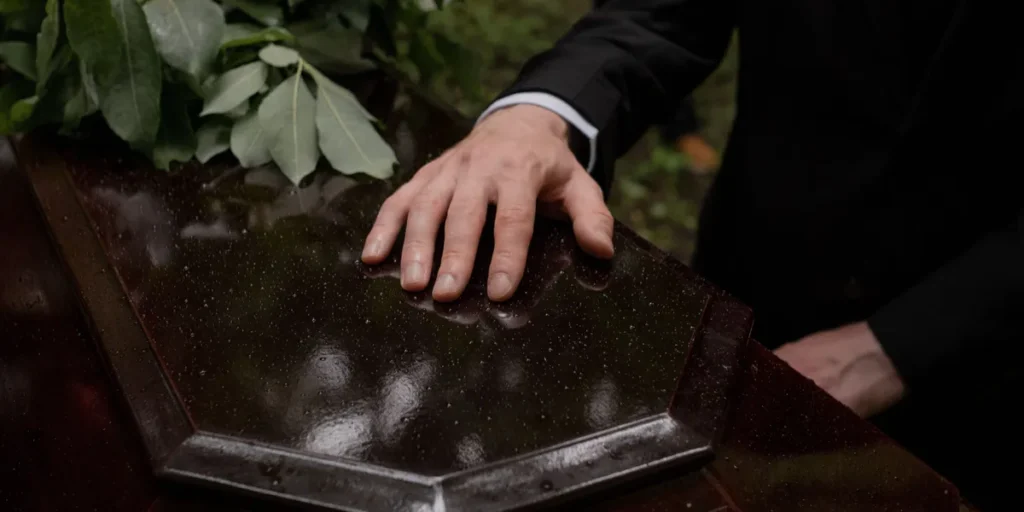
By morning, Mary was dead.
I came home with two daughters.
And a plastic hospital bag filled with my wife’s belongings.
Her sweatshirt was inside.
I couldn’t wash it.
Couldn’t even take it out.
Everyone told me to stay strong.
So I did what there was to do.
I warmed bottles.
Wrote down how much each girl drank because grief had turned my memory into something unreliable.
Changed diapers.
Washed tiny clothes.
Stood over both cribs in the middle of the night checking whether their chests were moving.
My sister brought casseroles.
Most of them spoiled in the refrigerator because I forgot to eat.
My jeans started hanging loose.
And whenever the house became quiet, I heard myself saying it again.
Save the babies.
What if I had said something else?
What if Mary would still be here?
I knew she had asked me to save them.
I knew that logically.
Grief did not care about logic.
Part of me still believed I had chosen.
And that belief was slowly destroying me.
Then, three months after Mary died, the doorbell rang.
Her mother stood outside.
An envelope shook between her hands.
The moment I saw her, I started apologizing.
“I didn’t want to lose her.”
She stepped inside.
“She asked me.”
“I know.”
“I agreed.”
“I know.”
“I should have done something else.”
Her face changed.
“Do you think that’s why I stayed away?”
I stopped.
She looked down at the envelope.
“You think I blame you?”
I couldn’t answer.
One of the twins made a small sound from the nursery.
Mary’s mother looked toward the hallway.
Then back at me.
“Can we sit down?”
We sat at the kitchen table.
Mary had once covered that table with scraps of paper containing baby names.
Half of them crossed out.
Some circled.
Some marked with question marks.
Her mother kept the envelope in her lap.
“There’s something about Mary’s childhood you never knew.”
I almost laughed.
“I knew her nine years.”
“I know.”
“She told me everything.”
Her mother looked directly at me.
“No.”
Her voice broke.
“She didn’t tell you what happened after her father died.”
I knew about the heart attack.
Mary was eight.
She remembered the ambulance.
The neighbors standing outside.
Her father’s shoes still by the door the next morning.
That was about all she ever said.
Her mother took a breath.
“After the funeral, I kept her fed.”
I waited.
“Got her to school.”
“What are you saying?”
“I stopped being there.”
I frowned.
“She had his eyes.”
Her mother’s voice trembled.
“Sometimes she would smile and look exactly like him.”
She stared down at her hands.
“And I would leave the room.”
“Why?”
“Because I missed him so much I couldn’t stand looking at her.”
I thought of Mary smiling across our kitchen.
That same crooked smile.
“One night,” her mother continued, “Mary found me crying over a photograph of him.”
I said nothing.
“She climbed beside me on the couch.”
Her mother closed her eyes.
“She asked, ‘Do you wish Daddy was here?’”
“What did you say?”
“More than anything.”
I felt something tighten in my chest.
“Then she asked me…”
Her mother’s voice failed.
“What?”
“‘More than you want me?’”
I waited.
“What did you say?”
Her mother shook her head.
“Nothing.”
I pushed my chair back.
“She was eight.”
“I know.”
“You didn’t answer?”
“I couldn’t.”
“She thought you didn’t want her.”
“For years.”
Suddenly, a hundred little things about Mary made sense.
She hated asking for help.
Even small things.
A glass of water.
A ride.
A favor.
She would always say:
“I don’t want to be a bother.”
I used to tease her about it.
I thought it was simply part of her personality.
It wasn’t.
“She stopped bringing me pictures of her father,” her mother said.
“Stopped asking about him.”
“You thought she was healing.”
“Yes.”
“She was trying not to make you sad.”
Her mother nodded.
A cry came from the nursery.
I stood automatically.
Her mother started to rise too.
“I’ve got her.”
I picked up the smaller twin.
She settled against my chest almost immediately.
Her sister remained asleep with one fist beside her cheek.
I stood there staring at them.
They had no idea what had happened in that delivery room.
One day, they would ask.
I had spent three months terrified of what I would tell them.
When I returned to the kitchen, Mary’s mother was staring at a photograph on the refrigerator.
Mary was holding a pair of tiny baby shoes.
She had bought them before we knew there were two babies.
In the picture, she was laughing.
“She was so happy,” her mother whispered.
“She was.”
Her mother looked down.
“Before your wedding, Mary finally told me what that night did to her.”
“Did you apologize?”
“Yes.”
“Did she forgive you?”
“She said she knew I loved her.”
Her mother swallowed.
“She just wished she’d known it when she was little.”
I sat back down.
“When she became pregnant, she brought it up again.”
“Why?”
“She told me she couldn’t bear the thought of her daughters ever feeling unwanted if something happened.”
I looked at her.
“What did you say?”
“I promised I’d be there.”
Her voice cracked.
“No matter what.”
I stared at the envelope.
“And then you disappeared.”
She flinched.
“Yes.”
Something returned to me.
A conversation I had almost forgotten.
Mary and I were in bed several weeks before the birth.
One of the babies kicked hard enough that we could actually see her stomach move.
I laughed.
Mary didn’t.
She looked at me and asked:
“If something happened to me, would you ever wish we never had them?”
I remember frowning.
“What kind of question is that?”
“Please.”
She looked frightened.
“Just answer me.”
“Of course not.”
“Even if you missed me?”
I rolled toward her.
“I’d miss you every day.”
She waited.
“But I’d still love them every day.”
Mary started crying.
I kissed her forehead.
Told her she was exhausted.
Told her everything was going to be fine.
I thought it was pregnancy anxiety.
Now I understood.
“She asked me that,” I said.
Her mother looked up.
I told her the entire conversation.
Her hand flew to her mouth.
“She asked you?”
“Yes.”
“And you told her you would still want them?”
“Of course.”
Tears filled her eyes.
“That’s what I should have told her when she was eight.”
I stared toward the nursery.
“She never told me why she asked.”
“She planned to.”
“When?”
“After the girls were born.”
“Why wait?”
Her mother’s answer was quiet.
“She was ashamed that one unanswered question from childhood still frightened her.”
“She had nothing to be ashamed of with me.”
“I know.”
For a brief moment, I felt angry with Mary.
Not because of the girls.
Because she had carried this thing alone.
Because I had been sleeping beside her every night and she still believed she had to hide part of herself.
Then I remembered the tears.
The question.
Maybe she had tried to tell me.
Maybe I had been so busy saying everything would be fine that I hadn’t listened closely enough to what she was actually asking.
Her mother slid the envelope across the table.
“She wrote this.”
“For who?”
“For me.”
I stared.
“She told me I could show it to you if anything happened to her.”
I didn’t touch it yet.
“Why didn’t you bring it sooner?”
Her mother started crying.
“I couldn’t.”
“What was she afraid of?”
She pushed the envelope closer.
“Read it.”
I opened it.
Mary’s handwriting.
The little hearts she sometimes drew over certain letters.
I touched the page before I started.
Mom,
I know you loved me.
I know that now.
But when I was little, I thought you would have traded every day with me to have Dad back.
I stopped reading.
Her mother covered her mouth.
I continued.
I know you never meant that.
Still, I spent years trying to be quiet enough not to make you sad.
Now I’m going to have two daughters.
I already love them more than I know how to say.
And I’m scared.
Not of them.
Of what grief can make people believe.
He will love them.
I know that.
He doesn’t know how much he’s already healed in me.
Someday I’ll tell him.
My vision blurred.
I wiped my face and kept reading.
I know I’m probably worrying about nothing.
But if something happens to me, he’ll blame himself.
He’ll think there was something else he should have said or done.
Please don’t let the girls grow up thinking their mother was someone they cost him.
Tell him I trusted him.
Tell him I wanted them.
And please, Mom.
Don’t disappear.
You promised.
I want my girls to know they were wanted.
Always.
I read the letter twice.
Then a third time.
One sentence stopped me.
He doesn’t know how much he’s already healed in me.
For three months, I had replayed the worst moment of our marriage.
The moment I believed I had failed her.
But Mary had been carrying another memory.
That night in bed.
Her question.
My answer.
An answer I had barely remembered giving.
She spent years wondering whether she had been wanted.
Somehow, without even understanding the question beneath the question, I had helped her stop wondering.
“She trusted me?”
Her mother nodded.
“Even knowing something could happen?”
“She wasn’t expecting to die.”
Her voice softened.
“She was afraid because she knew what grief could do to people.”
I looked at the sentence again.
Tell him I trusted him.
In the hospital, Mary had squeezed my hand.
“The girls. Obviously the girls.”
I had thought the squeeze meant goodbye.
Now I wondered whether it meant something else.
I trust you.
Not to choose for her.
To trust the choice she had already made.
I lowered the letter.
“She told you not to disappear.”
Her mother cried harder.
“I know.”
“You promised her.”
“Yes.”
“For three months, I sent you pictures of her daughters.”
“I know.”
“And you wrote ‘thank you.’”
She looked down.
“That’s all you had?”
“I saw Mary every time I looked at them.”
Her voice broke.
“And all I could think was that she should be holding them.”
“They’re here.”
“I know.”
“Mary isn’t.”
She started sobbing.
“But they are.”
“I know.”
“You knew what your silence did to her.”
She nodded.
“And you did it again.”
“Yes.”
I wanted her to argue.
I wanted her to defend herself so I could stay angry.
Instead she whispered:
“Mary spent her childhood waiting for me to come back.”
She wiped her eyes.
“And I made her daughters wait for me too.”
I stood and went to the sink.
Four bottles were drying on a towel.
Mary used to tease me about how organized I had become during the pregnancy.
Now I wrote feeding times on scraps of paper because some nights I couldn’t remember which baby I had just fed.
“I thought you hated me,” I said.
Her mother looked up.
“I thought you hated yourself.”
That stopped me.
“For what?”
“For saying yes.”
I looked away.
“I did.”
Then back at her.
“So why didn’t you come?”
She wiped her face.
“I was afraid I’d look at those girls and wish Mary were here instead.”
I said nothing.
“I was ashamed of that thought.”
“So you stayed away.”
“Yes.”
“The exact thing Mary begged you not to do.”
“I know.”
“Why today?”
She looked toward the nursery.
“Yesterday you sent me a picture.”
I remembered.
Both girls on a blanket.
One smiling.
The other grabbing her sister’s sleeve.
I had written:
They’ve started smiling when I sing.
“When I saw it,” her mother said, “I remembered Mary singing when she was little.”
She smiled faintly through tears.
“She was terrible.”
“She was terrible as an adult too.”
We both laughed.
Just once.
Then she cried again.
“I realized I couldn’t remember the last time I sang with her.”
She had opened the drawer where she kept Mary’s letter.
Read it again.
Found two little dresses she had bought before the birth.
Still wrapped.
She drove to my house.
Sat outside for almost an hour.
“I nearly left.”
“What stopped you?”
“I imagined the girls growing up and asking why their grandmother never came.”
“And what would you have said?”
“Nothing.”
She shook her head.
“Nothing that wouldn’t have hurt them.”
We sat quietly for a long time.
Then I told her something I had never admitted to anyone.
“Sometimes I miss Mary so much I feel guilty looking at the girls.”
Her eyes met mine.
“I’ll be holding one of them and think Mary should be doing this.”
My throat tightened.
“She should know which one hates a cold bottle.”
“She should have seen their first smiles.”
“She should be tired with me.”
“And then I hear myself saying it again.”
“Save the babies.”
Her mother reached across the table.
I pulled my hand away.
Not because I hated her.
Because I needed to finish.
“I keep thinking I traded her for them.”
Her mother’s face twisted.
“Mary asked you.”
“I agreed.”
“Because you trusted her.”
I shook my head.
“I have never wished they weren’t born.”
“Of course not.”
“Not once.”
“I believe you.”
“But I wish Mary hadn’t died.”
Her mother looked at me through tears.
“Those are not the same wish.”
The words hit me harder than anything else that day.
Those are not the same wish.
I thought of Mary in bed.
Even if you missed me?
I’d miss you every day.
But I’d still love them every day.
Mary believed me.
Somewhere down the hall, a baby started crying.
Her sister woke immediately.
Of course she did.
I went into the nursery.
Picked up one.
Then the other.
I tucked one against each shoulder.
Mary’s mother appeared in the doorway.
She watched me rock them.
“Mary would have laughed at this.”
“Why?”
“She said I couldn’t carry a grocery bag without dropping something.”
Her mother laughed softly.
Then, after a moment:
“Could I hold one?”
I hesitated.
She saw it.
Lowered her eyes.
“I understand.”
“These girls cannot spend their childhood waiting for you to become ready.”
“I know.”
“I’m not going to tell them Grandma is coming if you might disappear.”
She nodded.
“I’ll earn it.”
Her voice shook.
“If you let me.”
I handed her the smaller twin.
She held the baby like something fragile and holy.
“Hello, sweetheart.”
Her voice cracked.
“I’m your grandma.”
The baby reached up and grabbed the collar of her blouse.
Mary’s mother smiled through tears.
We did not fix everything that day.
I did not forgive three months of silence simply because she cried in my kitchen.
But she came back the next morning.
And the morning after that.
She washed bottles.
Learned which baby cried louder.
Learned which one liked to be rocked.
Held both girls while I slept for three uninterrupted hours.
One afternoon, she was feeding the smaller twin when the baby wrapped her fingers around Grandma’s thumb.
Mary’s mother froze.
“Mary used to do that.”
Her eyes filled.
For a second, she looked toward the door.
I recognized the expression immediately.
The urge to escape before remembering hurt too much.
Then the baby made an impatient little noise.
Her grandmother looked down.
“I’m here.”
She wiped her face with her free hand.
And kept feeding her.
This time, she stayed.
A week later, she brought an old photo album.
Mary with missing front teeth.
Mary in a crooked birthday hat.
Mary sitting on her father’s shoulders.
Her mother touched that photograph carefully.
“I couldn’t look at this for years.”
Then she told me the story behind it.
How Mary demanded another ride.
How her father pretended his legs were tired.
How she had screamed with laughter.
We laughed too.
I hadn’t expected that.
Later that evening, after her mother left, I opened the hospital bag.
For the first time.
I reached inside.
Pulled out Mary’s sweatshirt.
It still smelled faintly like her soap.
I held it against my face.
Cried until there wasn’t much left.
Then I folded it.
Placed it beside the photo album.
Not hidden.
Not trapped inside a plastic bag.
Not forgotten.
The next day, Mary’s mother noticed it.
“She wore that when she went into the hospital.”
“I know.”
“She bought it on your first trip together.”
I looked at her.
“How do you know that?”
“Mary told me.”
She smiled.
“It rained all weekend.”
“She said the rain made it romantic.”
Her mother laughed.
“She always did that.”
“Did what?”
“Found something good in whatever went wrong.”
I looked at the stretched sleeves.
Mary always pulled them over her hands.
“For months I thought taking this out meant letting her go.”
Her mother shook her head.
“No.”
She touched the album.
“It means the girls can know her.”
That evening, I sat between the cribs.
I started telling my daughters about their mother.
About the argument over names.
About her awful singing.
About how she laughed that morning because I couldn’t find the cup of water sitting directly beside me.
One daughter waved her fist.
The other stared at my face.
“Your mother wanted you.”
My voice broke.
“Both of you.”
I touched their tiny hands.
“And I do too.”
I still missed Mary.
Every day.
I always would.
But when the girls eventually asked why their mother was not there, I would never tell them they had cost me her life.
I would tell them she loved them before she ever saw their faces.
I would tell them about her laugh.
Her terrible singing.
The way she pulled her sleeves over her hands.
And I would tell them that when everything went wrong and she asked me to trust her, I did.
I kissed both foreheads.
Then turned off the nursery light.
Tomorrow they would wake hungry.
Their grandmother would come.
And together, we would keep telling them about Mary.
{"post":116787,"page":2,"next":[{"id":116784,"title":"Selfish Mother Returns For Wedding And Faces A Shocking Fifteen Year Secret","url":"https:\/\/new24.info\/116784"},{"id":116781,"title":"A School Held a Charity Basketball Game for a Woman\u0027s Seriously Ill Son, but a Rude Couple Refused to Leave the Accessible Seats Reserved for Him and His Mother \u2013 Then the Referee Did Something That Made the Entire Gym Hold Its Breath","url":"https:\/\/new24.info\/116781"},{"id":116779,"title":"I Chose A Tiny House Over My Daughter\u2019s Basement And Then Everything Came Out Thursday","url":"https:\/\/new24.info\/116779"},{"id":116777,"title":"My Daughter Told Me to Stay Out of Her Life \u2013 Then She Came Back Asking About the Bills","url":"https:\/\/new24.info\/116777"},{"id":116772,"title":"Ten minutes before our wedding, I heard my fianc\u00e9 tell his sister, \u201cDon\u2019t worry about daycare anymore. Natalie will take care of all three kids starting Monday.\u201d","url":"https:\/\/new24.info\/116772"},{"id":116768,"title":"My husband\u2019s family never knew I had once been an MMA champion. At my mother-in-law\u2019s BBQ, my brother-in-law poured beer over my head.","url":"https:\/\/new24.info\/116768"},{"id":116764,"title":"My brother smashed my $78,000 SUV after I refused to give it to his wife. Mom screamed, \u201cIt\u2019s just a car! Just lie to insurance!\u201d I just made one call\u2026 But when the police arrived, they asked them one question that left them speechless\u2026","url":"https:\/\/new24.info\/116764"},{"id":116749,"title":"Donald Trump\u0027s Granddaughter Shares Update After Unexpected Medical Procedure \u2014 Photos","url":"https:\/\/new24.info\/116749"},{"id":116746,"title":"Woman Went to Pick up Her Daughter\u2019s Wedding Cake \u2013 The Baker Saw Her Name and Said, \u2018I Was Told Not to Give It to You\u2019","url":"https:\/\/new24.info\/116746"},{"id":116741,"title":"With heavy hearts, we share the sad news that a classic Hollywood actor who gave us so much has passed away","url":"https:\/\/new24.info\/116741"},{"id":116739,"title":"My Husband Stole My Platinum Card to Fund His Family\u2019s Luxury Vacation\u2014Then Threatened Divorce When I Canceled It","url":"https:\/\/new24.info\/116739"},{"id":116737,"title":"A Gynecologist\u0027s Patient Told Her, \u0027I\u0027m Pregnant with Your Husband\u0027s Baby. You Need to Divorce Him!\u0027 \u2013 The Next Morning, the Patient Called Her, Screaming, \u0027What Did You Do?!\u0027","url":"https:\/\/new24.info\/116737"},{"id":116732,"title":"Mother Who Abandoned Six Daughters Returns for Wedding\u2014And Faces the Truth","url":"https:\/\/new24.info\/116732"},{"id":116727,"title":"Why She Wears a Pinky Ring as a Promise to Herself","url":"https:\/\/new24.info\/116727"},{"id":116724,"title":"What That Mysterious \u0027G\u0027 on a Manual Gear Stick Actually Means","url":"https:\/\/new24.info\/116724"},{"id":116721,"title":"She Sewed a Princess Dress for Three Nights \u2014 Then Let Her Daughter Decide What Love Looks Like","url":"https:\/\/new24.info\/116721"},{"id":116715,"title":"Can You Spot the Hidden Man\u0027s Face Hiding in This Peaceful Shoreline?","url":"https:\/\/new24.info\/116715"},{"id":116706,"title":"I came home carrying ivory roses after spending nine days with my mistress, only to discover that my wife and newborn son had vanished from our house.","url":"https:\/\/new24.info\/116706"},{"id":116702,"title":"While I was away on business, I got a call my husband had cr:ashed. At the hospital, a nurse whispered, \u201cYou can\u2019t go in his wife and child are already with him.\u201d","url":"https:\/\/new24.info\/116702"},{"id":116698,"title":"Eight months pregnant, I stood beside my billionaire father\u2019s coffin when my husband walked into the funeral holding his mistress\u2019s hand.","url":"https:\/\/new24.info\/116698"}]}