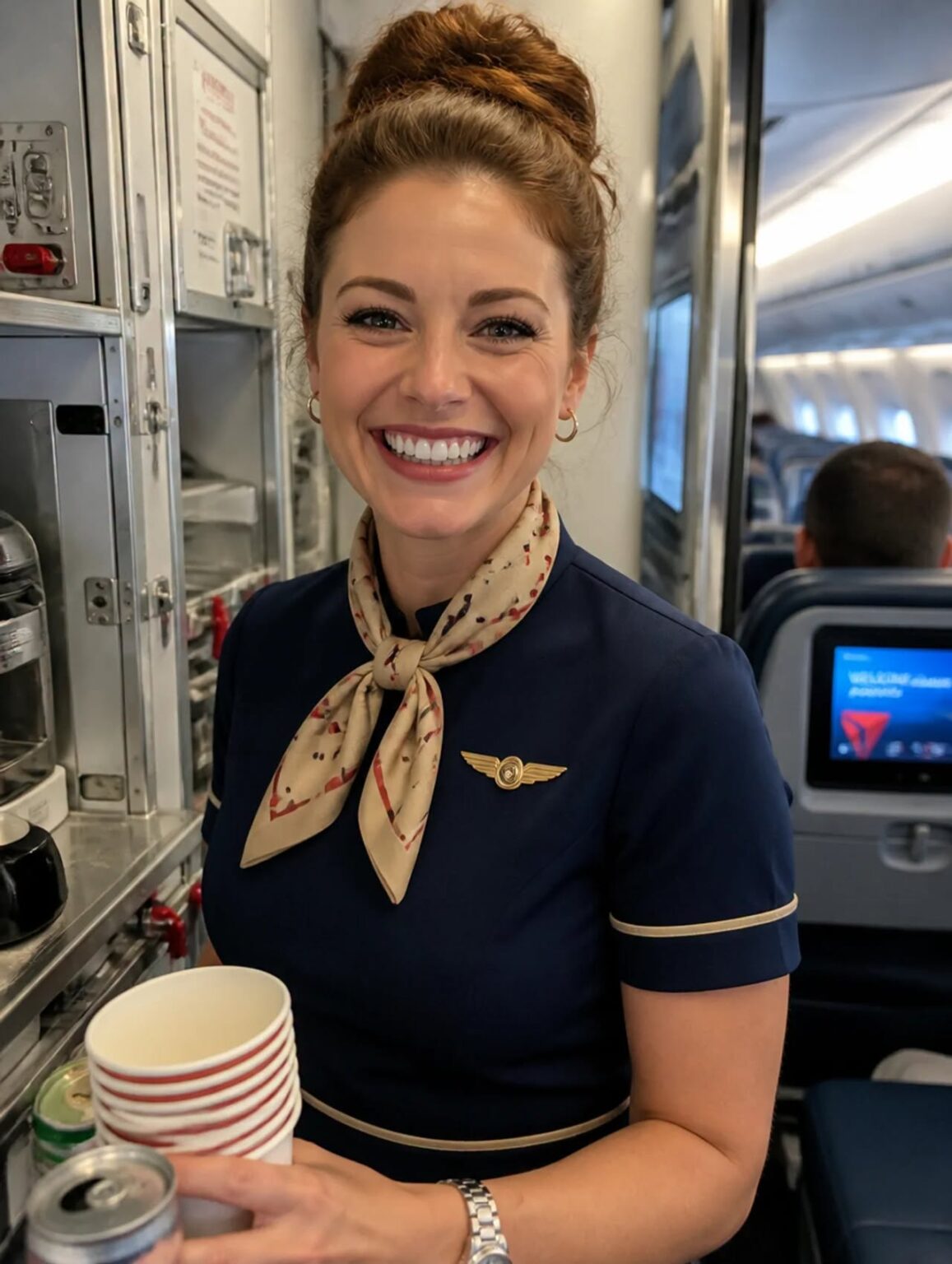
At least, Penelope thought we had stopped because neither of us could bear more disappointment.
There was something I had never told her.
Years earlier, I had quietly undergone my own fertility testing.
The result said I was incapable of fathering a child.
I hid it.
I told myself I was protecting her.
Really, I was protecting myself from having to say it aloud.
Two years later, Penelope decided to retire from flying.
Her final flight landed on our twelfth anniversary, so I secretly booked a seat.
When she saw me onboard, her whole face lit up.
Then, during the flight, I learned she was pregnant.
Everyone around us celebrated.
I could barely breathe.
One thought drowned out everything else.
It cannot be mine.
By the time we reached the parking garage, joy had already turned into accusation.
“Who is the father?”
Penelope stared at me.
“What?”
I told her about the old fertility result.
She looked more wounded by that revelation than by the accusation itself.
“You knew this for years?”
“I didn’t want to hurt you.”
“And now you think I cheated?”
I demanded an explanation she could not give because she had none.
She kept saying the same thing.
“I have never been unfaithful to you.”
I did not believe her.
That became the worst decision of my marriage.
Within days, I moved out.
For seven months, Penelope went through pregnancy largely without me.
I told myself certainty had forced my hand.
But certainty would have meant seeking another medical opinion.
Getting tested again.
Talking to doctors.
I did none of those things.
I had one piece of paper and a great deal of fear.
And I chose the paper over my wife.
During the seventh month, I finally returned to the fertility clinic.
The new test came back normal.
I thought there had to be another mistake.
There had been.
Six years earlier.
After reviewing the old records, the clinic determined that my original result had been mixed up with another patient’s.
I was capable of fathering a child.
I sat in the parking lot holding the corrected report and understood what I had done.
Penelope had told me the truth.
Repeatedly.
And I had left her alone because believing a laboratory result felt safer than trusting the woman I had loved for twelve years.
When I found her, I apologized.
Then apologized again.
She listened.
Finally she said:
“The clinic made a mistake six years ago.”
I nodded.
“But you made yours seven months ago.”
There was nothing I could say to that.
The medical error explained my fear.
It did not excuse what I had done with it.
She allowed me to help prepare for the baby.
Appointments.
Furniture.
Late-night grocery runs.
But I lived separately.
She did not owe me immediate trust because the mystery had finally been solved.
Trust had been broken by my choices, not by the laboratory.
When Penelope went into labor, she asked me to come.
Our daughter Amanda was born healthy.
Holding her for the first time brought joy and grief together in a way I had never experienced.
I had spent years believing this child could never exist.
Then months refusing to believe she was mine.
Now she was sleeping against my chest.
Penelope watched me quietly.
There was no dramatic declaration that everything was forgiven.
We simply began again.
Slowly.
I moved home later, after months of counseling and difficult conversations.
The clinic eventually accepted responsibility for the testing error, and the matter was resolved financially.
But no settlement could compensate Penelope for spending much of her pregnancy defending her honesty to the person who should have trusted her most.
That debt could only be answered differently.
With changed behavior.
A year later, our marriage was not the same as before.
In some ways, that was good.
We told each other things we once would have hidden out of shame or fear.
We asked questions before drawing conclusions.
And I stopped calling secrecy protection simply because my intention had been loving.
On our thirteenth anniversary, Amanda slept between us after refusing to settle in her crib.
Penelope looked at me and smiled.
Not the effortless smile she had given me across the airplane cabin a year earlier.
Something quieter.
Harder earned.
I once thought trust meant believing you knew another person completely.
Now I think it means something more demanding.
When fear arrives, you give the person you love a chance to stand beside you inside it.
I denied Penelope that chance twice.
First when I hid my diagnosis.
Then when I refused to believe her.
The clinic’s mistake nearly destroyed our marriage.
But it was not the piece of paper that did the deepest damage.
It was what I chose to do without ever questioning whether that paper might be wrong.