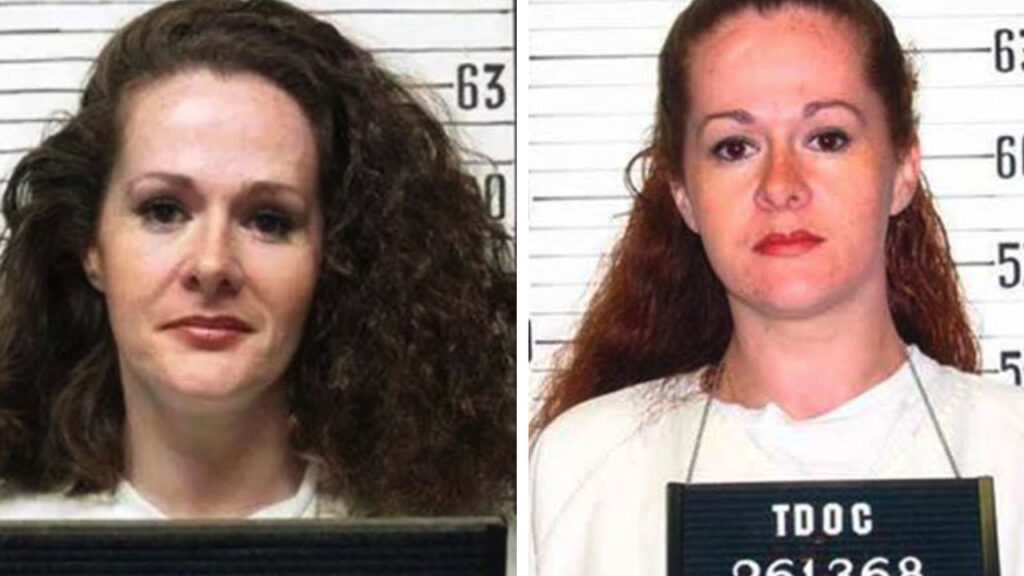
The attorneys added:
“She is grateful to the first responders and her medical team for their care in these extraordinary circumstances. She is continuing to receive medical care at the prison, and we will continue to track her recovery.”
Pike had been scheduled to die by lethal injection after spending approximately three decades on death row.
Before the execution, her attorneys repeatedly argued that the procedure could expose her to unnecessary suffering because of a blood-clotting disorder and difficulties involving IV access.
Those concerns became a major issue on September 30.
According to accounts of the execution attempt, officials struggled to establish an IV line in Pike’s arms. Her lawyers have said at least seven needles were used during the process, and one was reportedly removed bent at an extreme angle.
Pike was eventually given two doses of pentobarbital.
But she did not die.
Witnesses said she could be heard snoring during part of the procedure before officials eventually stopped the execution and transferred her to a hospital for emergency treatment.
Pike remained unconscious for several days.
Nearly a week later, her attorneys announced that she had regained consciousness and was able to speak.
Her condition continued to improve in the days that followed, and she eventually became able to stand.
Now, her discharge from the hospital marks another unexpected development in a case that has raised major questions about Tennessee’s execution procedures.
Pike’s attorneys say her physical recovery has been extraordinary, but they caution that it remains too early to know whether she will experience lasting effects from the failed execution.
“While her physical recovery has been remarkable, significant questions remain about the long-term effects of what she endured.”
Her lawyers say those concerns extend beyond her physical injuries.
They have also described the psychological consequences of surviving an execution attempt.
“Christa is dealing with the profound psychological trauma of having survived a failed execution, including the terror, pain and uncertainty of believing she was about to die.”
Her legal team has also said Pike continues to experience cognitive difficulties as her recovery progresses.
What happens next remains uncertain.
Pike and her attorneys have sought to have her death sentence reduced to life imprisonment, while questions remain about whether Tennessee could ever attempt to execute her again.
For now, executions in the state have been placed on hold while officials investigate what went wrong during the September 30 procedure.
Pike was sentenced to death for the 1995 murder of 19-year-old Colleen Slemmer.
At the time of the killing, Pike was 18 years old and Slemmer was a fellow student in a Job Corps program in Knoxville.
Prosecutors said Pike believed Slemmer was interested in her boyfriend, Tadaryl Shipp, who was 17 at the time.
Pike, Shipp, and another friend, Shadolla Peterson, lured Slemmer to an isolated location.
Slemmer was then killed.
Pike was convicted and sentenced to death in 1996.
Because Shipp was under 18 when the crime occurred, he was not eligible for the death penalty and instead received a life sentence.
Peterson received six years of probation.
Shipp remains incarcerated.
His request for parole was denied, and his next parole hearing is reportedly scheduled for 2031.
Pike’s own legal future, meanwhile, remains unresolved.
What was intended to be the end of a decades-long capital case has instead created an entirely new legal and medical chapter.
She entered the execution chamber on September 30 expecting to die.
After two doses of pentobarbital, days of unconsciousness, intensive hospital treatment, and an uncertain recovery, she is now back inside the prison where she spent more than 30 years awaiting execution.
Whether Tennessee will ever attempt to carry out her death sentence again remains one of the biggest unanswered questions surrounding the case.