The number was unfamiliar.
“Hello?”
There was a pause.
Then a man said, “Is this Eleanor?”
“Yes.”
“My name is Peter.”
Something about his voice made me sit down.
“I’m Jeffrey’s son.”
For a second, the room disappeared.
Jeffrey.
I had not heard that name spoken directly to me in decades.
Peter continued carefully.
“My father is in the hospital.”
My hand tightened around the phone.
“He asked me to find you.”
I couldn’t speak.
Peter lowered his voice.
“He really wants to see you.”
Jeffrey and I met when we were seventeen.
Back then, we were almost always together.
School.
Walks home.
Saturday afternoons.
Long conversations that stretched past dinner until one of our parents called looking for us.
We talked about everything.
College.
Work.
Places we wanted to visit.
People we wanted to become.
And the things teenagers believe they understand about the future.
Everyone assumed we were dating.
We weren’t.
At least not officially.
The truth was more complicated.
Jeffrey was my best friend.
And somewhere beneath all that friendship lived something neither of us was brave enough to say out loud.
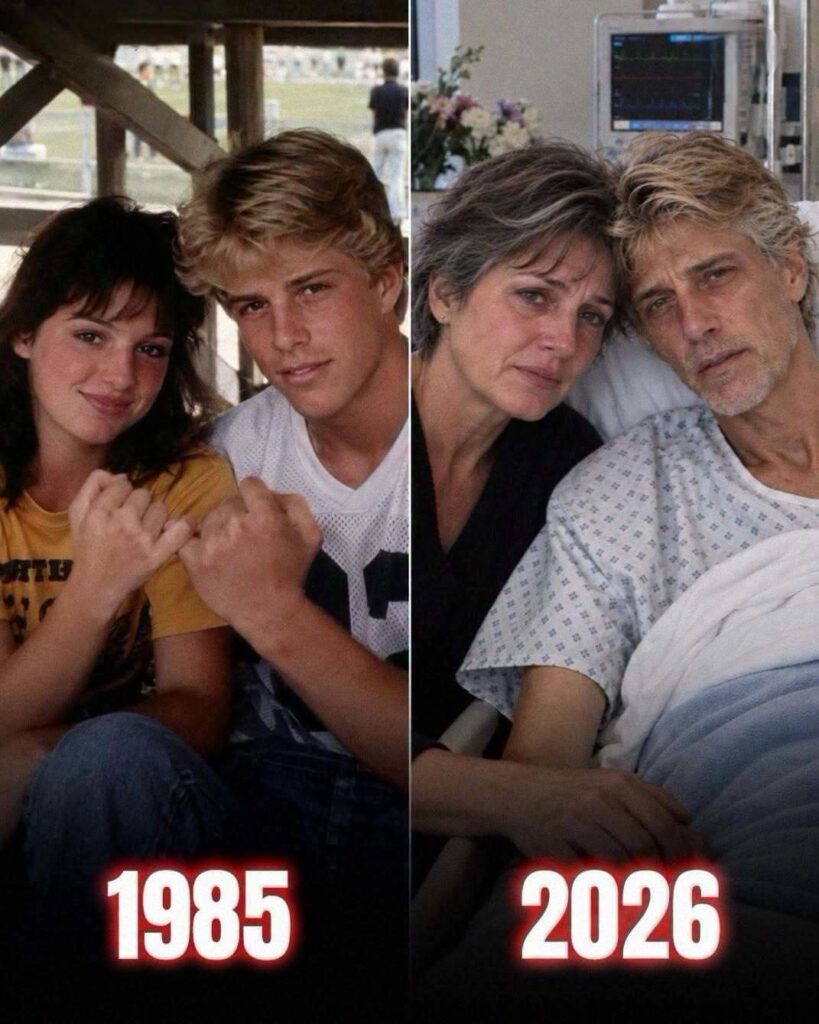
When we were nineteen, just before college pulled us in different directions, we sat on the grass outside our old high school.
The building was almost empty.
Summer had started.
Jeffrey was lying on his back staring at the sky.
“You know we’re going to lose touch eventually.”
I looked at him.
“No, we’re not.”
“We might.”
“We won’t.”
He smiled.
“You always sound very certain.”
“I usually am.”
Then he turned toward me.
“What if we make a deal?”
“What kind?”
“If we’re both single at sixty…”
I laughed.
“Sixty?”
“Yes.”
“That’s ancient.”
“It is not.”
“At nineteen, it definitely is.”
He held out his little finger.
“If we’re both single at sixty, we find each other.”
“And then what?”
He looked at me for a second too long.
“We figure out whatever this is.”
Neither of us had to define it.
I linked my little finger with his.
“Deal.”
Then life happened.
We went to different colleges.
At first, we wrote constantly.
Long letters.
Stacks of them.
He told me about roommates, classes, bad cafeteria food, and professors he hated.
I told him about teaching courses, books I was reading, and how strange it felt to build a life in a place where nobody knew the version of me he knew.
Then the letters became less frequent.
Weekly became monthly.
Monthly became occasional.
Distance did what distance often does.
Then, in 1986, I received a letter from Jeffrey that I still remember word for word in places.
He told me he was getting married.
Her name was Margaret.
He said she was kind.
He said he loved her.
Then came the part that hurt.
He asked me not to contact him again.
He said it would be better for everyone.
I read that letter until the paper softened at the folds.
Then I respected his wishes.
I did not write.
I did not call.
I did not ask mutual friends about him.
I put the letters away.
And I moved on.
At least, that was the story I told everyone.
I became a teacher.
I built a life I was proud of.
I traveled.
I had friends.
I dated.
There were even men I cared for deeply.
But I never married.
Whenever anyone asked why, I usually gave some easy answer.
Timing.
Work.
Wrong person.
Independence.
All of those things were partly true.
None of them were the whole truth.
The whole truth was that some part of me had remained in that summer field outside our high school, with a nineteen-year-old boy hooking his little finger around mine and making a ridiculous promise about turning sixty.
And now, on the exact birthday we had once joked about, his son was calling me.
The next morning, I went to the hospital.
I almost turned around twice.
By the time I reached Jeffrey’s room, my hands were shaking.
Peter was standing outside.
He smiled gently.
“You came.”
“I wasn’t sure I would.”
“He was sure.”
That hurt more than I expected.
Peter opened the door.
Jeffrey was lying in bed.
For one moment, I could only stare.
Time had changed him.
Of course it had.
His hair was mostly gray.
His face was thinner.
His hands looked fragile against the blanket.
But then he smiled.
And suddenly, for one impossible second, he was nineteen again.
“Eleanor.”
My throat closed.
“Jeffrey.”
He laughed weakly.
“You’re late.”
I actually laughed.
“By forty-one years?”
“Something like that.”
I walked closer.
There was a wooden box sitting on the chair beside his bed.
I recognized it immediately.
My father’s.
He had kept old documents in it when I was a child.
“Why do you have that?”
Jeffrey looked toward it.
“That’s a long story.”
I sat down.
“I think we have time.”
He nodded.
Then he opened the box.
Inside were letters.
Our letters.
Dozens of them.
My handwriting.
His handwriting.
Postmarks from years I had almost forgotten.
Then I saw a smaller case.
Jeffrey picked it up.
My heart started pounding before he even opened it.
Inside was a diamond ring.
I looked at him.
“What is that?”
He gave me the saddest smile I had ever seen.
“I bought it when I was nineteen.”
I stopped breathing.
“No.”
“I did.”
“For who?”
He gave me a look.
I covered my mouth.
“You were going to ask me to marry you?”
“Yes.”
I couldn’t process it.
“When?”
“Before college.”
“Why didn’t you?”
He looked down.
“I went to your father.”
“My father?”
“I wanted his blessing.”
I stared at him.
Jeffrey continued.
“He told me you had been accepted into college. He said you had opportunities. He said you needed to discover your own life before making a decision that big.”
That sounded exactly like my father.
“He didn’t forbid it?”
“No.”
“Then why didn’t you ask?”
Jeffrey closed his eyes.
“Because I was nineteen and stupid.”
Despite everything, I laughed.
He smiled.
“I heard what I was afraid of hearing.”
“What?”
“That you wanted a future without me.”
I stared at him.
“My father never told me any of this.”
“I know.”
“Did you think I didn’t love you?”
Jeffrey’s eyes filled.
“I thought you loved me enough to be kind, but not enough to stay.”
I looked away.
All those years.
All those unanswered questions.
All because two people had guessed instead of asking.
“What happened to the ring?”
“I kept it.”
“For all these years?”
“Yes.”
I looked back at the wooden box.
“How did you get Dad’s box?”
Jeffrey took a slow breath.
“Years later, your father contacted me.”
“What?”
“He regretted what happened.”
I felt dizzy.
“When?”
“After I married Margaret.”
That stopped me.
Jeffrey continued.
“He told me he had realized that trying to protect your future might have cost both of us the chance to choose it ourselves.”
I stared at him.
“He gave me the box.”
“Why?”
“There was a letter inside.”
Jeffrey handed me an envelope.
My father’s handwriting was on the front.
I unfolded it.
The letter was brief.
He wrote that he had believed he was protecting me.
That he had assumed Jeffrey and I were too young.
That he had expected us to reconnect naturally if what we felt was real.
But when we didn’t, he eventually understood that his advice had helped create a misunderstanding neither of us knew existed.
He apologized.
Not dramatically.
Just honestly.
By the time I finished reading, I was crying.
“I never knew.”
“Neither did I.”
I looked at Jeffrey.
“Why didn’t you contact me after Dad gave you this?”
His face changed.
“Because I was married.”
Margaret.
I had almost forgotten to ask.
“How was she?”
His expression softened immediately.
That told me everything.
“She was wonderful.”
I smiled through tears.
“Good.”
“We had thirty-two years.”
“That’s a long time.”
“Not long enough.”
He told me about her.
How she hated cold weather.
How she burned toast.
How she laughed whenever he got too serious.
He told me about Peter.
About becoming a father.
About his granddaughter, Anna.
There was no bitterness in the way he spoke about Margaret.
No suggestion that she had been second best.
He loved her.
That mattered to me.
“When did she die?”
“Six years ago.”
“I’m sorry.”
“Thank you.”
He paused.
“I thought about contacting you after.”
“Why didn’t you?”
“I was afraid.”
“Of me?”
“Of the past.”
He looked at the ring.
“I didn’t know what reopening all this would do to you.”
I almost laughed at the absurdity.
For more than forty years, everyone had been protecting everyone else from conversations we should have had.
My father protected me.
Jeffrey protected me.
I protected Jeffrey by respecting a letter I never understood.
And all that protection had created silence.
I reached for his hand.
“Do you remember our promise?”
He looked confused for a moment.
Then his eyes widened.
“No.”
“Yes.”
“Outside the high school?”
“Yes.”
His mouth slowly curved into a smile.
“We said sixty.”
“We did.”
He glanced toward the window.
“How old are you today?”
“Sixty.”
Jeffrey laughed.
A weak laugh.
But real.
“That’s ridiculous.”
I held out my little finger.
He stared at it.
Then hooked his around mine.
“Still single?” I asked.
“Technically widowed.”
“That’s cheating.”
“Still counts.”
We both laughed.
Then cried.
Probably more than either of us wanted to admit.
Jeffrey recovered enough to leave the hospital several days later.
That should have been the end of it.
A reunion.
Some old answers.
A little peace.
Instead, he started visiting.
The first time he came to my house, he stood in the doorway looking nervous.
“You’ve been here before,” I told him.
“Forty years ago.”
“Furniture changed.”
“So did we.”
“Speak for yourself.”
We started slowly.
Coffee.
Lunch.
Walks.
Long conversations.
We talked about the years we had missed.
Not as if we could reclaim them.
We couldn’t.
Jeffrey had loved Margaret.
I had lived my own life.
Those years belonged to the people we had been during them.
But now we could finally stop guessing.
One afternoon, we were sitting on my back porch.
Jeffrey reached into his coat pocket.
I immediately recognized the small case.
“You’re not serious.”
He opened it.
The same ring.
“I’m not proposing.”
“Good.”
He looked offended.
“Let me finish.”
I laughed.
He took the ring out.
“Would your nineteen-year-old self have said yes?”
I stared at it.
Then at him.
I thought about that girl.
The one who had loved him but had been too frightened to say it.
The one who spent decades wondering whether she had imagined everything.
Finally, I said:
“She would’ve wanted us to stop guessing and start talking.”
Jeffrey laughed.
“That sounds like something sixty-year-old Eleanor would say.”
“She’s wiser.”
“Bossier.”
“Also true.”
He slid the ring onto my finger.
It fit poorly.
Of course it did.
Forty-one years had passed.
I didn’t care.
I looked down at it.
Then at him.
And we embraced.
Not like teenagers.
Not like two people pretending no time had passed.
Like two older people who finally understood the price of silence.
Peter became part of my life.
So did Anna.
The first time she called me “Grandma Eleanor” by accident, everyone froze.
Then Anna shrugged.
“Well, you basically are.”
Jeffrey cried.
Peter pretended not to.
I absolutely did.
Life did not suddenly become perfect.
Jeffrey’s health still needed attention.
We had decades of separate habits.
He left cabinet doors open.
I hated it.
I corrected his driving.
He hated that.
We argued.
We laughed.
We learned each other again.
And sometimes, late at night, we talked about the years we lost.
There was sadness in that.
There always would be.
But neither of us wanted regret to become another way of wasting time.
We could not recover our twenties.
Or thirties.
Or forties.
Or fifties.
We could not rewrite my father’s mistake.
We could not change Jeffrey’s misunderstanding.
We could not erase the letter that separated us.
And neither of us wanted to erase Margaret or the beautiful life Jeffrey had built with her.
Those years mattered.
They were real.
So were ours.
That became the lesson I carried from all of it.
Sometimes the past does not return because it wants to be rewritten.
Sometimes it returns because there is finally something we are ready to understand.
An apology.
A misunderstanding.
A truth nobody knew how to say at the time.
For most of my life, I believed certain people were meant to remain memories.
Jeffrey taught me otherwise.
Sometimes a person can belong to your past without being trapped there.
Sometimes love does not come back to replace what happened in between.
It simply asks whether there is still room for something new.
And sometimes sixty is not the end of a promise.
Sometimes it is exactly when the promise was meant to begin.