
The moment I saw her face in the principal’s office, my whole body went numb. I knew exactly who she was, and the recognition hit harder than anything had in eleven years.
A Widow’s New Beginning
The night Grace entered our lives, I was forty years old—a widow barely keeping things together while raising two children on determination, exhaustion, and a limited paycheck. My husband, Thomas, had died a year earlier after a painful fight with cancer. Losing him had shattered me, but what came afterward nearly finished the job.
At his funeral, his mother stood outside the church staring at me with open bitterness. “If you had done more,” she said sharply, “maybe he’d still be alive.” My daughter Milana squeezed my hand tighter while my six-year-old son Daniel asked quietly, “Why is she mad at Mommy?” I didn’t know what to say.
After that day, Thomas’s family vanished from our lives completely. No phone calls. No visits. His sister, Lidia, stopped answering me altogether. So I learned how to survive alone—one checklist at a time. Groceries. Bills. Repairs. And the silent list of things I refused to cry about until my children were asleep.
A Baby in the Rain
That evening, I was still working when my phone rang. It was Milana. “Mom… don’t be mad,” she said right away, and those four words instantly tightened my chest. “We’re almost out of food,” she added. “Unless Daniel wants mustard for dinner.”
I told her to go to the store for pasta, milk, and bread, using the cash in the cookie jar. She promised to hurry and to call when she got home. Forty minutes later I walked into the apartment to find Daniel on the floor drawing, with no sign of his sister. My calls to her went unanswered.
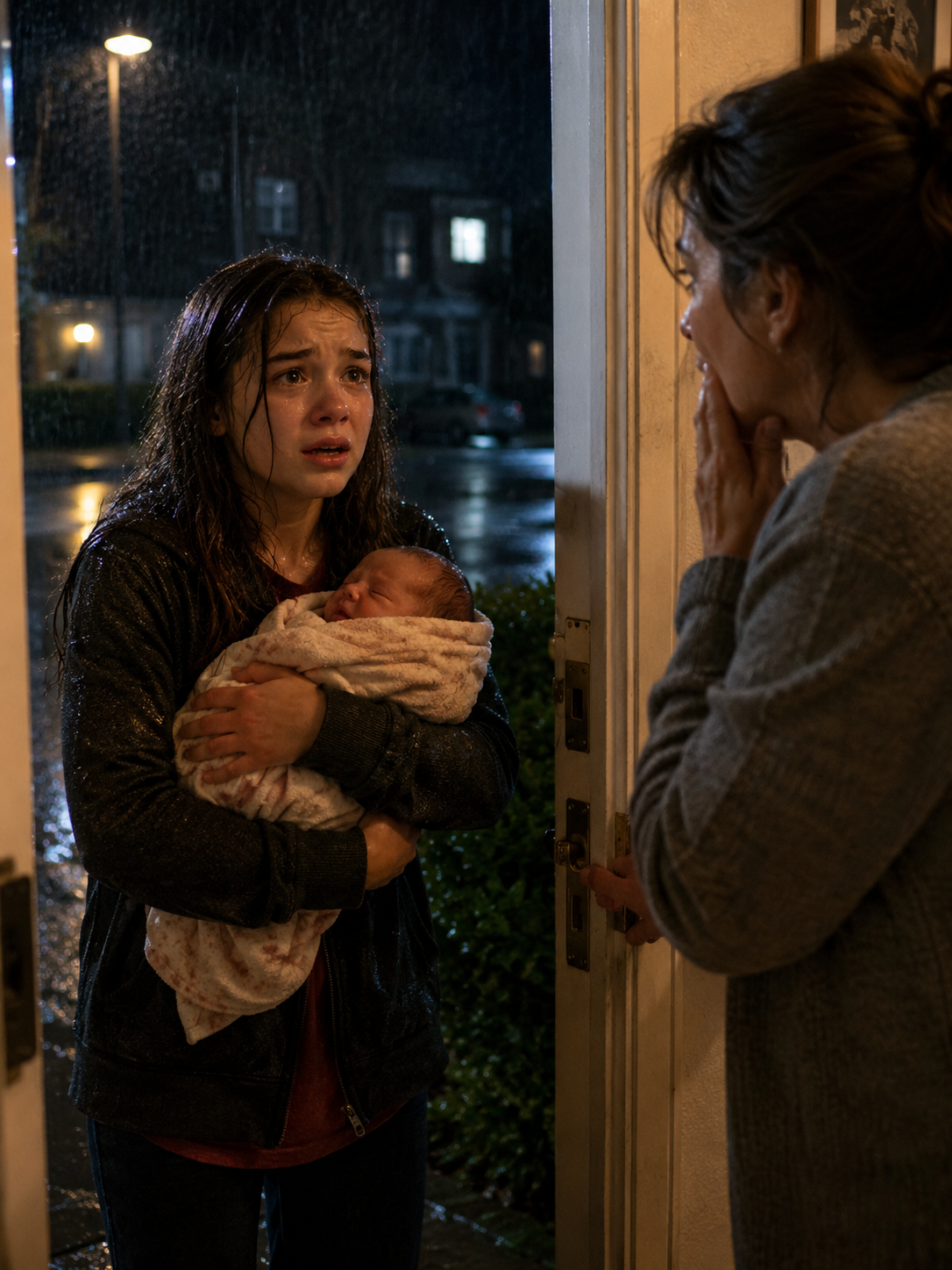
Then someone knocked on the door. I opened it ready to scold her for worrying me—and froze instead. Milana stood there drenched from the rain, shaking, holding a tiny bundle against her chest. “Mom,” she cried, “I had to bring her.”
“She was alone… in a cart… nobody came back for her,” Milana sobbed. Inside the blanket was a newborn girl, small, pale, and ice cold. “Mom, please—do something!” That jolted me into motion. I told Daniel to grab my blanket and took the baby into my arms, trying to warm her.
Milana explained she’d found the baby at the grocery store, by the soda aisle, and had waited and asked around before the baby made a small sound that scared her into running home. “You did the right thing,” I told her, my voice trembling. I called 911, and paramedics, police, and child services arrived in quick succession before rushing the baby to the hospital.
Building a Family Through Foster Care and Adoption
After the ambulance pulled away, I stood staring at the empty doorway, feeling like my life had quietly shifted. I kept calling for updates until a social worker told me the baby had been placed into emergency foster care. “You don’t have any legal rights to her,” she reminded me. “Then why do you keep calling?” she asked. I looked at my children asleep on the couch and said, “Because someone should.”
Two weeks later, I asked what it would take to foster her. The social worker warned me about inspections, paperwork, court hearings, and no guarantees. “I don’t understand it all,” I admitted, “but I do know how to stay.” And I did—cleaning the apartment, attending classes, and completing every requirement until the baby came home to us three months later.
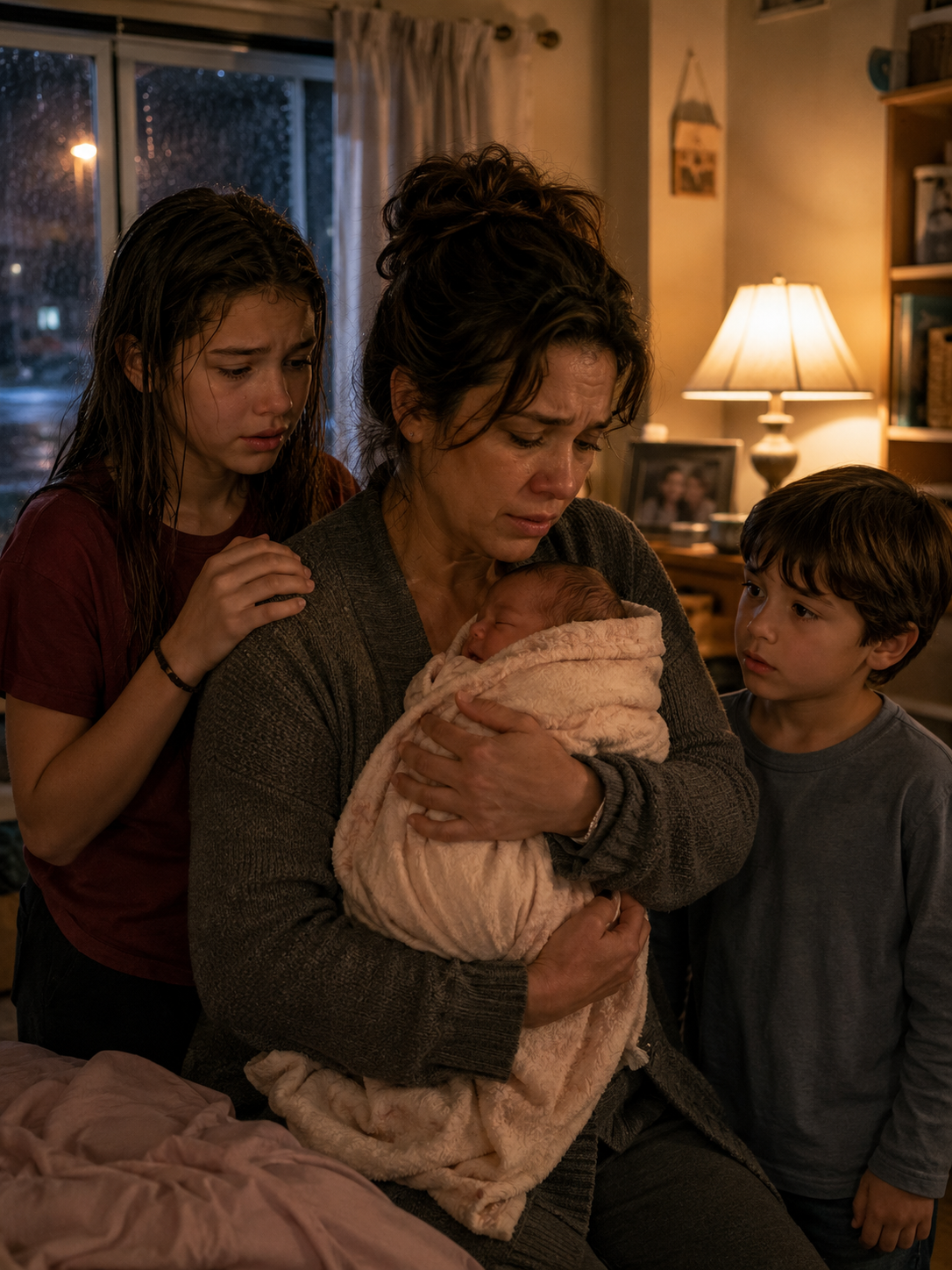
Milana named her Grace. “Because she came to us by grace,” she said. The case stayed open, but no biological parent ever came forward. Eventually adoption became possible, and standing in that courtroom, I promised myself I would never hide the truth about where Grace came from—but I would always be the one who stayed.
A Stranger at the School
Grace grew into a bright, curious, strong-willed girl. By eleven she was full of questions and personality. Then the school called. “There’s a woman here claiming to be Grace’s biological mother,” the principal said. My stomach dropped. “Don’t let her take my daughter,” I said. “She won’t. But you need to come.”
When I arrived, Grace sat trembling in the office. “Mom,” she whispered. “I’m here,” I told her. Then I heard a chair scrape across the floor, and the woman turned around. My entire world stopped. “Lidia?” My late husband’s sister stood there with tears in her eyes. “Claudia… please,” she said softly.
“No,” I snapped. “Please was eleven years ago—when your baby was abandoned in a shopping cart.” Grace gasped. “Your baby?” Lidia lowered her head. “I didn’t know at first,” she whispered. “But later… I found out.” “So you knew where she was?” Silence answered me. Then Grace’s voice cracked. “So you left me twice.”
A Mother’s Place in Court
Later, Lidia brought her parents to my house. Thomas’s mother looked at Grace and said, “She’s family.” I stepped protectively in front of my daughter. “Family wasn’t there when she was freezing and abandoned.” Nobody had a response. I placed Grace’s adoption folder on the table. “Everything you missed is in here,” I said. Grace stood beside me. “I’m not going anywhere,” she said firmly.
Weeks later, the court finalized it: I was officially Grace’s legal mother. Lidia would only have limited, supervised contact—if Grace wanted it. Outside the courthouse, Lidia said quietly, “I don’t expect forgiveness.” “Good,” I replied. “Expect responsibility instead.”
Grace looked directly at her. “Maybe one day I’ll have questions.” “I’ll answer them,” Lidia promised. “All of them?” “All of them.”
That night, Grace walked into my room carrying her old pink blanket. “You’re still my mom, right?” I kissed her forehead. “Every single day.” Milana stood in the doorway smiling through tears. “I’m still glad I found you,” she said. Grace smiled back. “Me too.”
For the first time in years, I didn’t need a list to remind me what truly mattered. Grace wasn’t the child I expected. She was the child I chose—every single day.