He said work, marriage, and responsibility had become too much.
He claimed he was going alone.
He wasn’t.
His fitness instructor, Julianne, had gone with him.
None of that mattered to me when Lily entered the ICU.
At 1:18 a.m., I called him.
Then again.
And again.
Eventually, he began rejecting the calls.
I texted:
LILY IS IN THE ICU. CALL ME NOW.
Nothing.
I sent a photograph of our daughter beneath hospital blankets, surrounded by tubes and monitors.
At 5:38, David finally replied.
Sarah, stop.
Then:
I’m doing a digital detox. Unless someone is literally dying, handle it until I get back.
Twenty feet away, doctors were trying to keep his daughter alive.
I typed:
SHE IS.
Then:
LILY MAY DIE. PLEASE CALL HER.
His answer came twenty minutes later.
I need two weeks where every crisis isn’t made into my responsibility. I’m turning my phone off.
I had called him fifty-one times.
That was the last one.
Lily briefly opened her eyes later that morning.
I leaned over her.
“Mommy’s here.”
She whispered one word.
“Cold.”
I held her hand and brushed the hair away from her forehead the way she always asked me to after nightmares.
That evening, she died.
I was still holding her hand.
David was still in the Bahamas.
The next morning, I sent him one final message.
Lily died yesterday at 6:14 p.m. Her funeral is Monday at 10. I will not contact you again.
It was delivered.
He did not respond.
I learned much later that he had read it.
He apparently told Julianne I was trying to manipulate him into ending the trip.
So we buried our daughter without her father.
His parents came.
Her teacher came.
Her soccer coach came.
Even one of the doctors from the ICU came.
At the cemetery, after everyone left, I put my hand against Lily’s little coffin.
“I’m sorry Daddy wasn’t here.”
Then I stopped.
“No.”
The rain was running down my face.
“That isn’t mine to apologize for.”
It was the first clear thought I’d had in days.
David’s absence belonged to David.
I would not spend the rest of my life translating his choices into softer explanations.
After the funeral, I returned to our enormous, silent house.
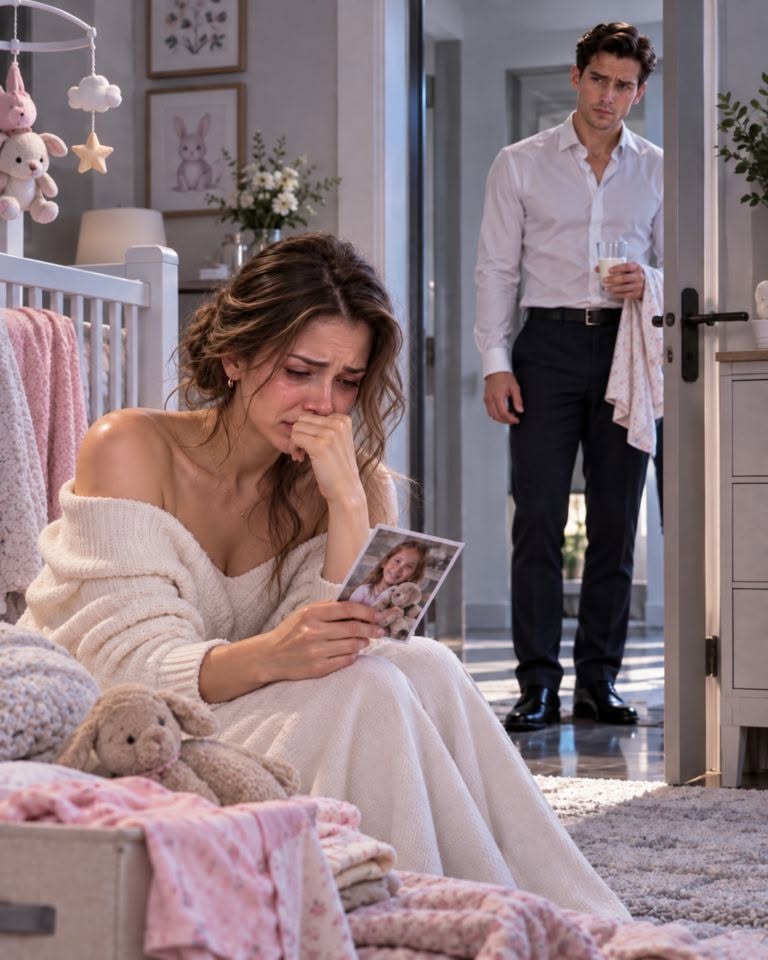
Lily’s room looked as though she might come home from school at any moment.
Her rabbit was on the bed.
A library book lay open.
Across the hall was David’s locked office.
For years I respected that door.
Confidential business records, he always said.
That day, fear had lost its authority over me.
Inside the office, behind a false drawer, I found a lockbox.
Bank statements.
Offshore accounts.
Shell companies.
A second laptop.
And documents carrying my name and a signature that looked almost—but not quite—like mine.
I did not start moving money.
I did not try to break into his computer.
I photographed what I had found and called an attorney.
Within days, a forensic accountant identified millions moving through companies connected to David’s business.
One document used my forged signature to guarantee obligations I had never agreed to.
Another company had paid large sums to Julianne.
Eventually, we learned federal investigators were already examining irregular payments connected to David’s firm.
The records I found filled in pieces they had been missing.
At that point, it was no longer simply a divorce.
But I refused to treat the investigation as revenge.
I gave authorities what I had lawfully found.
They verified the rest themselves.
Nine days after Lily died, David finally texted me.
Hope you’ve calmed down. I’ll be home Thursday. We need to talk about boundaries.
Then he added that Julianne would also be traveling through Chicago.
He still did not understand.
His mother eventually reached him first.
I overheard only part of the call.
“She told you.”
Then:
“I stood beside her coffin.”
David finally believed Lily was dead.
After that came the voicemails.
Confusion.
Anger.
Blame.
Tears.
Reception problems.
My supposed manipulation.
Julianne.
Stress.
Finally:
I made a mistake.
But fifty-one rejected calls were not one mistake.
Reading that your child may die and deciding not to answer was not one mistake.
It was a sequence of choices.
I preserved the messages for my attorney.
Then I stopped listening.
I moved into a smaller townhouse.
I took only what belonged to me and Lily, carefully documented under legal advice.
Her books.
Blankets.
Friendship bracelets.
Little notes she had pushed beneath my bedroom door.
Mommy I love you 100000000.
The new house had bad cabinets and a fireplace that barely worked.
I liked it.
It did not feel like a monument to someone else’s ambition.
It felt survivable.
When David returned from the Bahamas, investigators were waiting.
I watched from a neighbor’s house.
He arrived tanned, carrying vacation luggage.
Julianne beside him.
Inside, he discovered the house nearly empty.
Then he met the officers.
David was arrested in connection with the financial investigation.
Watching it happen gave me no satisfaction.
That surprised me.
I had imagined the moment many times.
But handcuffs did not bring Lily back.
They did not change the ICU room.
They did not answer one of those fifty-one calls.
When officers brought David outside, he saw me.
“Sarah!”
I almost stayed where I was.
Then I crossed the street.
He was crying.
“What happened to her?”
“Meningitis.”
He closed his eyes.
“Did she ask for me?”
“No.”
His face broke.
“She said she was cold.”
“I didn’t know.”
“You did.”
“I thought you were trying to make me come home.”
“Yes.”
My voice broke.
“I was trying to make you come home.”
He had no answer.
“You were her father.”
“I know.”
“No.”
I shook my head.
“You know now.”
For the first time, he seemed to understand the difference.
“I should have been there.”
“Yes.”
“I’ll never forgive myself.”
I looked at him.
“That isn’t my responsibility anymore.”
The criminal investigation continued for more than a year.
David eventually admitted to financial crimes.
Our divorce ended separately.
The house was sold.
I kept Lily’s belongings.
That was all I truly wanted from it.
Over time, I stopped following every detail of David’s case.
His punishment belonged to courts.
His remorse belonged to him.
My life could not remain organized around whether he suffered enough.
A year after Lily died, I woke at 2:47 in the morning.
The exact time the doctor had told me how sick she was.
I wrapped myself in Lily’s yellow blanket and made tea.
By then, photographs had returned to the walls.
Books filled the shelves.
There were plants in the windows.
My sister came often.
I had gone back to work part-time.
Twice a month, I volunteered with parents at the same hospital where Lily died.
Mostly, I sat beside them.
Sometimes presence is all another person needs.
David wrote letters from custody.
Some asked forgiveness.
Some explained his grief.
Some described dreams in which he answered my first call, or the tenth, or the fiftieth, and somehow reached the hospital in time.
I cried when I read that.
Not because I wanted him back.
Because somewhere there had once been a man who loved our daughter.
That was another difficult truth.
David had loved Lily.
And he had failed her terribly.
Both could be true.
The good memories did not erase his final betrayal.
His final betrayal did not mean every earlier moment of love had been false.
Understanding that gave me more peace than hatred ever could.
On what would have been Lily’s ninth birthday, our family gathered for cake.
People told stories.
How she hid peas in napkins.
How she once apologized to a classroom poster after correcting its spelling.
How she released fishing worms because she felt sorry for them.
David’s mother brought a photograph of him holding newborn Lily.
He looked terrified.
Exhausted.
Completely in love.
I kept it.
Not for David.
For Lily.
He had been part of her story.
That night, I opened Lily’s memory box.
At the bottom were the phone records from the hospital.
Fifty-one outgoing calls.
For a long time, those pages had represented only David’s absence.
Then I saw something else.
They also showed that I had stayed.
I carried Lily into the hospital.
I signed the forms.
Asked the questions.
Held her hand.
Called her father until there was nothing more I could do.
Smoothed her hair when she was frightened.
Stayed beside her until her final heartbeat.
I could not save her.
That truth will always hurt.
But I had been there.
I picked up a photograph of Lily smiling with two missing front teeth.
“I was there,” I whispered.
For years, David had called me too worried.
Too demanding.
Too emotional.
Too much.
But when our daughter needed someone, those same qualities kept me beside her.
I no longer needed David to understand that.
I no longer needed his apology to make it true.
And I no longer needed to decide whether forgiveness meant absolution.
Peace was enough.
Distance was allowed.
Good memories were allowed.
Anger could fade without the door reopening.
For years, I had waited for David to answer.
Eventually, the silence stopped feeling like rejection.
It simply became silence.
And for the first time, I was no longer waiting inside it.