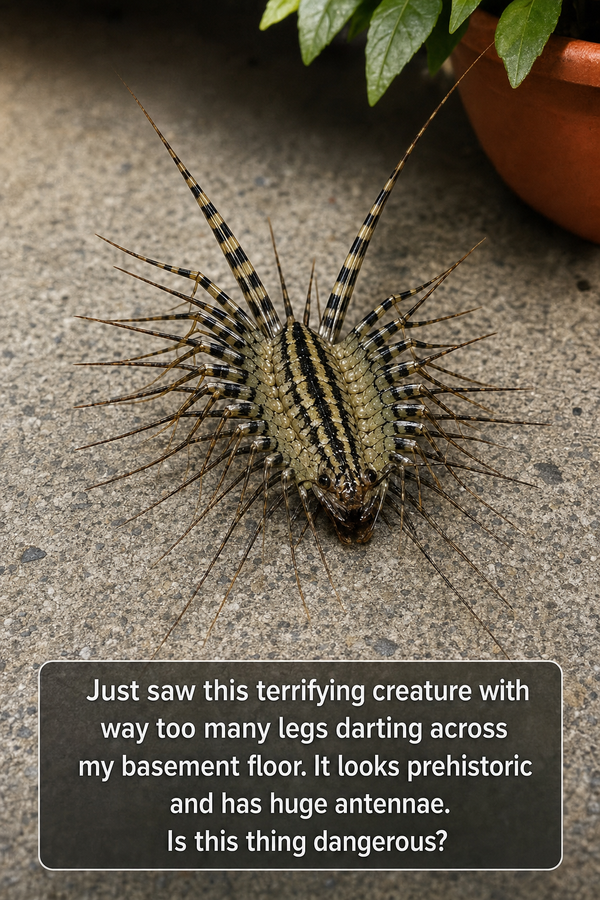
The truth turned out to be far less dramatic than the panic it caused, and the real concern had almost nothing to do with the creature racing across the floor. What mattered far more was the environment that had quietly invited it inside in the first place.

What Was Actually Found
The frantic visitor was a house centipede, a many-legged arthropod commonly found in damp, dark spaces like basements. Its extraordinary legs and long antennae make it look intimidating at first glance, but its presence alone says little about any danger to the household.
Why It’s Rarely a Real Threat
Despite its alarming looks, the house centipede generally avoids people. It hunts smaller household pests, including silverfish, cockroaches, and spiders, making it more of a quiet predator than an invader.
Bites are uncommon and usually happen only when the centipede is handled or accidentally trapped against skin. Even then, the result is typically localized pain or irritation rather than any serious harm.
When Sightings Signal a Bigger Issue
What deserves real attention is the environment that attracted it in the first place. Basements, bathrooms, and cluttered storage areas can offer the moisture, shelter, and prey that house centipedes rely on to survive.
One sighting does not mean an infestation is underway. But repeated encounters make it worth checking for leaks, excess humidity, and the presence of other pests nearby.
Addressing plumbing problems, running a dehumidifier, and sealing gaps where pests might enter can all help reduce the conditions that draw centipedes indoors. Once the initial shock of the sighting fades, this unsettling little hunter looks less like a household emergency and more like a signal worth following.
Rather than a threat to eliminate on sight, the house centipede functions as an early indicator. Its appearance is a prompt to look closer at hidden moisture or unnoticed pest activity, not a reason for alarm on its own.