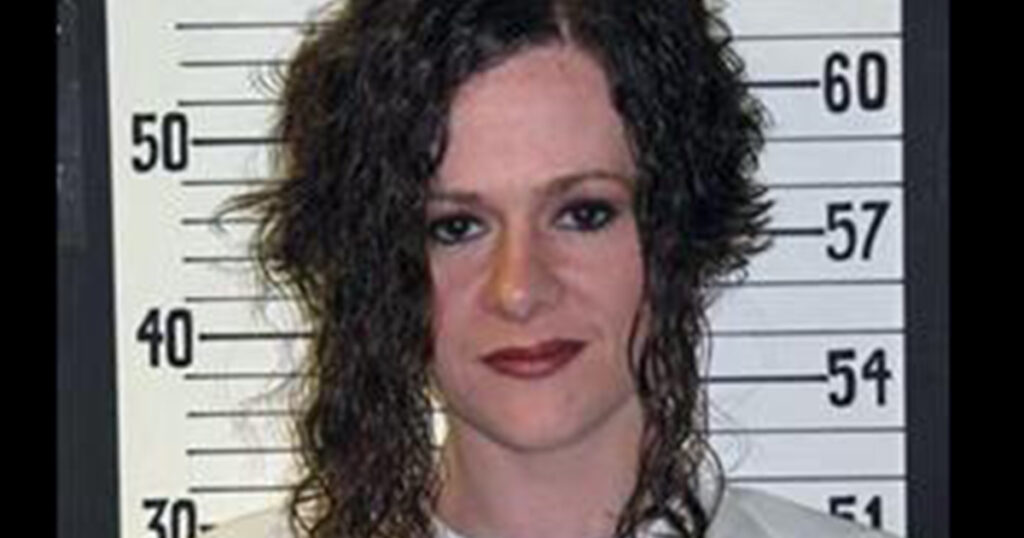
He said doctors were continuing to deal with the two doses of pentobarbital Pike received.
“We don’t really know the prognosis yet, and may not know for several days.”
Ferrell also said he was not aware of Pike regaining consciousness at any point after the execution attempt.
That leaves major questions about what kind of recovery—if any—may be possible.
“We don’t know what the prognosis is, as in the long-term prognosis… she may not fully recover,”
Ferrell said.
He added that Pike’s legal team had not yet had meaningful discussions about what Tennessee authorities intended to do next.
“The Tennessee attorney general’s office, so far, has not given us any indications of what their intentions will be.”
Pike’s attorneys have described disturbing injuries to both of her arms following the procedure.
According to her legal team, her arms were “swollen, burned, and blistered,” and at one point an arm appeared to “turn purple.”
Her attorneys also said Pike could be heard crying, whimpering, and breathing heavily as the execution team struggled with the IV lines.
At one stage, she reportedly said:
“My arm feels like it’s about to burst open.”
Later, she allegedly asked:
“Does this happen like that?”
Attorney Randy Spivey has strongly criticized the way the execution was handled.
According to Spivey, the execution team spent approximately an hour attempting to establish proper intravenous access.
He said he counted at least seven needles being used in Pike’s left arm alone and claimed that one appeared bent when it was removed after an unsuccessful attempt.
Pike’s defense team also brought in Dr. Joel Zivot, an Atlanta-based professor of anesthesiology and surgery, to evaluate what may have happened.
Zivot believes the IV catheters may have moved or the veins may have ruptured, allowing pentobarbital to enter surrounding tissue rather than circulating properly through Pike’s bloodstream.
“My opinion is that the intravenouses, that were placed in veins, that the veins ruptured, and the intravenous catheter was no longer in the vein, and when the pentobarbital was injected, instead of going into the circulation, it went into the tissue around the vein and caused burning, which that particular chemical pentobarbital will definitely do,”
Zivot explained.
In his view, Pike’s survival itself suggests that a sufficient quantity of pentobarbital never reached her bloodstream and brain.
“If a person is given the quantity of pentobarbital that the state uses, and it gets into the circulation and into the brain in the, in the quote ‘right way,’ it will kill you. So the fact that she didn’t die can only mean that the pentobarbital was never in a sufficient quantity in her bloodstream to cause death,”
he said.
There is no specific antidote that simply reverses severe pentobarbital poisoning.
Treatment generally focuses on supporting the patient while the body gradually processes and eliminates the drug.
That can mean mechanical ventilation to maintain breathing, close monitoring of blood pressure, oxygen levels, heart function and organ function, as well as intravenous fluids and medications when necessary.
In some severe barbiturate poisoning cases, doctors may also consider techniques such as hemodialysis, which filters the blood and has previously been used in reported cases involving massive pentobarbital exposure.
For now, however, Pike remains critically ill, and the full extent of any lasting damage is unknown.
The failed execution has also opened another major question: could Tennessee attempt to execute her again if she survives?
Pike’s attorneys are already arguing that it should not.
They are calling on Tennessee Governor Bill Lee to commute her death sentence to life imprisonment.
“At the very least, the governor should commute Ms Pike’s death sentence to a life sentence,”
Ferrell said.
“We don’t know what her physical state will be, but it’s clear that she has endured a tortuous attempt at executing her, and we had already asked that the governor commute her for many good reasons.”
A spokeswoman for Pike’s defense team also issued a brief statement Sunday asking that Pike’s privacy be respected while she remains hospitalized.
The extraordinary situation comes more than three decades after the crime that placed Pike on Tennessee’s death row.
Pike and her boyfriend at the time, Tadaryl Shipp, were convicted in connection with the 1995 torture and killing of 19-year-old Colleen Slemmer at a job-training facility in Knoxville.
Pike was 18 at the time of the killing, while Shipp was 17.

Shipp received a life sentence with the possibility of parole.
Pike has never denied killing Slemmer.
Her supporters, however, have argued over the years that her age at the time of the crime, her reported mental-health history, and accounts of severe sexual abuse beginning in childhood should have been considered grounds for reducing her sentence.
The execution failure has now placed Tennessee’s corrections system under intense scrutiny as well.
Frank Strada, commissioner of the Tennessee Department of Correction, is stepping down this month while an independent review examines what occurred during the execution attempt.
Governor Bill Lee has said the review is intended to determine how the procedure went wrong and what caused a situation Tennessee officials never expected to confront.
For Pike’s attorneys, however, the most immediate issue remains her condition.
She was taken into the execution chamber with the expectation that she would die there.
Instead, she left alive but unconscious, seriously injured, and requiring intensive medical care.
Days later, doctors are still treating her, lawyers are still waiting for answers, and state officials now face a legal and ethical question that could become even more complicated if Pike survives.
The execution was supposed to bring finality.
Instead, it has created an entirely new chapter—one involving Pike’s uncertain medical future, an investigation into Tennessee’s execution procedures, and a growing debate over whether the state could or should ever attempt to carry out her death sentence again.