Governor Bill Lee announced on Saturday, October 3, that Strada will resign as commissioner later this month.
Strada said in a statement that he believed the department had followed its established protocol, but added that stepping aside was “in the best interest” of Tennesseans while an independent review examines the failed execution.
Lee has also paused executions in Tennessee for the remainder of 2026 while investigators look into what went wrong.
Pike’s failed execution was not the first major problem involving Tennessee’s execution process this year.
In May, the planned execution of Tony Carruthers was stopped after execution-team members repeatedly attempted to establish an IV line and punctured him more than a dozen times.
Pike’s Attorneys Say They Warned the State
Pike’s attorneys had raised concerns about lethal injection months before her scheduled execution.
In a lawsuit filed earlier this year, they argued that her medical conditions—including thrombocytosis, PTSD, and small veins—created a serious risk of complications during the procedure.
Their filing claimed those conditions made it “sure or very likely” that Pike could experience “unnecessary and superadded pain and suffering, terror, and disgrace.”
Anesthesiologist Dr. Joel Zivot, who supported the legal challenge and opposes the death penalty, also warned that Pike’s blood disorder could create severe complications.
He wrote that the condition “would very likely produce … bloody froth in (Pike’s) lungs.”
The state disputed those arguments before the execution.
Tennessee Attorney General Jonathan Skrmetti previously argued that Pike had “offered nothing but speculation,” and the courts rejected her attempt to stop the procedure on those grounds.
Following the failed execution, however, Pike’s legal team said the complications they had warned about appeared to have occurred.
Lawyers Describe Serious Injuries
An emergency court filing submitted Friday offered disturbing details about what allegedly happened during the execution attempt.
According to Pike’s attorneys, members of the execution team spent more than an hour attempting to establish IV access and used at least seven needles.
Her lawyers believe the IV lines were improperly positioned or that her veins failed, causing at least some of the pentobarbital to leak into surrounding tissue rather than properly entering her bloodstream.
At one point before the second dose was administered, Pike reportedly said her arm felt “like it’s about to burst open.”
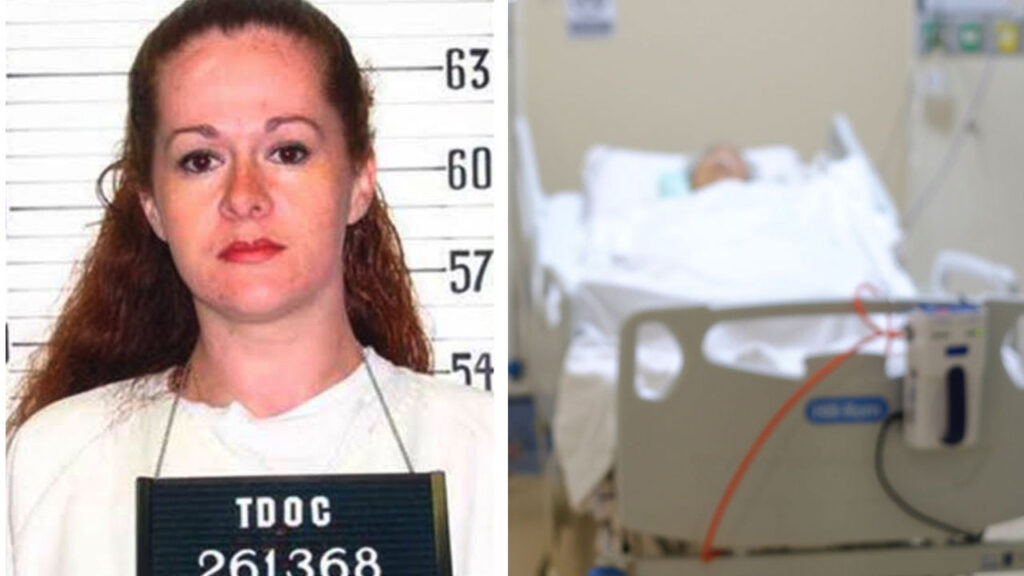
When she arrived at the hospital, her attorneys said both of her arms were swollen, burned, and blistered.
The filing states that hospital staff began treating Pike for the effects of the pentobarbital and attempting to clear the drug from her system.
She has remained unconscious and on a ventilator following the failed execution attempt.
Lawyers Seek to Preserve Evidence
Pike’s attorneys have now asked a judge to order Tennessee officials to preserve evidence connected to the execution.
They say records, equipment, medical materials, and other information could become critical in determining exactly why the lethal injection failed.
An expedited hearing has been granted, although the legal proceedings surrounding the case remain ongoing.
The state, meanwhile, has launched its own independent review.
Governor Lee’s decision to halt executions for the rest of the year means no additional executions are expected to take place in Tennessee while investigators examine the state’s procedures.
Questions Surround Tennessee’s Execution Protocol
Pike’s case has intensified an already growing debate over Tennessee’s ability to carry out lethal injections reliably.
The failed execution followed the problems surrounding Carruthers earlier this year, creating two major execution-related incidents within months.
Strada’s departure adds another major development to the controversy.
He will remain commissioner until sometime later this month, and Tennessee officials have said an interim replacement will be announced separately.
For now, the focus remains on Pike’s medical condition and on the investigation into exactly what happened inside Riverbend Maximum Security Institution on September 30.
What was supposed to become Tennessee’s first execution of a woman in more than two centuries instead ended with Pike hospitalized, the state’s execution schedule suspended, and the head of its prison system preparing to leave office.