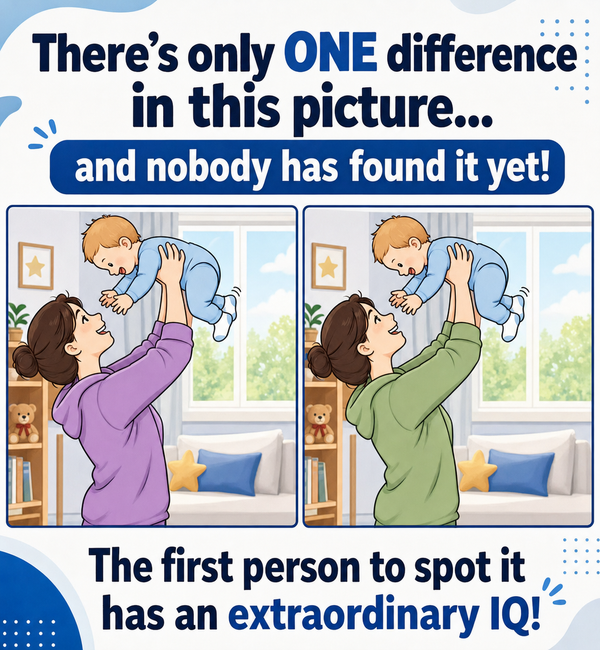
The difference is small enough that your brain simply glosses over it, insisting both pictures are the same even as your eyes move carefully across the hair, the smile, and the baby’s limbs. Somewhere in that scene, a collar line shifts, a shadow softens, or a fold in the diaper looks different than before.
Why Our Eyes Deceive Us
It’s tempting to blame the puzzle itself, but the real trick is happening inside your head. When two images look nearly identical, your brain takes a shortcut and assumes they match completely, rather than checking every detail from scratch.
That assumption is efficient in daily life, but it’s exactly what lets a subtle change slip past unnoticed. The eyes are doing their job—it’s the mind’s eagerness to decide that gets in the way.
The Hidden Detail
No definitive answer has been confirmed yet. Whether it’s the collar line, a softened shadow, or a shifted fold in the diaper, the single change remains elusive enough that it continues to trip people up.
What This Puzzle Teaches About Focus
These kinds of puzzles aren’t really about pictures at all—they’re reminders that attention is a skill, not a given. Slowing down and scanning details builds a sharper kind of focus than rushing to a quick judgment ever could.
That same habit of questioning first impressions matters well beyond a picture puzzle. It applies when reading a contract line by line, when crossing a street and checking twice, or when noticing a shift in a loved one’s mood.
If the difference eluded you at first, that’s the point of the exercise. The awareness it takes to finally spot it is the same awareness worth carrying back into everyday life.