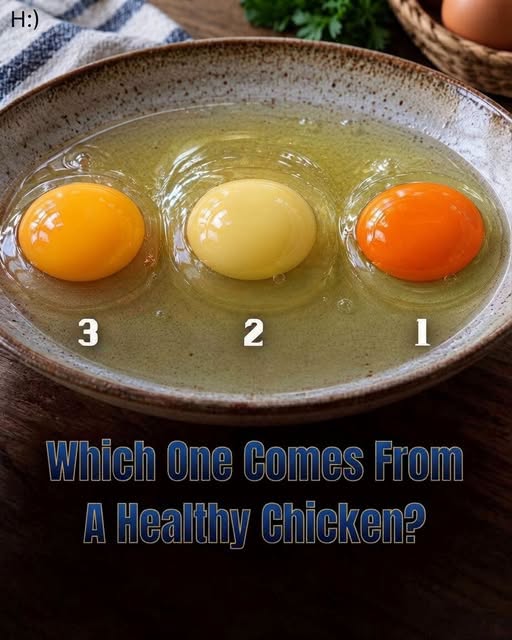
Egg yolk color is strongly influenced by pigments called carotenoids found in a hen’s diet.
Hens that eat foods containing higher levels of these natural pigments—such as grass, alfalfa, corn, or marigold petals—may produce eggs with darker yellow or orange yolks.
Some commercial feeds may also contain ingredients specifically chosen to create a deeper yolk color.
That means a vibrant orange yolk can certainly reflect differences in the hen’s diet, but it does not automatically mean the egg is more nutritious than one with a pale-yellow yolk.
A Darker Yolk Isn’t Automatically Healthier
One of the biggest misconceptions surrounding eggs is that yolk color provides a simple measure of nutritional quality.
It doesn’t.
A light-yellow yolk is not automatically a low-quality egg, just as a dark-orange yolk is not automatically superior.
Eggs naturally contain several important nutrients regardless of whether their yolks are pale, golden yellow, or deep orange.
They can provide high-quality protein as well as nutrients such as vitamin B12, vitamin D, selenium, and choline.
The exact nutritional profile of an egg can vary depending on the hen’s diet and production methods, but yolk color alone cannot reveal all of those differences.
What Matters More Than Color?
When choosing eggs, some of the most important factors are things you cannot immediately see after cracking one into a pan.
The hen’s overall diet matters.
So do farming conditions, hygiene practices, how the eggs are handled, how they are stored, and how fresh they are.
These factors can have a much greater influence on quality than whether the yolk happens to be pale yellow or bright orange.
Freshness, for example, may affect the texture and appearance of an egg far more directly than yolk color does.
Proper refrigeration and handling are also important when it comes to food safety.
Why Orange Yolks Look More Appealing
There is also a simple psychological reason many people associate orange yolks with premium eggs.
They look richer.
A golden-orange yolk can make an egg appear more natural, flavorful, or farm-fresh, even before anyone tastes it.
Because consumers often associate darker yolks with healthier or more traditional farming methods, yolk color can influence how eggs are marketed and perceived.
But appearance and nutritional quality are not always the same thing.
A particularly colorful yolk might simply be the result of specific ingredients in the hen’s feed.
What Should You Look for When Buying Eggs?
The next time you are standing in the grocery aisle comparing cartons, try not to let yolk color make the entire decision for you.
Instead, consider information such as production methods, freshness dates, storage conditions, and any verified nutritional claims on the packaging.
Yolk color can give you a clue about certain ingredients in the hen’s diet, but it does not tell you the complete story.
A pale yolk can still come from a perfectly nutritious egg.
And a deep-orange yolk does not automatically guarantee that you are getting significantly more nutrients.
In the end, that beautiful orange color may be visually appealing, but it should not be treated as a nutritional scorecard.
When it comes to choosing eggs, look beyond what catches your eye.
The healthiest or highest-quality option is not always the one with the darkest yolk.