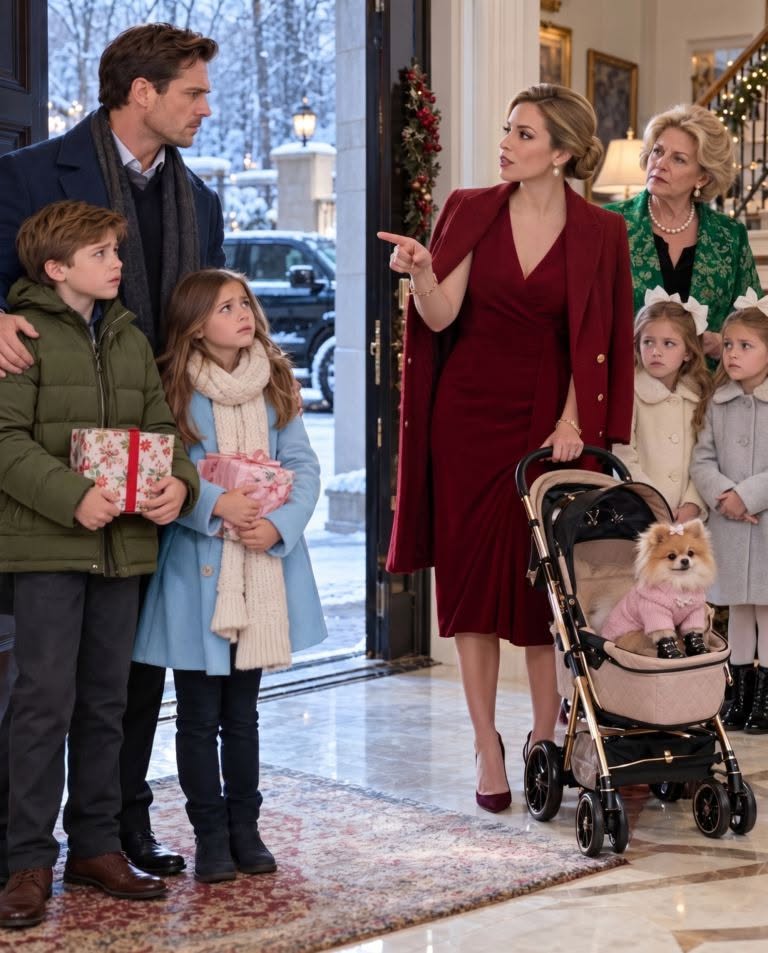
I work in high-altitude structural maintenance.
If something breaks far enough above the ground that most people look up and immediately decide somebody else should handle it, people like me get called.
Exterior building repairs.
Rooftop systems.
Industrial inspections.
Rope access.
I do not repair residential furnaces.
Somehow, that distinction had never mattered to my family.
Roof leaking?
Call Rupert.
Garage door jammed?
Rupert.
Water heater making a strange noise?
Rupert.
Internet slow?
For reasons still unclear to me, also Rupert.
Over the years, I had become the family’s unofficial emergency department.
The furnace had its own history.
Three years earlier, Mom had struggled to put the gas account in her name because of financial problems stemming from a business loan she had co-signed for Brooke.
The business was called Luxury Picnic Consulting.
I never fully understood it.
As far as I could determine, it involved arranging expensive cushions around food outdoors.
It lasted three months.
The debt lasted considerably longer.
Mom had asked me to put the gas account in my name temporarily.
“Just until things stabilize.”
Three years later, it was still mine.
The payment came automatically from my bank account.
Mom was supposed to reimburse me.
Sometimes she did.
Sometimes she forgot.
Sometimes some new crisis involving Brooke emerged and everybody quietly decided I could absorb the difference.
I looked again at Mom’s message.
Call your guy.
I typed:
You need an HVAC company tonight. I’m not qualified to repair the furnace.
That was more restrained than my first draft.
My phone rang immediately.
Mom.
“This isn’t funny, Rupert.”
“I’m not joking.”
“The furnace clicks and then shuts off.”
“You need a licensed technician.”
“I don’t know who to call.”
“I sent you three emergency companies last winter.”
“I don’t know where they are.”
“They’re in our messages. Search HVAC.”
There was silence.
Then I heard Brooke in the background.
“Give me the phone.”
A moment later:
“Rupert.”
“Brooke.”
“You need to come over.”
“No.”
“You don’t even know what I was going to say.”
“You were going to ask me to come over.”
“That is not the point.”
Then she explained why the furnace had suddenly become a national emergency.
Declan Vale was coming the next afternoon.
Declan was a lifestyle personality with millions of followers.
Brooke had spent months trying to arrange a meeting with him.
In her mind, this was the meeting that would finally change everything.
She had bought a cream blazer for it.
She had prepared a presentation.
She had spent weeks using phrases such as “cultural capital” and “premium positioning.”
“This man could change my life,” she said.
“I understand that.”
“The house cannot be freezing.”
“I also understand that.”
“So help us.”
“Call the technician.”
“I’m not an HVAC technician!”
“Neither am I.”
“But you know people.”
There it was again.
The assumption that proximity to competence meant permanent responsibility.
“Brooke, there are emergency HVAC services specifically for this.”
“They charge hundreds just for coming out.”
“Yes.”
“That’s outrageous.”
“Emergency work is expensive.”
Mom took the phone back.
“Rupert, please.”
I closed my eyes.
Three hours earlier, she had accepted the idea of her grandchildren sitting outside during dinner.
Now she expected me to coordinate her comfort because I had always done it before.
That contrast was hard to ignore.
But I also knew anger could make a boundary become punishment if I wasn’t careful.
So I slowed myself down.
“Mom, listen to me. I am not refusing to let you have heat. Your furnace failed. I didn’t cause that. I am telling you to call somebody qualified to repair it.”
“But you always handle these things.”
“I know.”
“Then why won’t you now?”
“Because I’ve handled too many things that were never actually mine to carry.”
Silence.
I continued.
“And tonight made something very clear to me.”
“What?”
“The gas account is still in my name.”
Another silence.
Brooke came back onto the line.
“What do you mean?”
“Three years ago, I put Mom’s account in my name temporarily.”
Mom’s voice appeared in the background.
“Rupert—”
“I’m not shutting anything off,” I said quickly. “Nobody is losing heat because I’m angry.”
The room on the other side of the phone seemed to exhale.
“But Monday morning, I’m transferring the account back to Mom. And I’m removing the automatic payment from my bank.”
Mom went quiet.
“You pay it automatically?”
“Yes.”
“But I reimburse you.”
“Sometimes.”
The word landed harder than I intended.
I didn’t list every missed month.
I didn’t need to.
Mom already knew.
“So now you’re keeping score?” she asked.
“No.”
And suddenly I meant it.
I wasn’t interested in calculating every dollar.
“I’m stopping something that should have stopped a long time ago.”
That was the difference.
There would be no revenge.
No gas shutoff.
No elderly woman sitting in the cold to teach her a lesson.
But I would no longer finance responsibilities that belonged to somebody else while quietly becoming resentful about it.
“Call the emergency company tonight,” I said.
Then I ended the call.
Chapter 3: The VIP Delusion and the Propane Problem
The technician arrived the next morning.
The diagnosis was simple.
The main control board had failed.
The replacement part would not arrive until Monday.
There was nothing dramatic about it.
No sabotage.
No mysterious conspiracy.
A circuit board had reached the end of its useful life at the worst possible time.
For Mom, that was inconvenient.
For Brooke, it was catastrophe.
At 8:14 AM she texted:
Bring your commercial heaters.
Through work, I owned several industrial electric heaters used on job sites.
I answered:
No. Those are work equipment.
My phone rang.
“Why are you doing this to me?”
“I’m not doing anything to you.”
“I’m trying to save my future.”
“And those heaters are professional equipment.”
“This is about my career.”
“No. Your meeting is about your career. Mom’s furnace is a separate problem.”
She hung up.
I spent the morning with my kids.
Around noon, I heard Brooke had bought six portable electric heaters.
That was concerning but manageable.
At 1:30 PM, Kyle called.
My brother-in-law sounded unusually serious.
“Rupert, I need help.”
“What happened?”
“She brought the propane patio heaters inside.”
I stood up immediately.
“Are they lit?”
“Yes.”
“Turn them off and move the propane cylinders outside.”
“I did. She turned them back on.”
That ended the discussion.
There are boundaries.
And then there are safety hazards.
I drove over.
Not to repair the furnace.
Not to rescue Brooke’s meeting.
To make sure nobody poisoned themselves with carbon monoxide.
When I arrived, the house had become a strange mixture of birthday decorations, emergency heating equipment, expensive appetizers, and winter clothing.
Mom was wearing a parka over her dress.
Brooke had paired her cream blazer with thermal leggings.
I looked at her.
She raised one finger.
“Do not say anything.”
“I wasn’t going to.”
“Your face is saying something.”
“My face is outside my jurisdiction.”
Kyle turned away because he was trying not to laugh.
I did too.
There was absurdity in the moment.
But underneath it, Brooke was clearly terrified that the meeting she had built up in her mind was collapsing.
So I let the joke pass.
I removed the propane cylinders.
Then I checked that the electric heaters were distributed safely enough not to overload a single circuit.
At 3:16 PM, the doorbell rang.
Brooke froze.
“He’s early.”
Everyone moved at once.
Mom removed her parka.
Kyle told her that was probably a bad idea.
Brooke whispered:
“Nobody mentions the furnace.”
She opened the door.
Declan Vale stood outside wearing jeans, boots, and a thick winter coat.
He stepped inside.
His breath was visible.
“Wow.”
Brooke smiled.
“We like a very open, elemental atmosphere.”
Declan looked at the closed windows.
Mom tried to help.
“We’re big believers in fresh air.”
Kyle looked down at the floor.
I admired his discipline.
Declan kept his coat on.
Then he noticed Lucy’s birthday card on a nearby table.
“This is cute.”
Mom’s expression softened.
“My granddaughter made it.”
“Is she here?”
Brooke answered too quickly.
“No.”
Declan looked toward me.
I could have stayed quiet.
Part of me wanted to.
Part of me also remembered Lucy holding that card in the foyer.
“Not today,” I said.
Declan looked between us.
“Family issue?”
Brooke immediately said, “No.”
Kyle said, “Yes.”
I sighed.
Declan asked what happened.
Mom called it a misunderstanding.
I felt anger rise.
But I didn’t want to turn my children’s hurt into entertainment for a stranger.
So I gave him the plain version.
“My children were asked to sit in my truck during dinner because Brooke’s twins said they were uncomfortable around them. I took them home instead.”
Declan’s expression changed.
“It was below freezing,” I added.
Brooke stepped in.
“It was a complicated question of boundaries.”
“Boundaries matter,” I said. “But adults are responsible for how we apply them.”
That stopped the conversation for a second.
Declan nodded slowly.
Then, mercifully, he changed the subject.
He asked what I did for work.
“High-altitude structural repair.”
“What does that mean?”
I explained.
Building exteriors.
Industrial access.
Wind turbines.
Rooftop systems.
He seemed genuinely interested.
Brooke became quieter.
I could see what was happening, and I felt uneasy about it.
This meeting mattered desperately to her.
I hadn’t come there to take it from her.
So when Declan asked another question about my work, I answered briefly and redirected.
“Brooke arranged the meeting,” I said. “You should hear what she wanted to propose.”
Her eyes flicked toward me.
For the first time that weekend, there was surprise without anger in them.
She began her pitch.
There were a lot of phrases.
“Cultural capital.”
“Luxury storytelling.”
“Premium circles.”
“Elevated female experiences.”
Declan listened politely.
Then he asked the simplest possible question.
“What does that look like in practice?”
Brooke hesitated.
That was the problem beneath most of her ideas.
They sounded complete until someone asked what they actually were.
She tried again.
She talked about access to high-end cultural spaces.
Then she mentioned Monica, her sister-in-law.
“Monica has worked with Lady Gaga.”
That part was technically true.
Once.
Declan became interested.
“How often?”
Brooke went quiet.
“One project.”
Kyle stared deeply into his drink.
I nearly made a joke.
I could feel it sitting on my tongue.
But Brooke already knew how it sounded.
She did not need my help feeling smaller.
Declan nodded.
“One project is still one project.”
Brooke looked at him.
“Yes.”
And the conversation continued.
Chapter 4: The Blackout and the Mirror
Ten minutes later, the power went out.
Everything stopped.
Lights.
Music.
Electric fireplace.
Space heaters.
Mom yelled.
Cartier barked.
Kyle announced from somewhere in the darkness:
“I didn’t touch anything.”
I turned on my phone flashlight.
“How many heaters are plugged in?”
“Six,” Mom said.
“And warming trays?”
“Three.”
I exhaled.
“We overloaded the circuit.”
This, at least, was a problem I could safely help solve.
I reset the breaker, unplugged several heaters, separated the remaining electrical load, and explained which outlets they could safely use.
When I returned to the living room, Declan was smiling.
“I have to admit,” he said. “This is the most memorable meeting I’ve had in a while.”
Brooke brightened.
“You like the authenticity?”
He laughed.
“I think authenticity arrived whether anyone invited it or not.”
Even Brooke smiled faintly.
Eventually she returned to her pitch.
“Would you be interested in collaborating?”
Declan’s expression became gentler.
“I’m not looking for a partner right now.”
“I don’t necessarily mean employment.”
“I understand.”
“When might you be?”
He paused.
“I don’t know.”
That was all.
No devastating punchline.
No public humiliation.
Just an answer she didn’t want.
Declan stayed a while longer.
Before leaving, he gave me his card.
“If I ever do something about people who work dangerous infrastructure jobs, would you be willing to talk?”
“Sure.”
I glanced at Brooke before putting the card away.
Her face had changed.
Declan thanked everyone and left.
The door closed.
Silence filled the room.
Brooke looked at me.
“He came here for me.”
“I know.”
“And he left asking for you.”
“I didn’t plan that.”
“That’s the worst part.”
I frowned.
She sat down.
“You didn’t try.”
Her voice cracked.
“You didn’t spend weeks preparing. You didn’t care whether he thought you were impressive. You just answered questions.”
I understood then that she wasn’t really angry about Declan.
Not entirely.
She was exhausted from performing a version of herself she desperately wanted to become.
Then Brooke started crying.
Not dramatically.
Not strategically.
She covered her face and cried like somebody whose defenses had finally stopped working.
Nobody made a joke.
“I just wanted one thing to work,” she said. “One big thing.”
For the first time in a long time, I looked past the language, the ambition, the constant reinvention.
Brooke was forty-one.
She believed time was closing around her.
She wanted the part where people respected her.
The title.
The income.
The confidence.
What terrified her was everything that came before it.
Being inexperienced.
Being ignored.
Getting something wrong.
Starting small.
I sat on the coffee table across from her.
“You need to build something real,” I said. “And then stay with it long enough to become good at it.”
She wiped her eyes.
“You say that like it’s easy.”
“It isn’t.”
“You already have a career.”
“I didn’t always.”
She looked at me.
“I spent years carrying equipment for people who barely remembered my name. I swept job sites. I made mistakes. I was the least important person in the room.”
“I’m forty-one, Rupert.”
“I know.”
“I can’t start at the bottom.”
“Then don’t call it the bottom.”
She looked up.
“What do I call it?”
“The beginning.”
She said nothing.
But this time she didn’t argue.
Chapter 5: The Thaw
Monday morning, I called the gas company.
I did exactly what I had said I would do.
I did not ask them to disconnect service.
I did not use the account as leverage.
I transferred legal responsibility for the gas meter back to Mom and removed my bank account from automatic payment.
It took fifteen minutes.
Three years of blurred responsibility ended with a few forms.
Ten minutes later, Mom called.
“So that’s it?”
“That’s it.”
“The bill is mine now.”
“Yes.”
“You’re really done paying it?”
“Yes.”
She was quiet for a long time.
Then she surprised me.
“You shouldn’t have been paying it this long.”
I sat back in my chair.
“No.”
Another pause.
The furnace was running behind her. I could hear the blower.
Then she said:
“I’m sorry about Friday.”
I waited.
She continued.
“I was wrong to agree to what Brooke asked. Your children should never have been told to leave my house.”
That mattered.
But there was one more thing.
“Tell them.”
“What?”
“Don’t apologize only to me.”
The following weekend, Mom came over.
She sat with Owen and Lucy at our dining table.
There were no qualifications.
No “if you were hurt.”
No explanations about family peace or difficult circumstances.
“I was wrong,” she told them. “I should have protected you in my home, and I didn’t.”
Lucy forgave her almost immediately and hugged her.
Owen did not.
He stayed polite but distant.
Mom looked at me once, uncertain.
I didn’t rescue her from that either.
Forgiveness could not be demanded just because an apology had finally arrived.
Owen needed time.
So we gave it to him.
Brooke changed more slowly.
Three weeks after the Declan meeting, she accepted an entry-level logistics coordinator job with a regional event company.
The salary was fifty-six thousand dollars.
She almost turned it down.
Mom, in a development none of us had predicted, told her:
“Take the job. Learn something.”
Brooke took it.
The first months were difficult.
She arranged chairs.
Confirmed deliveries.
Fixed spreadsheet errors.
Called vendors.
Apologized when she made mistakes.
Some days she hated it.
But she stayed.
Six months became twelve.
Then she was promoted to account manager.
The last time we spoke about salary, she was earning seventy-one thousand dollars.
She still wanted six figures.
Some ambitions survive humility.
The difference was that now she was building toward it.
Epilogue: The New Architecture
One year later, we gathered at Mom’s house for her sixty-ninth birthday.
It was twenty-eight degrees outside.
The wind rattled the branches against the streetlights.
Inside, the house was warm.
More importantly, so was the atmosphere.
Brooke was setting the table when Owen walked in.
She placed a fork down.
“Owen, I have terrible news.”
He immediately looked suspicious.
“The twins have requested separate seating.”
I stiffened before I could stop myself.
Brooke pointed toward the window.
“So I’ve told Braxton and Brinley they’ll be eating dinner in the Honda.”
From the living room:
“Mom!”
Brooke burst out laughing.
“I’m kidding.”
Owen stared at her for a second.
Then he laughed too.
It was not a perfect reconciliation.
Families rarely offer those.
But it was something honest.
Later, Lucy found Cartier in his stroller.
“Aunt Brooke, why is your dog wearing boots inside?”
Brooke opened her mouth.
I could almost see the old explanation assembling itself.
Anxiety.
Sensitivity.
Environmental regulation.
Then she stopped.
“You know what, Lucy?”
“What?”
“I have no idea.”
Lucy nodded solemnly.
“Okay.”
I laughed.
Brooke did too.
For most of my adult life, I thought love meant deployment.
Someone needed help?
Go.
Something broke?
Fix it.
Someone was short on money?
Cover it.
Someone lacked contacts, tools, time, knowledge, or courage?
Absorb the difference.
I believed usefulness was the same thing as love.
Eventually, I learned that constant rescuing can become its own kind of dishonesty.
You begin doing for people what they should be learning to do themselves.
Then you resent them for depending on you.
Then they resent you the moment you stop.
A boundary is not always punishment.
Sometimes it is simply the place where responsibility returns to its rightful owner.
I did not break my mother’s furnace.
I did not turn off her gas.
I did not leave her in danger to teach her a lesson.
I simply stopped carrying a responsibility that belonged to her.
And when she reminded me that it was her house, she was right.
It was her home.
Her decisions mattered there.
So did the consequences.
And if my children were going to be treated as though they did not belong at that table, I could not keep pretending that love required me to quietly finance the room around it.
Love still helps.
Love still sacrifices.
But love without truth eventually becomes resentment.
The warmer thing, sometimes, is not to keep rescuing someone.
It is to stop abandoning your own dignity while doing it.