
Her attorneys said she was in critical condition and receiving life-saving medical treatment, while questions intensified over whether the very complications they had warned about before the execution had unfolded during the procedure.
The uncertainty surrounding Pike’s execution had begun hours before she was taken into the chamber.
On September 30, a lower federal court temporarily halted the execution so that some of her legal arguments could receive additional review.
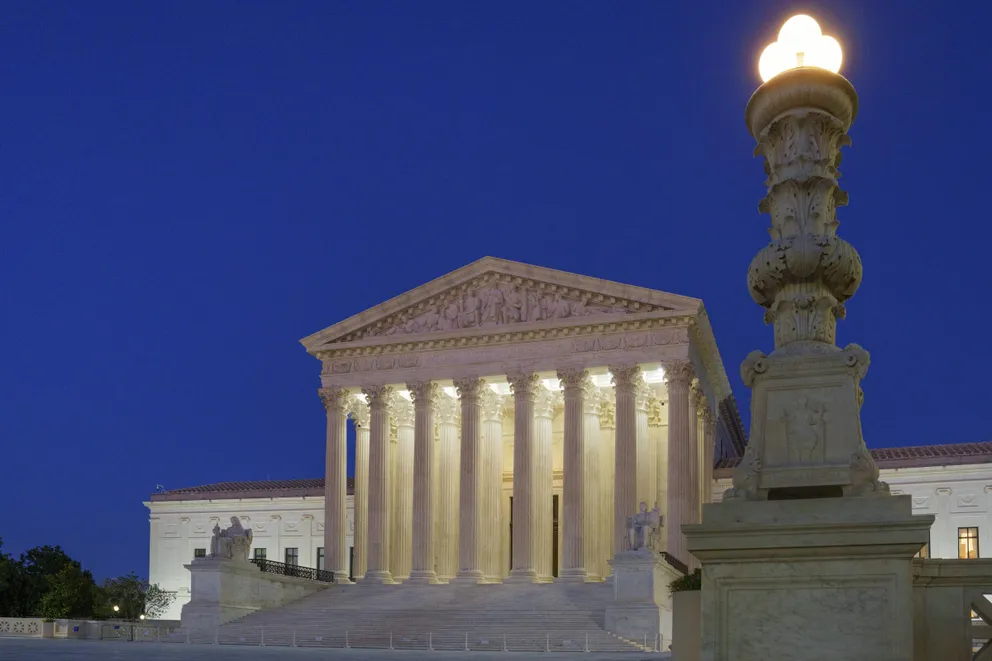
Later that day, however, the U.S. Supreme Court allowed Tennessee to proceed.
That left officials attempting to complete the execution before the end of the day rather than setting another date.
Media witnesses were taken into the viewing area shortly before 6:30 p.m.
When the curtain eventually opened, Pike could be seen lying inside the execution chamber with prison officials nearby.
Her spiritual adviser was with her.
At one point, witnesses said she sang.
Before the execution process began, Pike delivered what she believed would be her final statement.
“I’m going to leave this world the way I spent most of my life. And that is with love.”
But the evening quickly began moving in an unexpected direction.
Witnesses said Pike remained responsive after the procedure started.
At one point, she expressed concern about discomfort in her arm and asked whether what she was feeling was normal.
The curtain was closed, reopened, and eventually shut again for nearly an hour.
Even though reporters could no longer see Pike, they could still hear her breathing.
Some described hearing what sounded like “steady snoring.”
That detail would later become significant when Pike’s legal team began discussing what they believed had happened medically.
Shortly before 9 p.m., witnesses were instructed to leave the chamber area for a news conference.
Then emergency vehicles arrived.
An ambulance subsequently left Riverbend and transported Pike to a hospital.
Instead of announcing that Tennessee had carried out its first execution of a woman in more than two centuries, state officials were dealing with an outcome few had anticipated.
The Tennessee Department of Correction said its staff had followed the approved execution procedure.
“The lethal injection chemical in the protocol has consistently been effective,”
the department said.
Pike’s attorneys, however, described the situation very differently.
Before the execution, her lawyers had repeatedly argued that lethal injection posed particular medical risks in her case.
They pointed to her small veins, additional medical concerns, and a history of trauma while arguing that establishing reliable intravenous access might be unusually difficult.
Afterward, they said the problems they had warned about appeared to have occurred.
“We take no pleasure in being right, but the concerns raised by Ms. Pike proved to be true.”
They continued:
“Difficult vein access, blown veins, degraded pentobarbital, no emergency medical care available when things inevitably go wrong, all under a protocol that remains veiled in secrecy.”
Those claims represented the attorneys’ account and had not yet been established as the state’s official explanation for what went wrong.
Pike’s lawyers also said two syringes containing pentobarbital had been administered.
Despite that, they said she never became fully unconscious and continued to have a heartbeat.
By the following day, the attorneys issued an update that made clear the incident had become an ongoing medical emergency.
“Christa is alive right now and receiving life-saving medical care.”
They said her condition was critical.
A Tennessee anesthesiologist later offered one possible explanation for how such an outcome could occur.
Dr. Paul Allen, a professor of anesthesiology at the University of Tennessee Health Science Center, explained that pentobarbital must enter the bloodstream correctly in order to produce its intended effect.
Based on the descriptions given by witnesses, Allen suggested the intravenous line may have failed.
“What happened here, I would suspect, is that they infiltrated the vein,”
he said.
Infiltration occurs when fluid intended to enter a vein instead moves into the surrounding tissue.
According to Allen, that could potentially explain why Pike complained of pain or pressure in her arm while also appearing sedated enough to make snoring sounds without becoming fully unconscious.
His explanation was only a medical theory based on witness descriptions.
As of October 1, Tennessee had not publicly identified the exact reason the execution failed.
Allen also noted that dehydration and existing vein problems can make intravenous access more difficult.
That was particularly relevant because Pike had previously argued in court that she had a vein condition that could complicate lethal injection.
The medical questions quickly became intertwined with legal ones.
Pike remained alive, but her lawyers said she was seriously ill.
No new execution date was announced.
Tennessee Gov. Bill Lee also halted executions for the remainder of 2026 while an independent review examined what happened.
The incident came only months after another Tennessee execution attempt was abandoned because medical personnel were unable to establish the necessary IV access.
That history added another layer to criticism from Pike’s attorneys, who argued that the state should have more closely examined its procedures before attempting to execute her.
For Tennessee officials, the question now extends beyond why one execution failed.
They must determine how a procedure performed under an approved protocol ended with an inmate being rushed from the prison for emergency medical treatment.
The extraordinary circumstances surrounding Pike’s survival do not change the reason she had been sentenced to death.
At the center of the original case was 19-year-old Colleen Slemmer, who was killed in Knoxville in January 1995.
Pike was 18 at the time.
She, her then-boyfriend Tadaryl Shipp, and another person took Slemmer to a wooded area near the University of Tennessee campus, where prosecutors said she was violently attacked and killed.
Pike was ultimately convicted and sentenced to death.
Shipp, who was 17 at the time of the killing, received a life sentence because the death penalty could not be imposed on someone who had been under 18 when the crime occurred.
He was denied parole in 2025.
Slemmer’s family had continued supporting Pike’s execution throughout the decades that followed.
Relatives even raised money to travel from the Jacksonville, Florida, area to Nashville so they could witness the sentence being carried out.
Slemmer’s mother, May Martinez, had previously said she did not believe Pike’s expressions of remorse could make amends for her daughter’s death.
After the failed execution, Slemmer’s stepfather expressed anger and frustration that Pike remained alive.
For the family, September 30 had been expected to bring an ending to a chapter they had carried since 1995.
Instead, it created another period of uncertainty.
That leaves a difficult emotional reality surrounding the case.
Pike’s medical condition is serious.
At the same time, Slemmer’s family had traveled to Tennessee expecting a decades-old sentence to be completed and instead left without the outcome they had anticipated.
During her years in prison, Pike expressed remorse.
She was also diagnosed and treated for bipolar disorder and post-traumatic stress disorder.
Her attorneys argued that important evidence involving her mental health, childhood abuse, and neglect had not been adequately presented during her original defense.
Those claims became central to later efforts to stop or delay the execution.
Fellow inmates also submitted statements describing Pike as supportive and remorseful during her years in prison.
Those accounts did not change her conviction or the position of Slemmer’s family.
They did, however, form part of the broader legal argument that courts should more closely examine Pike’s background, mental health, and behavior in prison before allowing Tennessee to proceed.
Hours before the execution attempt, that argument had nearly succeeded in delaying the sentence.
A lower federal court temporarily paused the execution while Pike’s lawyers pursued claims that her original legal representation had failed to adequately present evidence of childhood abuse and neglect.
The U.S. Supreme Court ultimately allowed the execution to continue.
Justices Sonia Sotomayor, Elena Kagan, and Ketanji Brown Jackson dissented.
Sotomayor wrote that she saw no justification for ending the normal appeals process prematurely:
“particularly in light of the grave consequences of an erroneous decision.”
She also argued that Tennessee’s interest in carrying out the execution within days or weeks should not outweigh Pike’s interest in remaining alive while her legal claims were reviewed.
Only hours later, those legal arguments were overshadowed by what unfolded inside Riverbend.
Rather than completing the execution, Tennessee was left with a critically ill prisoner, an emergency hospitalization, and a procedure that death-penalty observers described as highly unusual.
Robin Maher, executive director of the Death Penalty Information Center, called the episode unprecedented.
“This event is the worst we’ve seen and unlike any other botched execution in the modern era.”
She added:
“There is no precedent.”
For the immediate future, attention has shifted from another execution date to Pike’s medical condition.
Her attorneys have asked Gov. Lee to commute her death sentence.
As of October 1, he had not agreed to do so.
Instead, Lee ordered an independent investigation into the failed execution and suspended Tennessee’s remaining executions for the rest of the year.
“That investigation will be thorough, and it’s gonna take time,”
Lee said.
The governor indicated that officials first need to understand exactly why the procedure failed before deciding what changes may be necessary.
Tennessee does have another recent failed execution attempt that offers at least some indication of how the state could respond.
After officials were unable to carry out the execution of Tony Carruthers because of problems establishing intravenous access, Lee granted him a one-year reprieve.
Carruthers remains on death row and does not currently have another execution date.
Pike’s situation is different, however.
According to her attorneys, the lethal drug had actually been administered before officials stopped the process.
Her legal team has said it intends to wait for her medical condition to stabilize before determining what legal steps to take next.
For now, nearly every major question remains unanswered.
Tennessee has not publicly established exactly why the execution failed.
Pike’s long-term medical condition remains uncertain.
Her request to have her death sentence commuted has not been granted.
And no new execution date has been announced.
Until doctors determine whether Pike will recover and investigators establish what happened inside the execution chamber, the woman Tennessee expected to die on September 30 remains alive.
What was supposed to be the final chapter of a case stretching back more than three decades has instead opened an entirely new one.