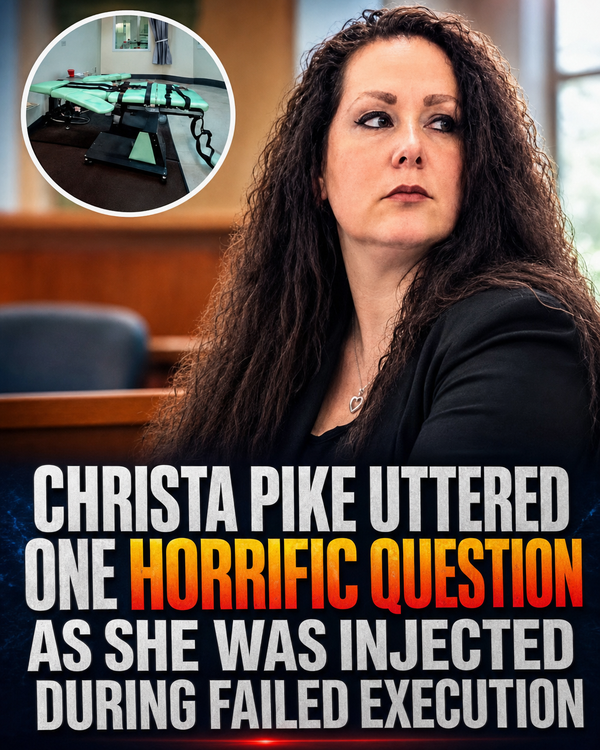
What those muffled sounds meant remains unclear, but the disruption was enough to unsettle everyone present. Prison officials maintained afterward that the execution had proceeded strictly “by protocol,” even as journalists in the witness room strained to make out Pike’s breathing through the fabric barrier separating them from the chamber.

Nearly Three Decades on Death Row
Christa Pike had spent nearly thirty years awaiting this moment. She was condemned for a brutal 1995 murder, and her case moved through nearly three decades of appeals before the state of Tennessee set a final date to carry out her sentence at Riverbend.
Confusion, Motions, and an Ambulance
As the situation unfolded inside, activity intensified outside the prison walls. Lawyers and activists filed emergency motions in a last attempt to intervene, even as the execution process was already underway.
As the chaos continued, an ambulance was used to carry Pike away from the prison she was never meant to leave alive, a detail that added to the sense of confusion surrounding the event. Her reported final words spoke of love, peace, and freedom, offering a stark contrast to the turmoil that had just taken place inside the chamber.
A Renewed National Debate
The troubled execution has reignited long-standing national arguments over lethal injection and the broader machinery of capital punishment.
No clear resolution has emerged from what happened at Riverbend. Instead, the event has left lingering, unanswered questions about how the justice system carries out its most irreversible sentence—and what accountability looks like when the process itself appears to falter.