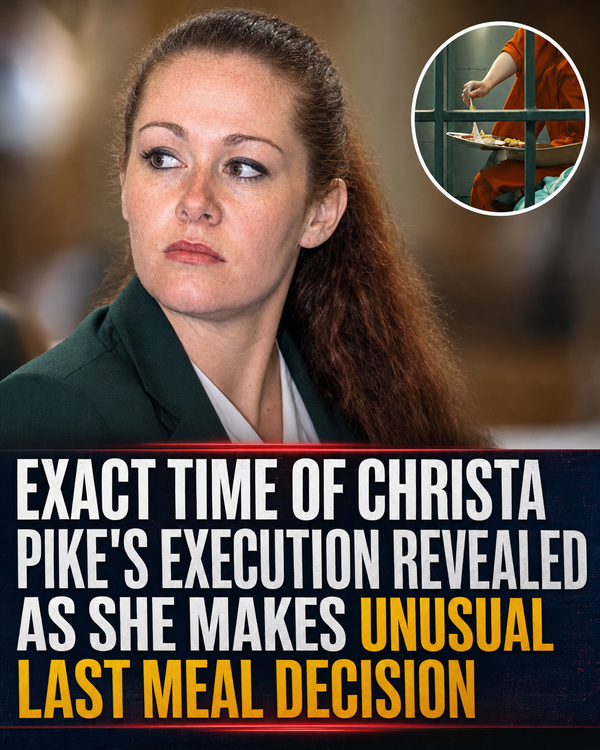
That refusal stood apart from decades of tradition inside American death rows, where a final meal has long offered condemned inmates one last, fleeting moment of ordinary humanity. By declining to choose, Pike seemed to step away from that small mercy altogether, facing the state’s ultimate power without asking anything more of it.

A Final Refusal
Pike is held at Tennessee’s Riverbend Maximum Security Institution, where she has spent years awaiting execution.
She made no request for a favorite dish, no plea for comfort. According to her own account, she says she faces the end without fear.
The Crime and the Life Behind It
Pike was convicted of murdering Colleen Slemmer, a crime committed nearly thirty years ago. The killing has remained a point of lasting scrutiny, both for its brutality and for what came after in the courts and in public debate.
Pike’s own childhood has been described as marked by abuse and trauma. That history has fueled years of argument over how youth, mental illness, and personal responsibility should weigh against the severity of a crime — questions that have followed her case since its earliest days.
A Family Still Waiting
For Colleen Slemmer’s family, the passage of nearly three decades has not brought the closure they have long sought. The wait for justice has stretched across a generation, shadowing the case even as legal proceedings continued.
Pike’s refusal of a last meal adds an unexpected, somber footnote to a story already weighed down by unresolved grief and lingering questions about mercy, punishment, and what, if anything, either side is owed in the end.
As of now, the final outcome of her case remains part of an ongoing and unresolved chapter, one that leaves both Pike’s fate and the Slemmer family’s long wait for closure still unanswered.