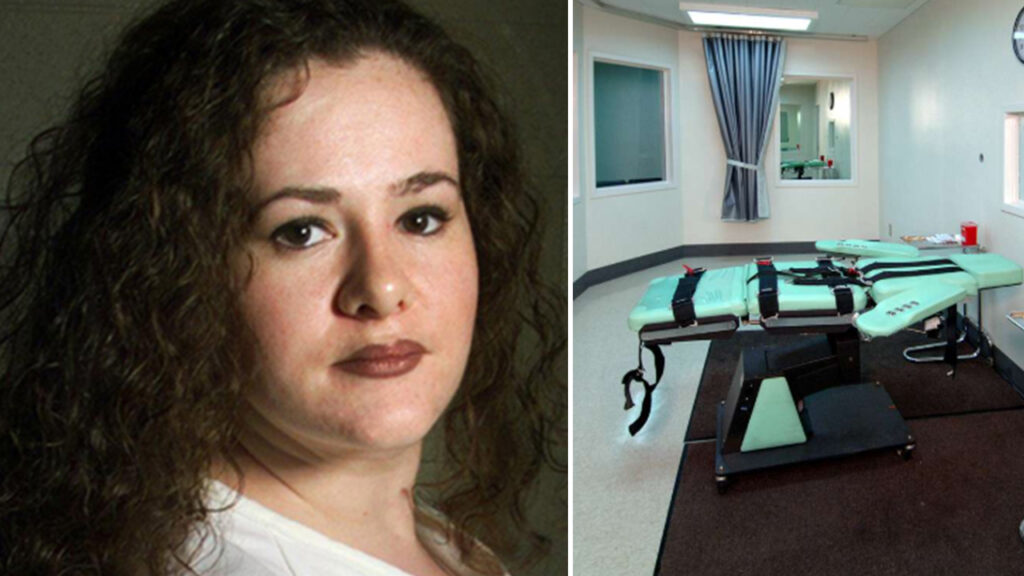
Pike described herself as being at peace.
But what happened afterward was anything but routine.
Witnesses reported that she remained awake after the first dose of pentobarbital was administered. She continued making movements and eventually raised her head to speak to prison officials about her arm.
Media witnesses later described hearing and seeing signs that Pike remained alive as the procedure continued.
By 8:26 p.m., according to witnesses, a second dose of pentobarbital had been administered. Tennessee’s protocol provides for a second set of syringes if the prisoner has not died after the first dose.
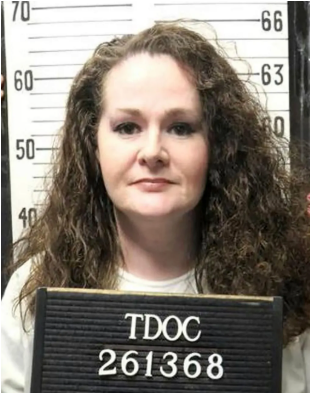
However, the written protocol does not explain what officials are supposed to do if the inmate remains alive after that second dose.
That became particularly significant in Pike’s case.
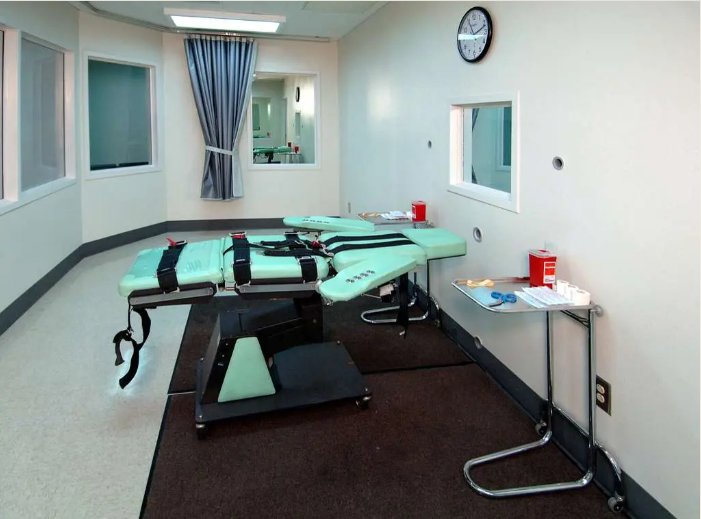
Witnesses said the curtain was closed, limiting their ability to see what prison officials were doing. Pike could still reportedly be heard breathing and making loud snoring sounds from behind the curtain.
Those sounds continued until approximately 8:53 p.m., when the microphone was turned off and media witnesses were told to leave.
Reporter Steven Hale, who witnessed the proceedings, later emphasized how much of the incident occurred away from public view.
“I cannot emphasize enough how much of whatever just happened happened behind a closed curtain.”
He added:
“When Christa Pike was still alive, we could still hear her breathing, but we could not see what was going on.”
Pike was eventually removed from the prison by ambulance and taken to a hospital for treatment.
As of Thursday, October 1, authorities had not publicly provided a clear update on her condition. The Associated Press reported that even Tennessee Gov. Bill Lee said he had not yet received an update.
Pike’s attorneys said she had received two doses of pentobarbital during the failed procedure.
The Tennessee Department of Correction maintained that officials had followed the approved state protocol.
“The Tennessee Department of Correction followed every step of the State’s lawful, established execution protocol approved by the Attorney General’s Office.”
The department has not yet publicly explained why the lethal injection failed.
Pike’s attorneys filed emergency motions during the process, arguing that she was being subjected to unnecessary suffering and seeking to stop any further attempt to continue the execution.
The incident was described by Robin Maher, executive director of the Death Penalty Information Center, as “singular and unparalleled.”
While other condemned prisoners have survived execution attempts because officials were unable to establish intravenous access, Maher said Pike’s case was unusual because she remained alive after the execution drugs had actually been administered.
The failed execution immediately prompted action from Tennessee officials.
Gov. Bill Lee ordered a comprehensive independent review into exactly what happened and suspended Tennessee’s remaining scheduled execution for the rest of 2026.
“Carrying out a lawfully imposed sentence is among the State’s most serious responsibilities, and the people of Tennessee expect it to be done in a manner that is not only legal and constitutional, but is effective.”
Lee later called the situation “deeply disturbing” and said Tennesseans deserved answers about what had gone wrong.
Pike’s attempted execution was also the second time in 2026 that Tennessee was unable to carry out a scheduled lethal injection.
In May, the execution of Tony Carruthers was called off after officials spent more than an hour unsuccessfully trying to establish the intravenous access required to administer pentobarbital.
For Pike, the events of September 30 unfolded very differently from the peaceful final moments she had apparently expected.
Before the procedure began, she spoke about love and acceptance and said she was ready for what she believed would happen.
Instead, she survived two rounds of the lethal injection process, was removed from the prison by ambulance, and became the center of a new investigation into Tennessee’s execution system.
Exactly why the drugs failed to kill her remains unanswered.
And until the independent review is completed, many of the most important questions about what happened behind that closed execution-chamber curtain remain unresolved.