We had always answered her questions as gently and honestly as we could.
Her biological parents had died in a car accident when she was a baby.
That was the story we knew.
That was the story Sophie knew.
So when she needed a picture for class, I opened our family albums and spread dozens of photographs across the table.
Birthdays.
Christmases.
Vacations.
School mornings.
One of us at the beach caught her attention.
The three of us were sunburned, laughing, and squinting into the sun.
“That one?” I asked.
Sophie nodded.
I thought that was the photo she took to school.
The next afternoon, the school called.
When I arrived, Sophie’s class was still sitting at their desks.
Her teacher, Mrs. Parker, stood near the front with a folded piece of newspaper in her hand.
She looked irritated.
“Your daughter brought something completely inappropriate for a second-grade family project.”
She handed it to me.
My stomach dropped.
It was not the beach photograph.
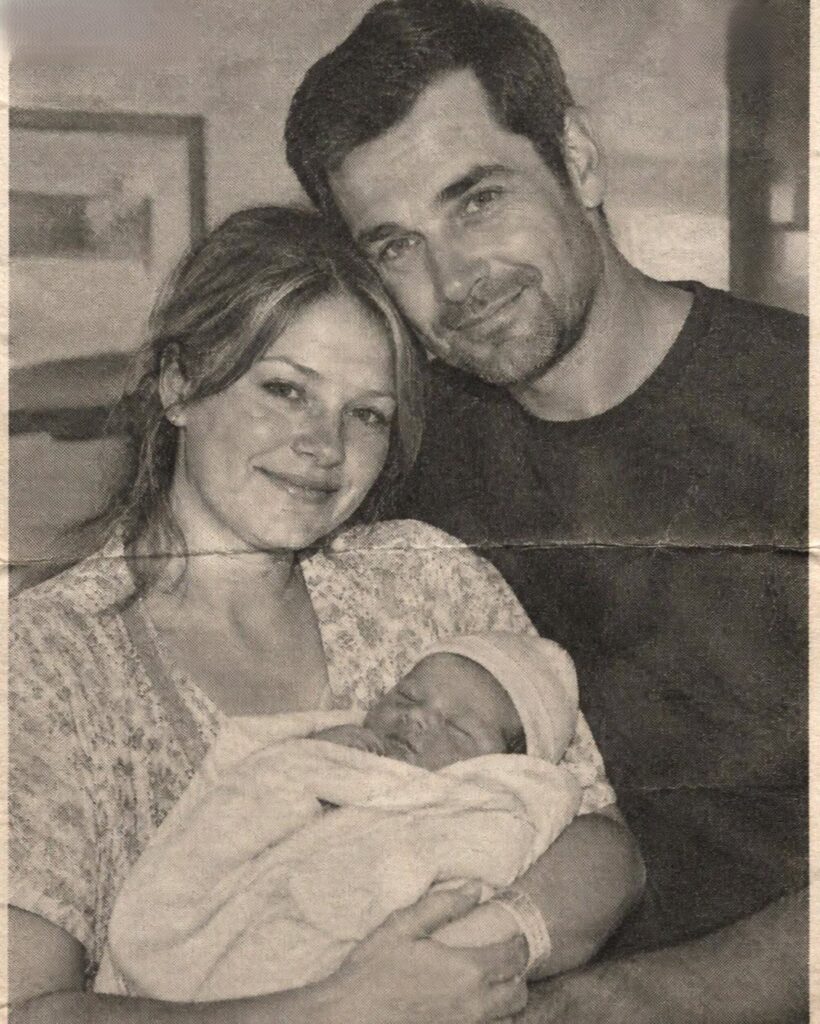
It was a newspaper clipping.
One I had kept hidden in a box at the top of my closet.
The article was about the accident that killed Sophie’s biological parents.
Underneath the headline was a photograph of them together.
Young.
Smiling.
Alive.
Before I could say anything, Sophie whispered:
“I wanted my first family too.”
Every bit of anger I had disappeared.
I looked at her.
Her eyes were fixed on the floor.
Mrs. Parker picked up the classroom phone.
“I asked Mr. Harris to come down. I think the principal should decide whether this belongs in the project.”
A minute later, Mr. Harris walked into the room.
He took the clipping from Mrs. Parker.
At first, he barely looked at it.
Then he stopped.
His eyes went back to the photograph.
He moved closer to the window and read the article from beginning to end.
“Where did Sophie get this?”
“From my house.”
He looked around the room.
“Everyone stay seated.”
Mrs. Parker frowned.
“Why?”
He didn’t answer.
His attention had shifted to something near the bottom edge of the clipping.
I had never paid attention to it before.
When the article had been cut from the newspaper years earlier, part of another photograph had been left attached beside it.
Most of it was gone.
Only half of a man’s face remained.
Part of an eye.
A cheek.
Gray hair.
Mr. Harris stared at it.
Then looked at Sophie.
“That’s my father.”
Nobody spoke.
Mrs. Parker gave a small confused laugh.
“What?”
Mr. Harris pointed to the partial photograph.
“His name was Richard.”
I looked at the tiny image.
“Are you sure?”
“I’m sure.”
His voice had changed.
He unfolded the clipping completely and ran his finger beneath the photograph of Sophie’s biological parents.
Then he read the names printed below.
He stopped at one.
“Isabella.”
Sophie looked up.
“That was my first mommy.”
Mr. Harris gripped the desk.
“Your mother’s name was Isabella?”
“Yes.”
Something happened in his face.
Recognition, but not exactly.
It looked more like a piece of his past had suddenly stepped into the room.
He glanced around at the children watching us.
Then looked at me.
“Could you and Sophie come to my office?”
Mrs. Parker started to speak.
“You too,” he added.
A few minutes later, Sophie was sitting beside me in the principal’s office, still holding my hand.
Mr. Harris closed the door.
Then he crouched in front of her.
“Was your mother’s maiden name Isabella H?”
Sophie squeezed my fingers.
“I don’t know.”
But I did.
I had seen the name years earlier on adoption documents.
“Yes,” I said.
Mr. Harris closed his eyes.
When he opened them again, they were wet.
“Isabella was my sister.”
I stared at him.
“What?”
“My older sister.”
He pointed toward the clipping.
“That’s my sister.”
Mrs. Parker slowly sat down.
Mr. Harris didn’t seem to notice.
He was looking only at Sophie.
“She left home when I was sixteen. I knew she married. Years later, my father told me she had a little girl.”
His voice cracked.
“A girl named Sophie.”
Sophie stared at him.
“Me?”
He nodded.
“You.”
She thought about that for a few seconds.
Then asked the most Sophie question imaginable.
“Then what are you?”
Something in Mr. Harris’s face collapsed.
“I’m your uncle.”
Sophie immediately looked at me.
Then back at him.
“My real uncle?”
“Your biological uncle,” I said carefully.
Mr. Harris looked at me.
“I’m sorry. I didn’t mean—”
“No.”
I squeezed Sophie’s hand.
“Uncle is fine.”
He sat down on the floor.
For a moment, he didn’t look like the principal of an elementary school.
He looked like a man who had just found something he believed had been lost forever.
“I’ve wondered where you were for seven years.”
That sentence hit me harder than anything else.
“Wait.”
I looked again at the clipping.
The gray-haired man.
Richard.
Then a memory I had not thought about in years came rushing back.
A man standing on our porch.
Gray hair.
A cardboard box in his hands.
“Oh my God.”
Mr. Harris looked at me.
“What?”
“Richard.”
His expression changed.
“I met your father.”
He stood so quickly the chair behind him scraped against the floor.
“When?”
“When Sophie was a baby.”
I could see it clearly now.
My husband and I had only recently learned that Sophie would be staying with us permanently.
Richard had called first.
He asked if he could bring over a box containing things that had belonged to Isabella and Sophie’s biological father.
He stayed maybe twenty minutes.
He looked exhausted.
Older than his years.
Before he left, he placed one hand on the box and said:
“Give these to her when she’s old enough to ask.”
Then he looked at baby Sophie sleeping in my husband’s arms.
“Just don’t let her grow up thinking they didn’t love her.”
I had remembered that sentence for years.
I had forgotten his last name.
Mr. Harris covered his mouth.
“My father knew where she was.”
“Yes.”
“And he never told me.”
The hurt in his voice was unmistakable.
Then he looked at Sophie, and his expression softened.
“I knew you survived,” he told her. “Dad told me you were safe and that a family was taking care of you. I wanted to find you.”
Sophie frowned.
“Why didn’t you?”
“He asked me not to.”
“Why?”
Mr. Harris took a moment.
“He said you had already lost your mom and dad. He didn’t want strangers showing up and frightening the people raising you.”
He gave a sad smile.
“He said when you were older, there would be time.”
Richard died three years later.
Mr. Harris knew Sophie existed.
He knew she had survived.
But he never learned where his father had found her new family.
And I had never known that the quiet older man on our porch had a son.
A son who would someday become the principal of Sophie’s school.
Sophie tugged at my sleeve.
“Mom?”
“Yes?”
“Is the box still there?”
My stomach tightened.
“Yes.”
“Can I see it?”
I knew immediately what she meant.
Not the newspaper clipping.
Everything.
I had shown Sophie pieces of the box before.
A photograph here.
A small keepsake there.
But I had never allowed her to sit down and go through everything herself.
I kept telling myself she wasn’t old enough.
That Richard had told me to wait until she was old enough to ask.
But standing there in that office, I realized something uncomfortable.
She had been asking for years.
Not once.
Dozens of times.
Did my first mommy have brown eyes?
Did she like swimming?
Was my first daddy funny?
What music did they like?
Did they hold me?
Did they love me?
I had answered whatever I could.
But I had somehow decided those questions didn’t count.
I had kept moving the line.
Not because Sophie wasn’t ready.
Because I wasn’t.
“We’ll look tonight,” I said.
Her eyes widened.
“All of it?”
“All of it.”
Mrs. Parker finally spoke.
“I didn’t understand what the clipping was.”
Sophie looked at her.
Mrs. Parker’s face reddened.
“I saw an article about two people dying and thought it wasn’t appropriate beside the other children’s family pictures.”
Sophie frowned.
“But it’s not a picture of them dying.”
Mrs. Parker went quiet.
“No.”
“It’s a picture of my mom and dad.”
Mrs. Parker looked down.
“You’re right.”
That evening, my husband sat beside Sophie on our bedroom floor while I took the box down from the closet.
Sophie recognized it immediately.
“So that’s where you got the clipping.”
She nodded.
“You climbed up there?”
Another nod.
My husband gave her a look.
“We’ll discuss the climbing later.”
For the first time all day, Sophie smiled.
Then I opened the box.
There were fewer things inside than I remembered.
Three photographs.
A hospital bracelet with Sophie’s birth name.
A tiny knitted hat.
Several envelopes tied together with a faded blue ribbon.
And one photograph I had completely forgotten.
Richard was sitting in an armchair.
He looked much younger than the man who had once stood on my porch.
In his arms was a newborn wrapped in a yellow blanket.
Sophie.
On the back, written in blue ink, were the words:
“Sophie. My granddaughter. Three weeks old.”
I called Mr. Harris.
He came over that evening.
When I handed him the photograph, he stared at it for a long time.
Then he noticed the envelopes.
“What are those?”
“I don’t know.”
I had never opened them.
He untied the blue ribbon.
Every envelope had the same name written across the front.
Mr. Harris.
He looked at me.
“That’s me.”
There were six letters.
All written in Isabella’s handwriting.
None had stamps.
None had ever been mailed.
Mr. Harris opened the first one.
Sophie leaned against me while he read silently.
Halfway through the page, he stopped.
“What does it say?” I asked.
He swallowed.
“She wrote this after she left home.”
Then he read one line aloud.
“I don’t know if you still hate me.”
Mr. Harris lowered the letter.
“I didn’t hate her.”
Nobody spoke.
“I was sixteen,” he said. “She and Dad had this terrible argument. She packed a bag.”
He stared down at the page.
“I was angry because she was leaving.”
His voice weakened.
“The last thing I said to her was, ‘Fine. Go.’”
He looked away.
“I waited for her to call me.”
I looked at the unopened letters.
“And she thought you didn’t want her to.”
He nodded.
The letters covered years.
Isabella wrote about getting married.
Missing home.
Wondering whether her little brother had graduated.
Whether he was happy.
Whether he still thought about her.
Then we reached one written after Sophie’s birth.
Mr. Harris unfolded it with shaking hands.
A small photograph slipped to the floor.
Sophie picked it up.
Isabella was lying in a hospital bed.
Newborn Sophie was asleep against her chest.
Mr. Harris kept reading.
Then he made a sound that didn’t sound like crying exactly.
More like something inside him had finally broken open.
“What?” Sophie asked.
He handed me the letter.
Near the bottom was a line about her.
“If you ever meet her, her name is Sophie. She has your ridiculous dimple when she smiles.”
I looked at Sophie.
She had a dimple in her left cheek.
So did Mr. Harris.
Sophie touched hers.
“She knew you?”
Mr. Harris laughed through his tears.
“She knew me very well.”
Then Sophie asked the question that changed the entire room.
“Did she want me?”
My husband turned toward her.
“Sophie.”
She was staring at the photograph.
“My first mommy. Did she want me?”
And suddenly I heard Richard’s voice from seven years earlier.
“Just don’t let her grow up thinking they didn’t love her.”
“Of course she did,” I said.
Sophie looked at me.
“But how do you know?”
I opened my mouth.
Nothing came out.
Mr. Harris looked down at Isabella’s letter.
“There’s more.”
He crouched beside Sophie.
“Do you want me to read it?”
She nodded.
His voice shook.
“Sophie is the best thing we’ve ever done. I didn’t know you could love somebody this much when you’ve only known them for four days.”
Sophie stayed perfectly still.
Mr. Harris continued.
“I keep looking at her and thinking I wish my little brother could meet her.”
He stopped.
He couldn’t read any farther.
He didn’t need to.
Sophie looked at the photograph.
Then climbed into my lap.
I wrapped both arms around her.
After a while, she whispered:
“Mom?”
“Yes?”
“Are you sad?”
“I am.”
“Because I wanted their picture?”
That question broke me.
“No.”
She wouldn’t look at me.
“I didn’t tell you I took it because I thought maybe you’d think I wanted a different mommy.”
“Oh, Sophie.”
“I don’t.”
She said it quickly.
“I don’t want a different one.”
I held her tighter.
“You never have to choose.”
That was when she started crying.
Quietly.
“I like hearing about her.”
“I know.”
“And him.”
“I know.”
“But I love you and Dad.”
My husband knelt beside us.
“We know.”
I kissed her hair.
“You are allowed to miss people you don’t remember. You are allowed to love them. You can ask about them every day if you want.”
She looked at me.
“Really?”
“Really.”
“None of that takes anything away from us.”
Behind her, Mr. Harris was crying again.
And suddenly I understood why.
He had spent years believing that loving the family he remained with meant accepting that Isabella had chosen another life.
Sophie had spent years believing that loving the family she lost might somehow hurt the one she had.
Both of them had mistaken silence for rejection.
The next morning, Mr. Harris met Sophie at the school entrance.
She looked up at him.
“Do I call you Uncle Mr. Harris at school?”
He smiled.
“Probably not during assembly.”
“What about lunch?”
“We can negotiate.”
Inside the classroom, Mrs. Parker was waiting.
She crouched beside Sophie’s desk.
“Sophie, I owe you an apology.”
Sophie watched her.
“I shouldn’t have called your photograph inappropriate. I should have asked you why it mattered.”
Sophie nodded.
Then Mrs. Parker asked:
“Would you still like to use it for your project?”
Sophie thought about it.
“Can I use two?”
Mrs. Parker smiled.
“You can use as many as you need.”
Three weeks later, parents were invited to see the completed family projects displayed in the hallway.
Twenty-three pieces of construction paper covered the wall.
I found Sophie’s immediately.
At the top, written in purple marker, were the words:
“MY FAMILY.”
On the left was the beach photograph she had originally chosen.
Sophie sitting between my husband and me.
All three of us sunburned and laughing.
On the right was the newspaper photograph of Isabella and Sophie’s biological father.
Under that was the photograph of Richard holding Sophie as a baby.
And beside it was a new photograph.
Sophie and Mr. Harris.
He was kneeling beside her so they were the same height.
Both were smiling.
Both had the same dimple.
Mrs. Parker came to stand beside me.
“She worked on it for two days.”
At the bottom of the page, Sophie had drawn a small cardboard box.
I smiled.
The real box was no longer on top of my closet.
It was on the bookshelf in Sophie’s bedroom.
The knitted hat was still inside.
So was the hospital bracelet.
The photographs.
Isabella’s letters.
Everything Richard had saved.
But now Sophie could open it whenever she wanted.
Richard had told me to give it to her when she was old enough to ask.
For seven years, I had believed I was waiting for that moment.
The truth was, the moment had come long before I noticed it.
Sophie had been asking all along.
Then she came running down the hallway.
“Mom, come see.”
“I see it.”
“No.”
She grabbed my hand.
“This.”
She pointed toward one line she had written beneath all four photographs.
There were no labels.
No biological.
No adoptive.
No first family.
No second family.
Just four simple words in Sophie’s careful handwriting.
“They’re all my family.”
I stood there staring at that sentence.
And for the first time, I understood that giving Sophie more of her past had never threatened the place we held in her present.
Love had never been something she needed to divide.
There had always been enough room for all of us.