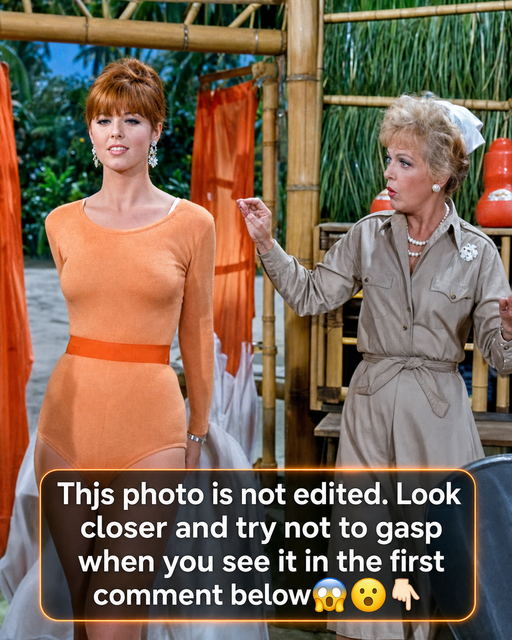
That detail involves an extra figure who sometimes seems to appear alongside the seven castaways as the S.S. Minnow prepares to set sail. Decades after its original broadcast, fans still return to old episodes to spot production quirks and details easy to miss the first time around.
Who’s Really in That Opening Shot?
The show’s opening sequence is one of the most recognizable introductions in television history. The premise is simple: seven people board the S.S. Minnow for a three-hour tour before a storm leaves them stranded on an uncharted island.
But viewers who study the wider shots may notice something unusual — there can appear to be more than seven people aboard the boat. Rather than an eighth secret castaway, the extra figure is generally explained by stand-ins and doubles used when the camera was filming from a distance.
It’s a small production detail, but once you start looking for it, that familiar opening becomes even more interesting to watch.
Building a ‘Deserted’ Island on a Studio Budget
One of the show’s greatest accomplishments was making a television set feel like a remote tropical island, hundreds of miles from civilization. In reality, the production relied on practical locations and studio facilities, which occasionally created problems.
In some wider shots, eagle-eyed viewers have noticed background structures or equipment that don’t quite fit the story’s remote setting. This wasn’t unusual for the era — sets were built to look convincing from the angles cameras were expected to use, not from every direction. The illusion didn’t always have to be perfect, and that’s part of the charm.
The jungle itself worked the same way. Trees, plants and scenery were positioned strategically, with the camera doing the rest to stretch a small space far beyond the edge of the screen.
Watch several episodes back to back and a familiar tree, rock or patch of vegetation may suddenly look surprisingly recognizable. The creators weren’t building a whole island — just enough of one to convince the audience.
A Real-World Moment Behind the Cameras
There’s also a historical detail tied to the original pilot. Filming took place in Hawaii in 1963, around the time of President John F. Kennedy’s assassination, an event that affected productions and daily life across the country.
The cast and crew were working in the Honolulu area when the news arrived, and the national period of mourning was reflected in the environment around them. Some early footage looks different when viewed today with that context in mind.
It’s an unexpected reminder that Gilligan’s Island wasn’t made in a vacuum. The production unfolded during a major moment in American history, and traces of that period remain connected to the show.
Landing the Role of the Skipper
It’s hard to imagine the show without Alan Hale Jr. as the Skipper, but getting the part reportedly took some determination. Hale was working on another production when he learned about the audition opportunity, and according to accounts of his career, he had to make his own arrangements to get to Los Angeles to pursue it.
The decision proved significant. As the Skipper, Hale developed an instantly recognizable dynamic with Bob Denver’s Gilligan, and their constant disagreements and misunderstandings became central to the show’s humor. It’s hard to picture anyone else delivering the Skipper’s familiar cry of “little buddy.”
Low-Budget Tricks That Became Part of Its Charm
Part of what keeps Gilligan’s Island entertaining is that viewers can occasionally see the mechanics behind the illusion. Modern television leans on huge budgets and computer-generated environments, but the castaways had none of that.
Instead, the production relied on costumes, practical sets, carefully placed scenery and creative camera work. Sometimes those techniques worked perfectly; other times, viewers could spot a small reminder that they were watching a television show. Either way, those imperfections became part of the series’ personality rather than a flaw.
Why Rewatching Still Rewards Longtime Fans
Watching a classic sitcom decades after its original broadcast is a different experience. The first time through, attention stays on the story; the second or third time, viewers start noticing everything around it — a background performer, a piece of scenery, a familiar location, a prop that seems to shift between shots.
Those small discoveries can make an old favorite feel surprisingly fresh. Gilligan’s Island may have told the story of seven people stranded far from civilization, but the real production was filled with actors, crew members, sets and practical filmmaking tricks working just out of frame.
Perhaps that’s part of why the show has stayed so memorable. It never needed to be flawless — it only needed to convince audiences, for half an hour at a time, that they’d been transported to a ridiculous little island where almost anything could happen.