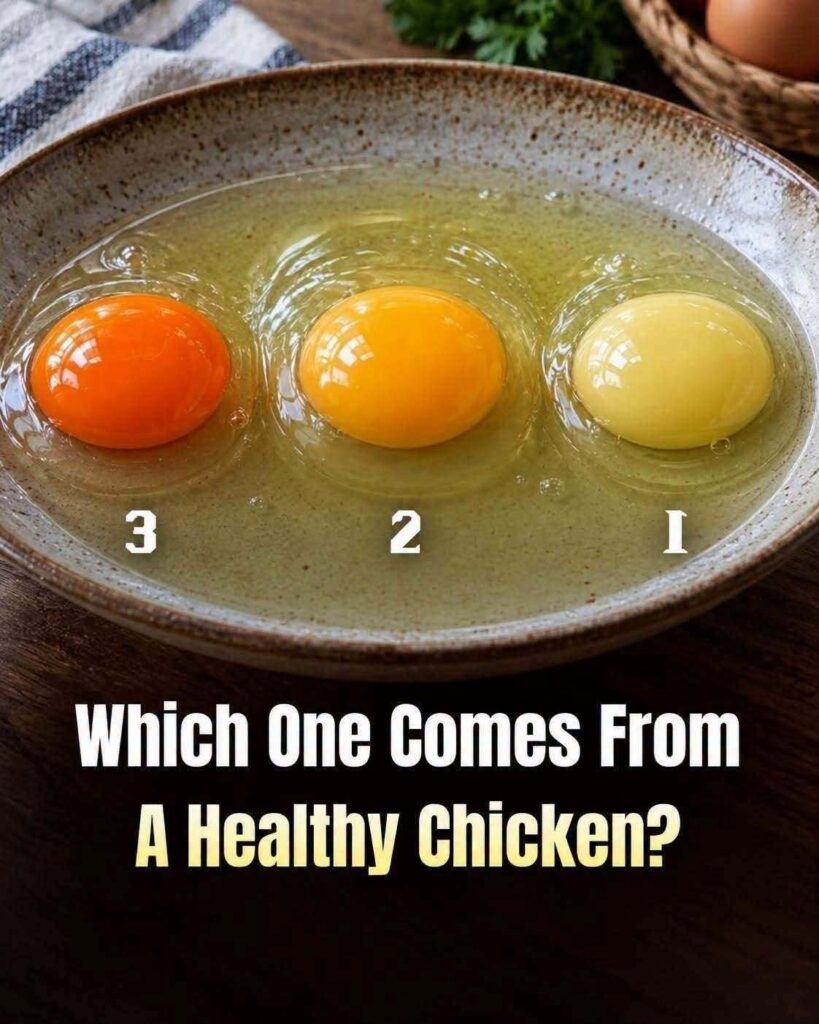
The shade of an egg yolk is influenced mainly by the hen’s diet.
When hens eat foods naturally rich in carotenoids, their yolks can become darker and more orange. Ingredients such as grass, alfalfa, corn, and marigold petals may all contribute to a richer color.
Some commercial feeds can also include ingredients or additives specifically chosen to influence yolk color.
That means a vibrant orange yolk can sometimes reflect what the hen ate, but it does not automatically prove that the egg contains dramatically more nutrients or came from a healthier farming system.
A pale yellow yolk is not necessarily a poor-quality yolk.
Likewise, a dark orange yolk is not automatically superior.
Eggs can provide valuable nutrients regardless of yolk color. They are a source of protein and can also contain important nutrients such as vitamin B12, vitamin D, selenium, and choline.
The color may change, but many of the basic nutritional qualities remain.
What matters more is often what you cannot immediately see when you crack the egg into a frying pan.
The hen’s overall diet matters.
Farming and housing conditions matter.
Clean handling matters.
Proper storage matters.
Freshness matters.
These factors can tell you far more about the quality and safety of an egg than simply judging whether the yolk is yellow, golden, or deep orange.
This is especially important because appearance can be persuasive.
People naturally associate rich colors with freshness and nutrition, which is one reason darker yolks are often viewed as more desirable.
But attractive color and nutritional superiority are not necessarily the same thing.
A dark yolk may simply indicate that the hen consumed more pigments in its feed.
That does not automatically make a pale yolk unhealthy.
The same principle applies when shopping for eggs.
Instead of choosing a carton based only on how orange you expect the yolks to be, consider the broader information available.
Look at freshness.
Pay attention to storage.
Consider how the hens were raised if that matters to you.
Look at the overall quality of the eggs rather than relying on a single visual characteristic.
Yolk color can still tell you something.
It can provide clues about the hen’s diet.
But it cannot tell you the complete nutritional story.
The darkest yolk in the carton is not automatically the healthiest one, just as the palest yolk is not automatically the worst.
Sometimes the yolk that looks most impressive simply reflects the ingredients the hen was fed.
So the next time you crack an egg and see a glowing orange center, enjoy it.
Just don’t assume the color alone proves you bought a nutritionally superior egg.
When it comes to choosing eggs, appearance can be interesting, but it should never be the only thing you judge.
The healthiest-looking option is not always the healthiest one.