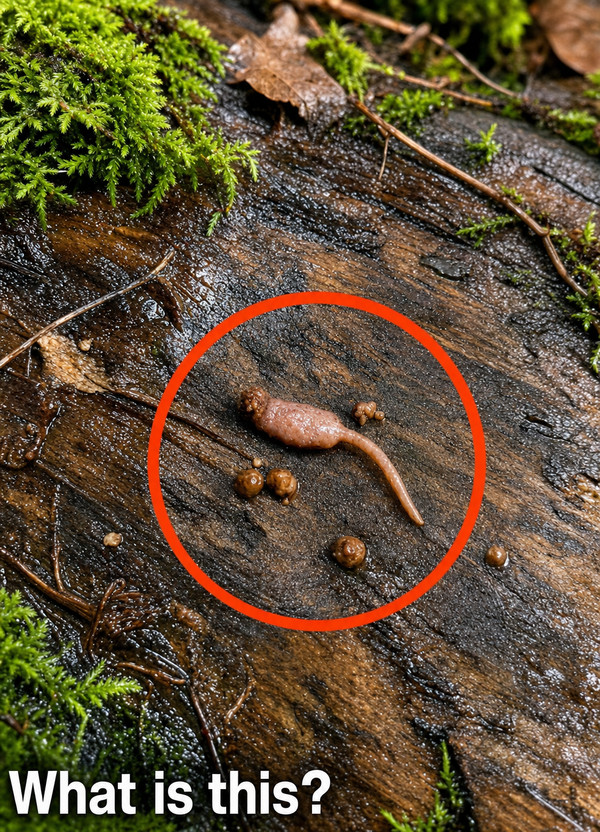
For a brief, unsettling moment, the shape resembled a tiny worm, and the instinct was to assume something alive—or something dangerous—had ended up on the plate. That fear was enough to make the whole batch feel unappetizing, even before any research had been done.
The Unsettling Discovery
The object sat embedded in the cooked meat, stringy and curled, with none of the texture of ordinary ground beef around it. It wasn’t moving, but its shape alone was enough to raise alarm. The natural assumption was that it might be a parasite.
Rather than tossing the meat immediately, curiosity took over. A quick photo was snapped so the strange fragment could be examined more closely and researched before any final decision was made about dinner.
What the Research Revealed
Zooming into the photo showed a pale, stringy strip rather than anything segmented or feature-like, which are the traits usually associated with actual parasites. That detail helped point toward a much less alarming explanation.
The object turned out to be a piece of connective tissue, likely fat or tendon, that had tightened and curled during cooking. Ground beef isn’t pure muscle; it naturally includes small amounts of fat, gristle, and connective tissue mixed throughout.
When exposed to heat, these bits can shrink, twist, and bunch together into shapes that look nothing like typical meat. The result can be visually startling, even though nothing unusual or unsafe has actually happened.
In this case, the twisted strip wasn’t a parasite and wasn’t a health risk. It was simply a normal component of ground beef reacting to heat in a way that looked far stranger than it actually was. Unsettling to find, but safe to eat once its true nature was understood.