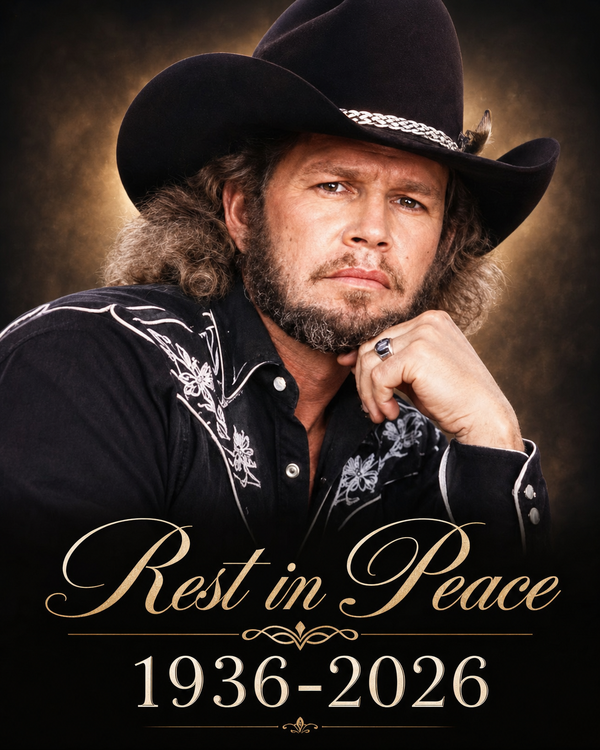
That impossible task was always the point. Coe’s lyrics swung between confession and provocation, and his death arrives without a tidy explanation or resolution, leaving only the same unresolved tension that defined his career.

A Life Shaped by Hardship
Coe came from the margins and rarely strayed far from them, even after fame found him. A brutal childhood and years spent behind bars weren’t simply chapters in his biography—they were the raw material for nearly everything he later wrote.
That hard-won honesty gave his songs a lived-in quality, as though each one were a confession murmured at closing time or a curse hurled at a world that had shown him little mercy. His hardship didn’t just inform his music; it powered it.
A Legacy of Contradiction
For countless listeners, that bruised, unvarnished honesty felt like salvation. Coe’s willingness to sing from the darkest corners of his own life gave his best work a rare, unflinching authenticity that few in the genre could match.
But for others, his most controversial material crossed a line that couldn’t be forgiven. His songs sparked strong, opposing reactions—admiration on one side, offense on the other—and that divide never closed.
His death doesn’t settle that argument. Instead, it freezes it in place, leaving the same difficult questions hanging over his catalog.
What remains are the records, the bootlegs, and the barroom memories—an unresolved body of work that still asks every listener to decide what they can forgive, what they can’t, and what continues to move them despite it all. In that uneasy space between admiration and recoil, David Allan Coe’s outlaw spirit lingers on.