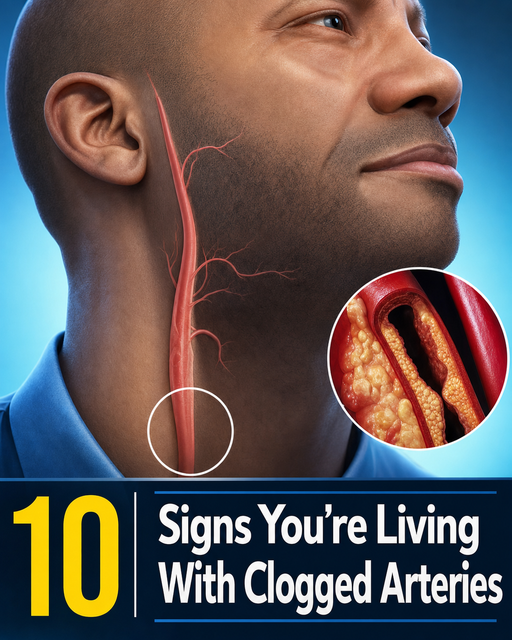
That protection begins with understanding what’s actually happening inside the vessels: the narrowing, caused by buildup inside blood vessels, can eventually restrict blood flow enough to trigger high blood pressure or even a heart attack if left unaddressed. Recognizing the early signals gives people a chance to seek medical attention before a minor symptom becomes a major emergency.
Warning Signs Related to the Heart and Chest
Nausea is easy to dismiss because it accompanies so many everyday ailments. On its own, it doesn’t confirm clogged arteries, but persistent or unexplained nausea is worth mentioning to a doctor rather than ignoring.
Chest pain, medically known as angina, is a more direct signal. It occurs when plaque buildup reduces blood flow to the heart, often starting behind the breastbone before spreading to the left shoulder, arm, jaw, or upper back. Repeated episodes call for prompt medical evaluation.
Shortness of breath can also point to trouble, specifically in the pulmonary arteries. Feeling winded after climbing stairs or exercising is normal, but frequent or unexplained breathlessness during ordinary activity is a different matter and should be checked by a physician.
Heart palpitations deserve the same seriousness. A pounding, fluttering, or unusually noticeable heartbeat—sometimes felt in the neck or throat and often lasting just a few seconds—may reflect irregular blood flow and should prompt immediate medical consultation.
Neurological and Vision-Related Signs
The carotid arteries carry blood from the heart up through the neck to the head, splitting into branches that supply the brain, eyes, tongue, and face. When blood flow through these vessels is restricted, the effects can show up in surprising ways.
Weakness or numbness confined to one side of the body can result from limited circulation in the carotid arteries. Because these vessels feed both the brain and facial structures, a blockage can disrupt sensation or strength unevenly across the body.
Slurred speech is another possible symptom tied to blocked carotid arteries, whether the obstruction affects the branch supplying the brain or the one reaching the tongue and face. It’s a symptom shared with other conditions, which makes prompt evaluation important rather than optional.
Vision loss, in one eye or both, can signal a clogged exterior branch of the carotid artery. Sudden blurring or a noticeable drop in eyesight is not something to wait out—it calls for immediate medical attention.
Signs Affecting the Legs and Feet
Circulation problems don’t stop at the neck and chest; the peripheral arteries running through the arms and legs can narrow too, and the legs often show the earliest clues.
Leg pain that appears without any obvious injury or strain may point to clogged peripheral arteries. Because leg pain has many possible causes, unexplained or recurring discomfort is a signal worth investigating rather than brushing aside.
Cold feet can develop when restricted blood flow fails to reach the extremities properly. Regularly cold feet, especially alongside other symptoms, may indicate a blocked peripheral artery rather than simple poor circulation from cold weather.
Delayed healing of foot injuries follows a similar logic: wounds need blood flow to repair themselves, and reduced circulation to the legs means cuts or sores on the feet may take noticeably longer to close.
Taken together, these ten signs share a common thread—each may reflect restricted blood flow somewhere in the body, and none should be diagnosed at home. Anyone noticing these symptoms, particularly in combination, is encouraged to consult a healthcare professional for proper evaluation.
This article is not intended as medical advice. Readers experiencing any of these symptoms should seek guidance from a qualified medical professional for an accurate diagnosis.